
Property
Protect your property with custom legal documents. We're here to help.
- Gemma, Founder
- That's Her Business
Property FAQs
-
What documents do I need to rent out my property?
There are a number of different documents that you may need when you are renting out property.
When you are renting residential property, you should consider making:
-
an Initial holding deposit form - setting out the terms related to a holding deposit (ie the deposit they pay to take the property ‘off the market’ before officially renting it)
-
an Inventory - recording the condition of items in your property before it was rented out (note that providing an inventory is mandatory in Wales)
-
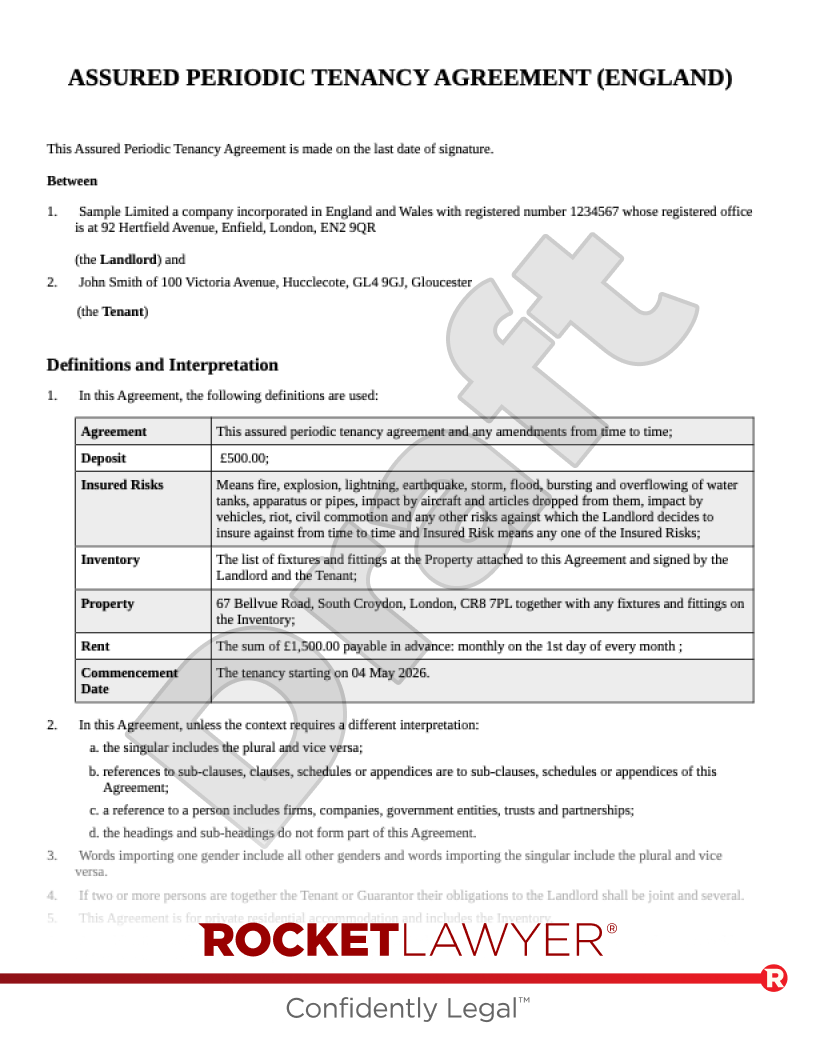
a Tenancy agreement - renting the property to the tenant (also known as a ‘contract holder’ in Wales)
-
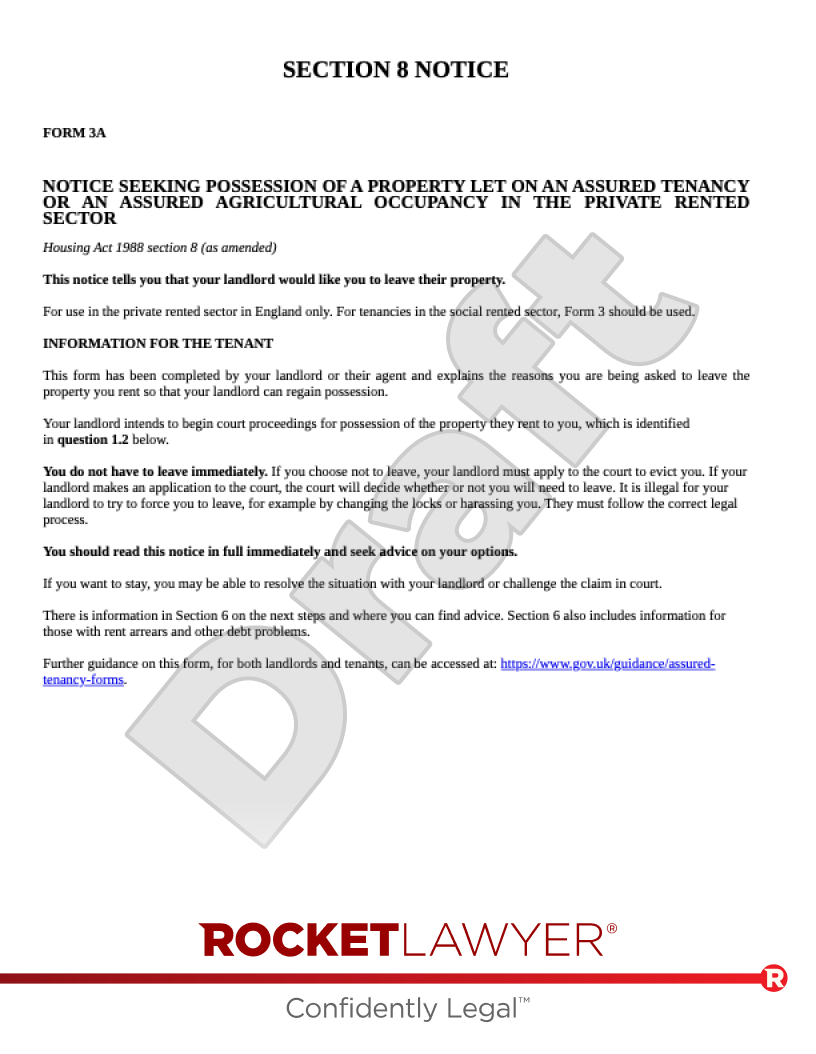
an Eviction notice - to bring the tenancy to an end
When you are renting commercial property, you should consider making:
-
a Commercial lease - to rent out the whole of a commercial building
-
a Rent deposit deed - setting out how the commercial tenant's deposit is secured
-
a Landlord's notice to exclude security of tenure - to exclude security of tenure when you do not want tenants to re-lease your property once their current lease is up
-
a Tenant's agreement to exclude security of tenure - asking the tenant to agree to exclude security of tenure
-
a Notice of breach of covenants - to inform a tenant that they are in breach of the lease, provided that this does not relate to non-payment of rent (this is the first step towards ending a commercial lease)
-
-
How do I rent out my residential property?
To rent out your property, you will need to choose which rental document is appropriate for you. Having the right agreement in place will secure the rights and set out the obligations of both landlord and tenant.
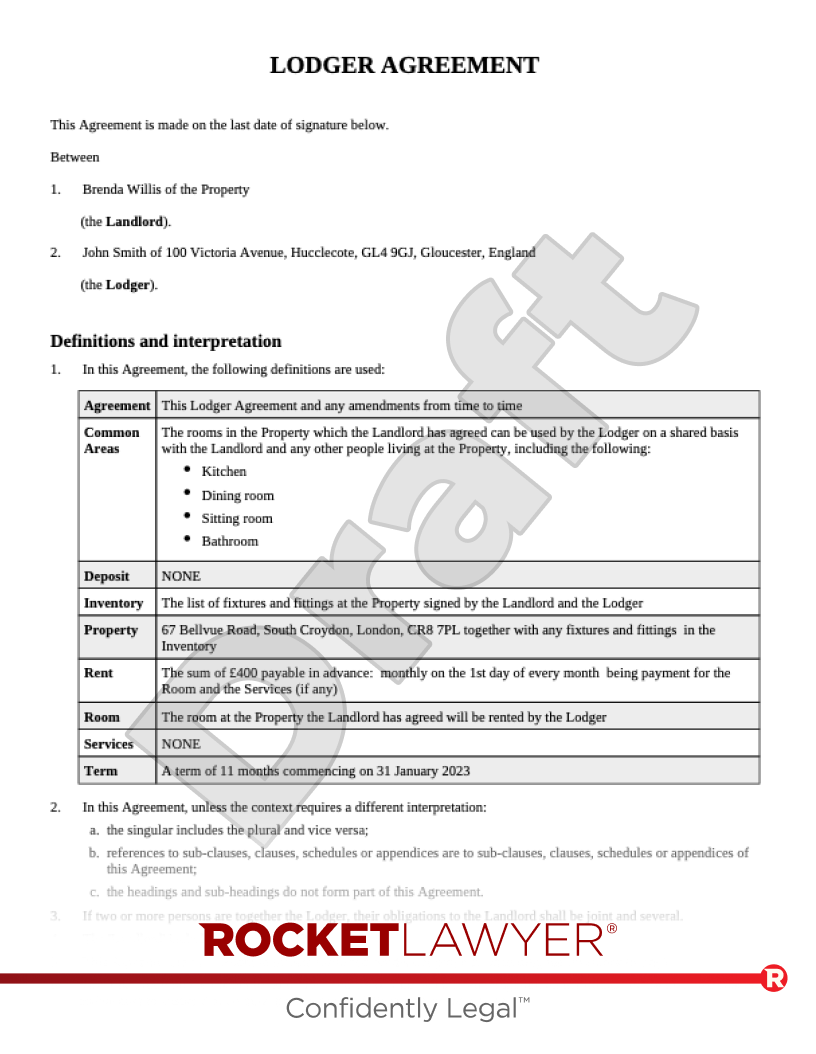
In England, since 1 May 2026, assured periodic tenancies (APTs) are the most common type of agreement. APTs give the tenant the exclusive right to use and occupy a house, flat or room (in a house rented to multiple different tenants) on an indefinite, rolling basis. If you just want to rent out a spare room in your home, a Lodger agreement can be used. For more information, read Residential tenancies.
In Wales, since 1 December 2022, most residential property is rented out under occupation contracts. These give the contract holder the exclusive right to rent and occupy a property (eg a house, a flat or a room in a property shared with multiple other contract holders). Certain letting arrangements won’t be occupation contracts (unless the landlord says otherwise). These types of contracts include Lodger agreements (used to let a room in their home) and holiday lets (used to let a holiday home for a short period of time). For more information, read Residential tenancies in Wales.
In Scotland, all tenancies that started on or after 1 December 2017 are private residential tenancies. These give the tenant the exclusive right to use and occupy a house, flat or room (in a house rented to multiple different tenants). They are open-ended tenancies that will last until the tenant wishes to leave the property or until the landlord relies on one or more of the 18 grounds for eviction. If you just want to rent out a spare room in your home, a Lodger agreement for Scotland can be used. For more information, read Residential tenancies in Scotland.
-
How can I manage issues with my residential tenants?
Becoming a landlord is not always an easy ride and you could be faced with problems such as your tenant falling behind with the rent, not cleaning the property, ruining the furniture, misusing the property, having noisy guests or intimidating the neighbours.
How you can remedy issues with tenants depends on the specific situation. For example, if a tenant is late paying rent, chase them using a Rent demand letter.
As soon as a problem comes to light, it is advisable to speak to your tenant and remedy any issues as soon as possible. Some important points to remember if problems do occur:
-
you can legally terminate a tenancy if a tenant behaves badly
-
you can impose a penalty for late payment of rent
-
you must never harass a tenant into leaving
For more information, read Difficult tenants and How to deal with difficult tenants in Scotland.
-
-
How can I evict my residential tenant?
Tenant eviction is a necessary part of being a landlord.
In England, a Section 8 notice must be used to evict a tenant on an APT, provided that at least one of the legal grounds for eviction (eg non-payment of rent or the landlord selling the property) can be demonstrated. For more information, read Evicting a tenant.
In Wales, the process for eviction depends on the type of contract (eg fixed-term occupation contract, periodic occupation contract or secure contract) and why the landlord wants to take possession of the property. For more information, read Repossessing property in Wales.
In Scotland, tenants can generally only be evicted if the landlord can rely on one or more of the 18 grounds for eviction.
In all cases, the appropriate process needs to be followed and care needs to be taken that sufficient notice is given.
Ask a lawyer
Get quick answers from lawyers, easily.