What is a residential tenancy in Scotland?
A residential tenancy is a contract between a landlord and a tenant that grants the tenant the right to live in a property in exchange for rent. The primary characteristic of any tenancy is that the tenant is granted exclusive possession of the property, meaning they alone have the right to occupy it. Since December 2017, the law has categorised nearly all new private lets under the private residential tenancy system detailed below.
If a contract doesn't grant exclusive possession, or if the landlord also lives there and occupies it as their main home, the occupant is usually a common law lodger, not a tenant, and the specific protections of a residential tenancy won't apply.
What are the different types of tenancies in Scotland?
While the legal landscape is now dominated by the private residential tenancy (PRT), older tenancy types still exist. It’s important to understand which type of agreement covers your property, as this dictates how you can end the tenancy and what documents you need to use.
Private residential tenancies
The PRT applies to nearly all private sector tenancies that started on or after 1 December 2017. This is the only type of tenancy agreement a landlord should issue for a new tenancy. The PRT is an open-ended tenancy, meaning it doesn't have a fixed end date. It runs until the tenant decides to leave or the landlord uses one of the statutory grounds for eviction. This structure provides tenants with significantly more security of tenure than previous tenancy types.
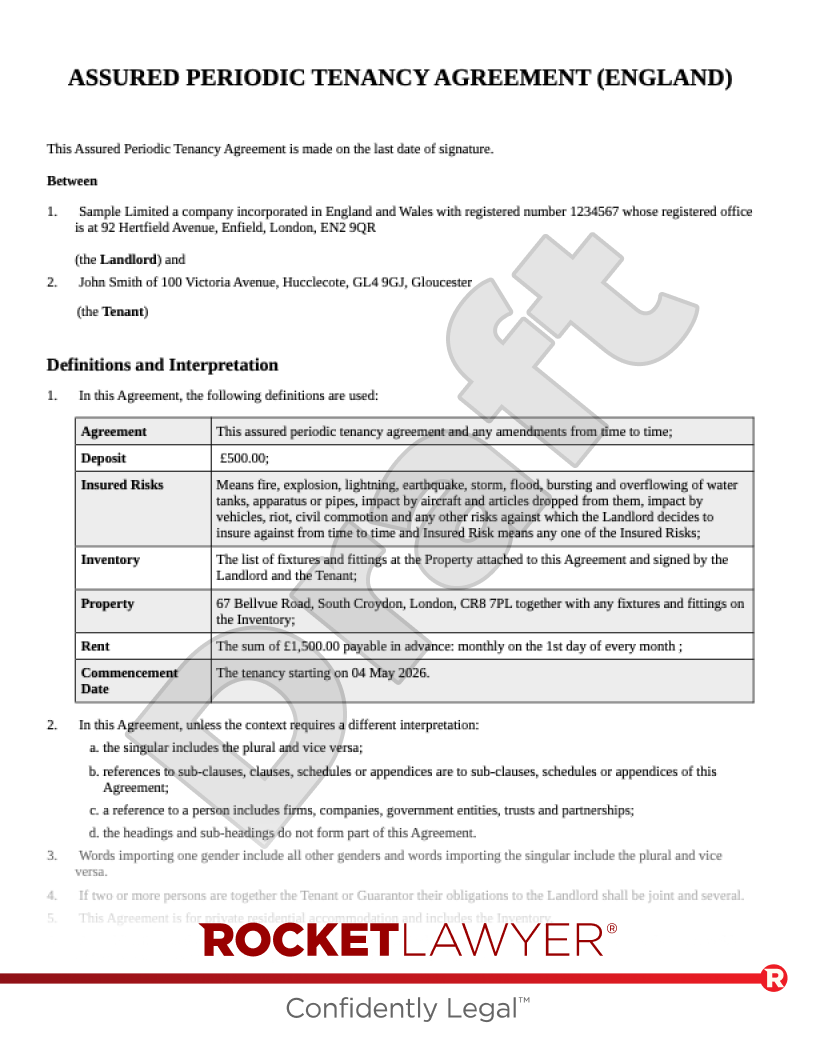
Landlords must use a written Private residential tenancy agreement for every PRT, which must include certain mandatory terms and conditions and be accompanied by government-produced notes explaining the tenant’s rights.
Short assured tenancies
These tenancies applied to private lets that began between 2 January 1989 and 30 November 2017. Crucially, to be a short assured tenancy, the landlord must have served the tenant with a statutory notice (known as an AT5 form) before the tenancy started.
If an existing tenancy is a short assured tenancy, it offers the tenant less security compared to an assured tenancy or a PRT. This is because the landlord had the right to end the tenancy relatively easily once the fixed term (which had to be at least six months) expired, provided they followed the correct legal steps and gave a notice to quit and a notice that possession is required. Ask a lawyer for more information.
Assured tenancies
These tenancies also applied to private lets that began between 2 January 1989 and 30 November 2017, but the key difference is that the AT5 form was not served on the tenant, or was served incorrectly.
An assured tenancy provides the tenant with greater security of tenure than a short assured tenancy. Under an assured tenancy, a landlord can only end the lease by proving one of the statutory grounds for possession to the Sheriff Court. If you have an existing assured tenancy, you must follow the specific rules for eviction applicable to that tenancy type, which differ from the PRT process. Ask a lawyer for more information.
Why is using the correct letting document essential?
Getting the legal paperwork right is crucial for protecting your interests and property as a landlord. You must use the correct document, whether it's a Private residential tenancy for a house, a Private residential tenancy for a flat, a Private residential tenancy for a room, or a Lodger agreement, to clearly define the legal relationship.
If you use the wrong type of document, the person renting the property could gain tenancy rights you didn't intend for them to have. This can make the eviction process significantly more difficult and expensive if they fail to pay rent or breach the agreement's terms, as the tenant will gain stability in the property through the wrong paperwork.
Furthermore, using the right agreement is essential for compliance with your mortgage. Many mortgage contracts require you to get the lender’s permission before renting out all or part of the property. Failing to inform your lender or using a document they don't permit could break your mortgage terms. For more information on letting properties, read Renting out property in Scotland.
What are non-tenancy occupation agreements?
Not all arrangements where someone pays to live in a property count as a residential tenancy. Agreements like those for lodgers or holidaymakers don't grant the same rights and responsibilities as a PRT.
Lodger agreements in Scotland
A Lodger agreement gives a lodger the right to use a spare room in a property. In Scotland, lodgers have what's referred to as a common law tenancy. A common law tenancy arises if the occupier (eg the lodger) lives in the same property as the owner but has exclusive possession of part of the property (eg they've got their own bedroom). The owner lives at the property, and the lodger is granted use of a bedroom, as well as the right to use other areas of the property, including the bathroom, kitchen, and garden. For more information, read Taking in a lodger.
The owner can end the agreement if the lodger is late in paying the rent or breaches any obligations by following the set procedure. For more information, read Evicting lodgers in Scotland.
Holiday lets
Under a holiday letting agreement, the owner won’t live at the property and the person renting the holiday let is given full use of the entire property for a set, short period of time, usually between one to three weeks.
The guest doesn't have the right to stay in the property after the set period, and the owner can obtain possession of the property by following the set procedure. For more information, read Holiday lets.
If you need to make or update your tenancy agreement for a property in Scotland, you can make the relevant Private residential tenancy agreement for your needs. If you're taking in a lodger, you can make a Lodger agreement. Do not hesitate to Ask a lawyer if you have any questions or concerns.