What is security of tenure?
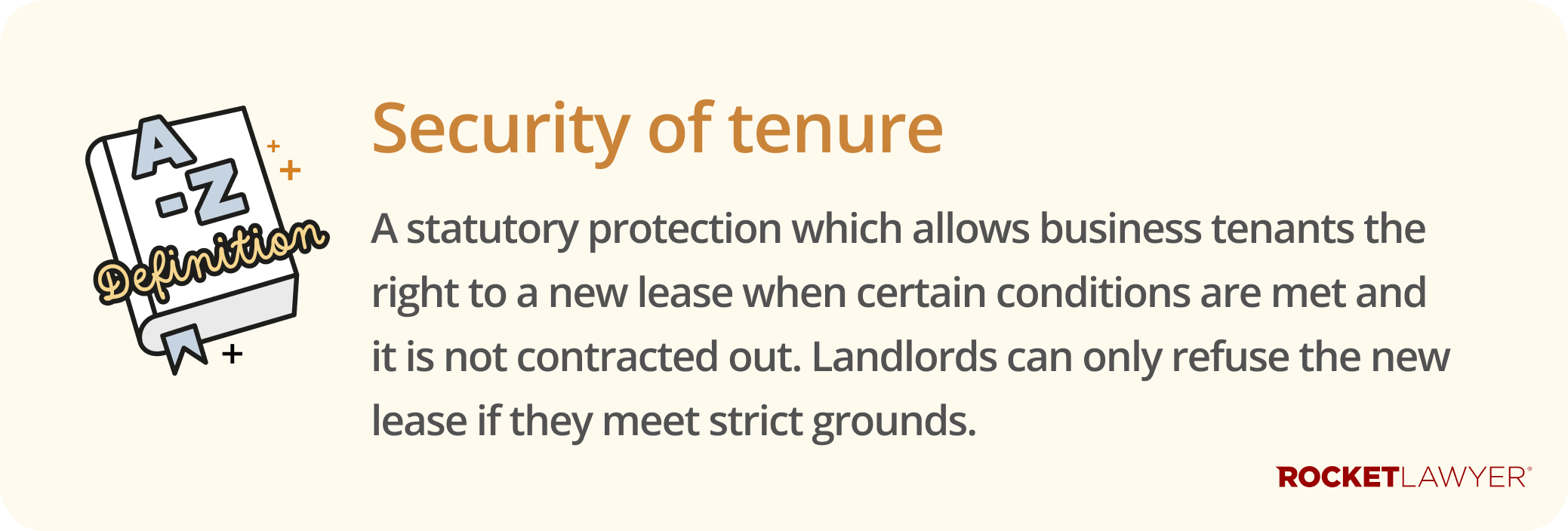
In a nutshell, security of tenure is a business tenant's legal right to renew their lease when it expires. This right is granted by the Landlord and Tenant Act 1954 and applies automatically to most commercial leases.
It means that when the lease term ends, the tenancy doesn't just stop. The tenant can stay in the property and has the right to ask for a new lease on similar terms. The landlord can only refuse to grant a new lease on a few, very specific legal grounds. The main purpose of this right is to protect the tenant’s business, allowing them to continue operating from the same location without interruption.
Why would a landlord exclude security of tenure?
Excluding security of tenure (ie contracting out of security of tenure) gives a landlord much more flexibility and control over their property. While offering security can attract stable, long-term tenants, there are several good reasons why a landlord might want to contract out. The decision to do so should be made at the start of negotiations and recorded in the commercial lease heads of terms.
-
future development - the landlord might have plans to sell, redevelop, or refurbish the property, and needs it to be empty at the end of the lease
-
flexibility - they may want to use the property for their own business or change its use entirely once the current lease ends
-
tenant suitability - it might be a short-term lease, and the landlord wants to assess the tenant before committing to a longer-term relationship that could be hard to end
-
avoiding compensation - if a landlord refuses to grant a new lease to a tenant who has security of tenure, they may have to pay the tenant compensation. Contracting out avoids this risk
How do you exclude security of tenure?
To exclude security of tenure, you need to follow a strict legal procedure before the lease is completed and before the tenant moves in. If you don't follow the steps correctly, the exclusion won't be valid, and the tenant will gain security of tenure automatically.
The notice procedure
The process involves two key steps using specific legal documents:
-
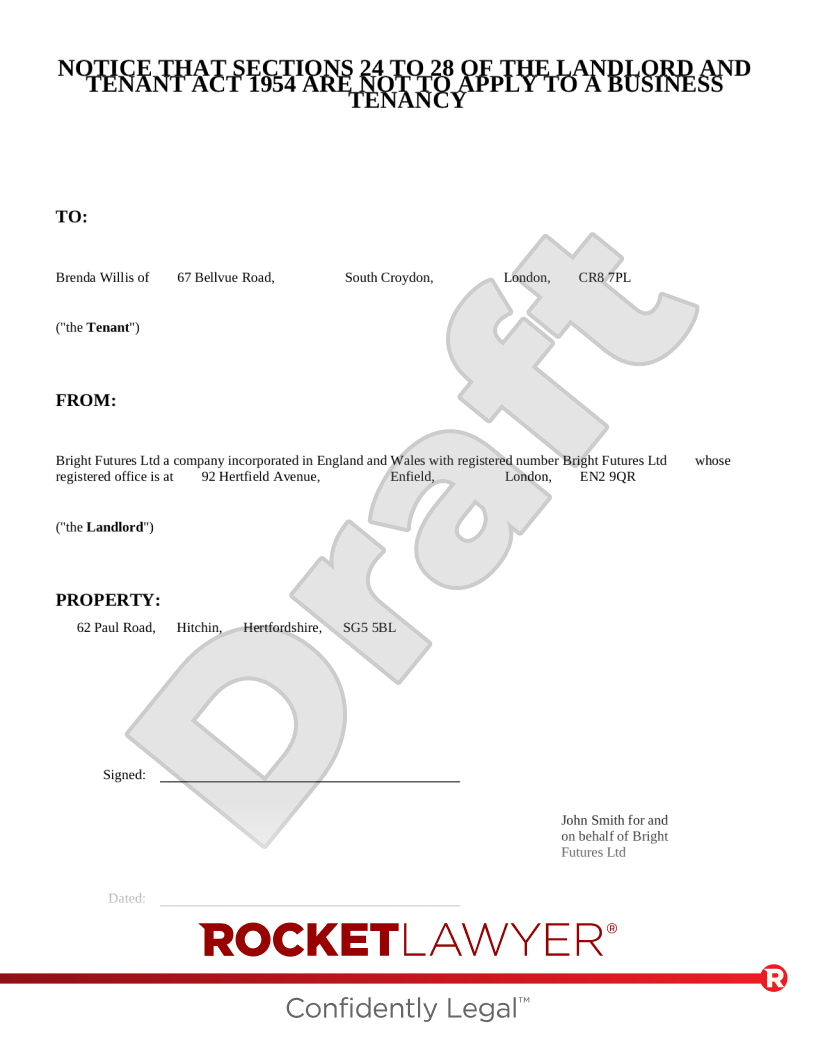
the landlord serves a Landlord's notice to exclude security of tenure. This is often called a 'warning notice'. It must be in a specific format and tells the tenant that they're agreeing to a lease without security of tenure and that they should get professional advice
-
the tenant makes a declaration using a Tenant's agreement to exclude security of tenure. This is the tenant’s formal acknowledgement that they've received the landlord's notice and understand they're giving up their right to security of tenure
Serving the notice correctly
For the notice to be valid, you must make sure it's served correctly. If you have multiple tenants, you can't just serve one notice; each tenant must be named on the notice and receive their own individual copy.
Don't change the lease after serving the notice
The warning notice applies to the specific lease that the tenant is agreeing to. If you make any amendments to the lease after you've already served the notice, the original notice will be invalid. You must issue a completely new warning notice before the tenant signs the updated lease.
Timing is crucial
The type of declaration the tenant needs to make depends on how much notice they get before they commit to the lease (eg by signing the agreement or moving in). If the tenant receives the warning notice:
-
14 days or more before the lease is completed, they can make a simple declaration
-
less than 14 days before the lease is completed, they must make a statutory declaration. This is more formal and must be sworn in the presence of a lawyer or a commissioner for oaths
Finalising the lease agreement
The final, crucial step is to make sure the Commercial lease itself reflects the agreement to contract out. The lease must contain a specific clause stating that security of tenure has been excluded. This clause should also refer to both the landlord's warning notice and the tenant's declaration to confirm that the correct procedure was followed.
What happens if the notice procedure isn't followed correctly?
If you don't follow the procedure exactly, the attempt to contract out will fail, and the tenant will automatically have security of tenure. This means they'll have the legal right to a new lease when the current one ends.
It's absolutely essential that the landlord’s warning notice is served and the tenant’s declaration is completed before the lease is signed and before the tenant is given access to the property. If the tenant moves in before the procedure is complete, they could successfully argue in court that their occupation has given them security of tenure, regardless of what was intended.
What happens when the lease ends?
The outcome at the end of the lease term depends entirely on whether security of tenure was excluded.
If the lease is contracted out
A contracted-out lease will end on the expiry date stated in the agreement. The tenant has no right to stay in the property or to ask for a new lease. The landlord doesn't need to serve any notice to end the lease, and they are free to find a new tenant or use the property for other purposes.
If the lease is not contracted out
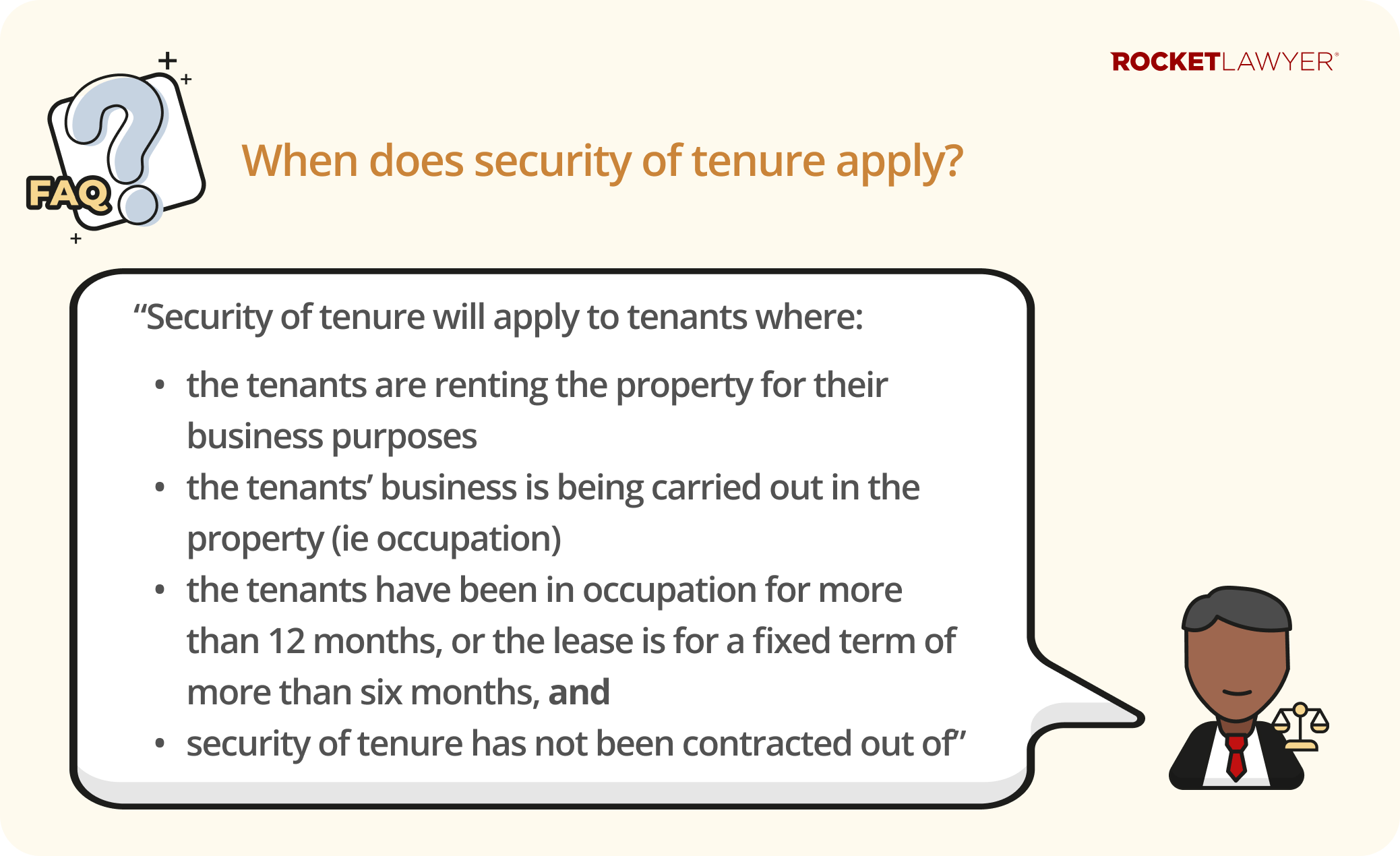
A lease that isn't contracted out doesn't automatically end on its expiry date. The tenant has the right to a new lease on similar terms. The landlord can only refuse to grant a new lease if one of the very strict legal grounds exists, and they may be required to pay compensation to the tenant for doing so.
On what grounds can a landlord refuse a new lease?
If a lease has security of tenure, a landlord can only refuse to grant a new one if they can prove one of the specific grounds set out in the Landlord and Tenant Act 1954. These are often divided into fault grounds (based on the tenant's actions) and no-fault grounds.
The main grounds for refusal include:
-
tenant's breach - the tenant has failed to keep the property in good repair or has seriously breached the lease in another way
-
persistent late rent - the tenant has been consistently late in paying their rent
-
alternative accommodation - the landlord can offer the tenant suitable alternative premises
-
landlord wants to redevelop - the landlord intends to demolish or reconstruct the property and can't reasonably do so with the tenant in place
-
landlord's own use - the landlord wants to use the property for their own business or as their home
Some of these grounds mean the landlord may have to pay the tenant compensation if they successfully oppose the new lease.
If you're ready to exclude security of tenure, you can make a Landlord's notice to exclude security of tenure and have the tenant complete a Tenant's agreement to exclude security of tenure. You can then finalise everything by making your Commercial lease. If you have any questions about your specific situation, don't hesitate to Ask a lawyer.