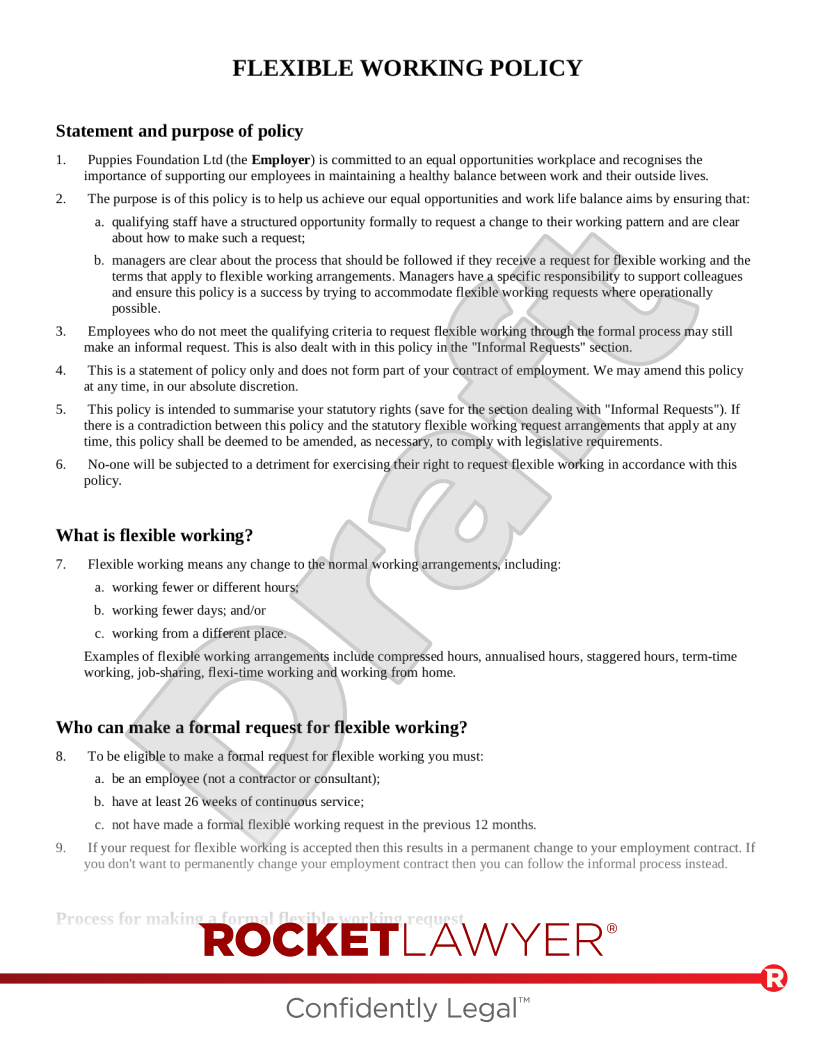
What is flexible working?
Flexible working is any working arrangement that is different from the default or 'normal' arrangement in a given workplace or from an employee's previous arrangements. Flexible working includes arrangements like:
-
working from home or from other remote locations (ie working from anywhere other than a usual place of work)
-
hybrid working (ie working from the employer's premises on some days and from another location on the remaining days)
-
working part-time
-
working annualised hours (where an employee works a set number of hours over a year but has flexibility over when they work them)
-
working compressed hours (ie working full-time hours over fewer days)
-
flexitime working (ie where hours are flexible except for certain 'core' periods)
-
term-time working (ie working a certain number of weeks per year, with any non-working periods being scheduled in advance in regular, planned periods)
-
staggered hours (ie having start, finish, and break times that are different from those of other workers)
-
job-sharing (eg two people doing one job and splitting the hours between them)
Who is entitled to flexible working?
Staff members do not have an absolute right to work flexibly. However, under the Employment Rights Act 1996, certain staff members have a right to request a flexible working arrangement and their employer has a duty to handle the request in a specified, reasonable manner. Such requests are often referred to as ‘formal flexible working requests’ or ‘statutory flexible working requests'.
A staff member can make a formal flexible working request if they:
-
are not an agency worker (unless they have employee status and are returning from parental leave)
-
have not already made two requests to the employer within the preceding 12 months
-
do not already have an outstanding flexible working request with the employer (eg they’re not waiting on the outcome of an appeal)
An eligible employee can make a formal flexible working request anytime from their first day of employment with an employer.
If a staff member is not eligible to make a formal flexible working request at a given time, they can still make an ‘informal’ request to their employer. The employer does not have to treat these requests in accordance with the rules on formal flexible working requests. However, they should still be careful not to discriminate when considering the request and weigh the practical benefits that allowing it may have for the staff member and the employer’s business.
How can an employee make a flexible working request?
A formal flexible working request should be made in a specific way to benefit from the full legal protections granted in relation to such requests. A request should:
-
be made in writing
-
include the date of the request
-
state that it is a formal statutory request for a flexible working arrangement
-
specify the desired changes to the employee’s working arrangements and when the employee would like these changes to take place
-
identify whether the employee has previously made any statutory working requests to this employer and, if so, when
The employee does not need to explain the effect that their proposed flexible working arrangement would have on the employer’s business.
How should an employer handle a flexible working request?
An employer has a legal duty to handle formal flexible working requests in a particular way. They must:
-
handle the request in a ‘reasonable manner’ (eg by clearly communicating about the request and about the employee’s rights)
-
consult the employee about the request before refusing it (eg to discuss any barriers to approving the request or alterations the employer wishes to make to the proposed arrangement)
-
only refuse the request if one or more of the specified grounds for doing so apply
-
inform the employee of the outcome of their request within two months of the request
It’s best for all communications about a request (eg a communication informing the employee of the outcome) to be in writing, and if the employer refuses the request:
-
outline how the employee can appeal the employer’s decision, and
-
state the reason(s) for the refusal and how these reasons apply
If an employer cannot practically grant a flexible working request as originally specified, they may offer or discuss an alternative arrangement (eg allowing remote working but requiring one day per week of office attendance). Such propositions should be discussed during an employee consultation. Considering alternative arrangements rather than outright refusal can help show that an employer is handling a request reasonably.
A trial period can be agreed to, but this may also make it hard to say no to a permanent change later.
Having a comprehensive Flexible working policy in place can help an employer comply with the law on flexible working and ensure that employees understand the process for making and dealing with requests.
When can an employer refuse a flexible working request?
An employer can only refuse a formal request for flexible working if one or more of the eight specific statutory reasons apply. These reasons are because:
-
allowing the request would impose a burden of additional costs that would negatively impact the business
-
allowing the request would have a detrimental effect on the business’s ability to meet customer demands
-
of an inability to reorganise work among existing staff
-
of an inability to recruit additional staff
-
allowing the request would have a detrimental impact on quality of work
-
allowing the request would have a detrimental impact on the performance of work
-
of an insufficiency of work during the periods the employee proposes to work
-
there are planned structural changes within the business that would be incompatible with the request
Legal considerations for employers considering flexible working requests
Avoiding discrimination
If someone requests flexible working for childcare reasons, refusing the request may, in some circumstances, amount to sex discrimination. For example, if the request is refused because of a blanket rule against part-time working, which disproportionately impacts individuals with childcare responsibilities who are disproportionately female. That’s not to say requests for flexible working made due to childcare commitments can never be refused. If the request is refused on one of the eight statutory grounds and it is a proportionate means of achieving a legitimate aim, it may be justified. Essentially, the refusal may be justified if it is for a good reason and has been balanced against the impact on the employee.
Where a flexible working request is made to accommodate health concerns, an employer should take particular care to avoid disability discrimination. In particular, they should consider whether the flexible working arrangement would constitute a reasonable adjustment (ie an alteration to the employee’s work patterns that reduces a disadvantage imposed by a disability, which is reasonable for the employer to make).
For more information, read Equal opportunities and discrimination and Disability and reasonable adjustments.
Complying with data protection law
All flexible working requests are likely to contain sensitive personal data (eg information about the employee’s health). These must be processed (eg handled) in accordance with the employer’s Data protection policy and Employee privacy notice, and with data protection laws more broadly.
Avoiding unfair dismissal
Employees must not be dismissed or subjected to any detriment (eg being passed over for promotion or dismissed) because they have requested flexible working. If an employee is dismissed because of a request for flexible working, this will be considered an automatic unfair dismissal.
Practical tips for employers handling flexible working arrangements
Formalise the changes
After agreeing to a flexible working arrangement, make sure to properly record the new working arrangement in a written variation to the employee's Employment contract. Consider using a Change to employment terms letter to do this.
Adjust for part-time work
If the employee is now working part-time, ensure their pay and benefits comply with the legal rules for part-time employees.
Make sure you’re covered for employees working from home
If an employee will work from home, ensure the home workplace complies with health and safety requirements and carry out a risk assessment that considers risks associated with homeworking. For more information, read Employer health and safety responsibilities for staff working from home and Employer first aid obligations for employees working from home and lone workers.
Check that your employers' liability insurance covers employees working remotely and comply with any conditions of cover.
Ensure appropriate arrangements are in place to protect the security and confidentiality of materials kept at home.
Consider changes to management systems and other arrangements to ensure homeworkers remain integrated into and engaged with the business. Consider implementing a Working from home policy that outlines how the business manages working from home.
If you need to update your staff procedures, you can make a Flexible working policy. Do not hesitate to Ask a lawyer if you have any questions.