What is employment status?
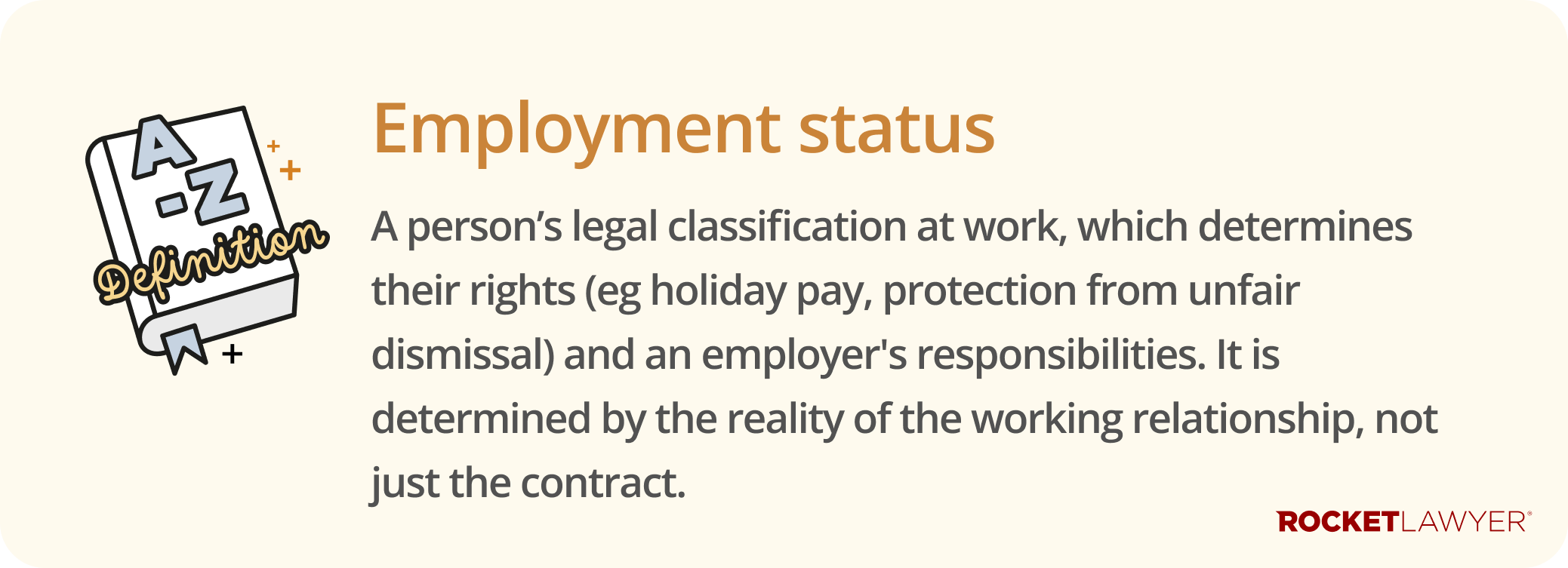
Employment status defines a person's legal classification in the workplace. It sets out the rights they have and the responsibilities you, as the employer, owe them. While a contract might state a particular status, what truly matters is the reality of the working relationship.
The main types of employment status are:
-
employee
-
worker
-
self-employed (often called a consultant, contractor, or freelancer)
-
director
-
office holder
It's also important to note that some individuals, like those working as volunteer, have a different legal status and generally fall outside these categories.
While this guide focuses on the first three, it's useful to know that directors are appointed to run a company but may also be employees, while office holders have a position created by law (like a company secretary) and usually aren't employees or workers unless they also have a separate contract.
It's important to remember that someone can have a different status for employment law purposes than they do for tax purposes. Indisputes about rights, an employment tribunal makes the final decision on employment status, while HMRC determines status for tax.
Why is getting employment status right so important?
Correctly identifying someone's employment status is crucial. If you misclassify someone, you could face serious consequences. For example, if you treat someone as a self-employed consultant when they should be an employee, you could be liable for:
-
backdated holiday pay
-
unpaid national minimum wage
-
unpaid tax and National Insurance contributions (NICs) through Pay As You Earn (PAYE)
-
significant penalties from HMRC, especially under the off-payroll working rules (known as IR35)
An individual could also bring a claim to an employment tribunal to assert their rights, which can be costly and damage your business's reputation.
What is a worker?
The worker category sits between an employee and a self-employed contractor. A worker provides a service personally as part of a contract but has more flexibility than an employee. They often work under arrangements like a Zero hours contract or a casual contract. People in this category are sometimes called 'limb (b) workers'.
A person is likely a worker if most of the following apply:
-
they carry out work for the business on an occasional or irregular basis
-
there’s no obligation for the business to offer work, or for them to accept it
-
their working arrangement is described as ‘casual’, ‘freelance’, or on a ‘zero-hours’ basis
-
they have to accept the business’s terms and conditions to perform the work
-
their work is supervised or controlled by the business
-
they must perform the work personally and can't send someone else in their place
-
their pay is handled by the business, which deducts tax and NICs
-
the business supplies the essential tools, materials, or equipment they need
Worker rights
Workers don't get the full range of employment rights, but they are entitled to core protections, including:
-
a written statement of employment particulars detailing their job rights and responsibilities
-
protection against unlawful discrimination
-
statutory rest breaks and limits on the working week
-
protection against unlawful deductions from their wages
-
protection for whistleblowing
Statutory pay and leave for workers
This is where it can get tricky. Depending on a worker’s earnings and NICs, they may also be entitled to some types of statutory pay, such as:
-
statutory sick pay (SSP)
-
maternity, paternity, adoption, or shared parental pay
However, workers are not entitled to the corresponding statutory leave (eg maternity leave or shared parental leave). This is because they aren't required to make themselves available for work and can choose to take time off when they want to. They also generally aren't entitled to minimum notice periods, protection from unfair dismissal, or statutory redundancy pay.
This category often includes people on casual contracts (like a Zero hours contract) or those considered gig economy workers.
What is an employee?
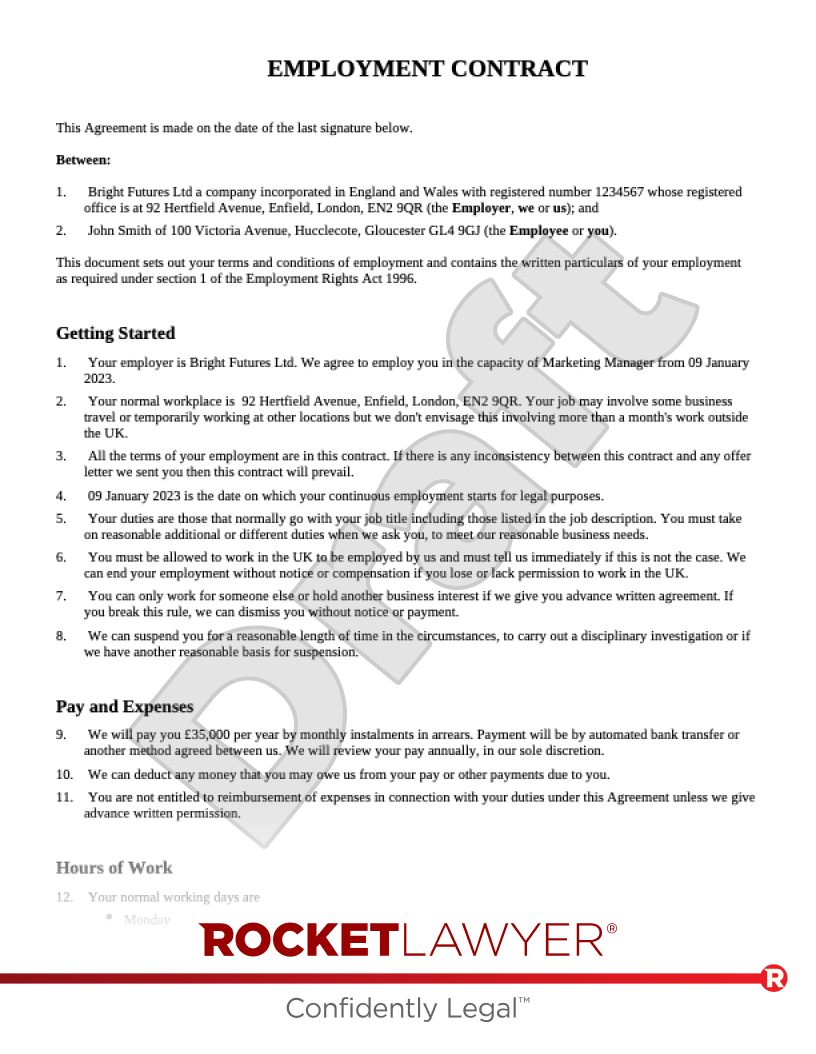
An employee is someone who works for you under an Employment contract. This represents the most formal working relationship.
All employees are also workers, which means they're entitled to all the rights of a worker, plus a range of additional rights and protections.
These additional key rights for employees include:
-
statutory sick pay (SSP), maternity, paternity, adoption, shared parental, parental bereavement, and neonatal care leave and pay
-
reasonable time off for emergencies
-
protection against unfair dismissal (usually after two years of service)
-
statutory redundancy pay (after two years of service)
-
the right to request flexible working
-
a minimum notice period if their employment is ending
As an employer, you are responsible for deducting tax and NICs from an employee's salary through the PAYE system.
What is a consultant?
A self-employed person, often called a consultant, freelancer, or contractor, runs their own business and is responsible for its success. They provide services to clients under a 'contract for services', such as a Consultancy agreement.
You can usually tell someone is self-employed if they:
-
quote or bid for jobs
-
submit invoices to get paid
-
are free to decide how, when, and where they do their work
-
can send someone else to do the work for them (ie appoint a substitute)
-
use their own equipment and materials
-
are responsible for their own tax and NICs
Self-employed people generally aren't covered by employment law and aren't paid through PAYE. This is because they are their own boss, usually operating as a sole trader or their own company. They are responsible for their own tax affairs and need to tell HMRC when they become self-employed.
It’s crucial to understand that HMRC may consider someone as self-employed for tax purposes, even if an employment tribunal would classify them as a worker for employment rights. Despite not having most employment protections, self-employed contractors do have rights regarding health and safety and protection from discrimination. In some cases, they may also have rights as a whistleblower. For more details, read Using consultants.
What is an office holder?
An office holder is a person appointed to a formal position within a company or organisation. This position usually exists under a set of rules (like an act of law or the company's articles) and is distinct from being employed under an ordinary contract. Office holders often don't have a formal contract or receive regular payments.
Examples of office holders include:
-
registered company directors or secretaries
-
trustees appointed under a trust deed
-
board members of statutory bodies
-
figures with Crown appointments (eg a government minister)
-
people in roles set out by an organisation’s internal rules, such as a club treasurer or a trade union secretary
-
members of the clergy
Do office holders have employment rights?
Office holders are generally neither employees nor workers, so they aren't automatically entitled to key employment rights. However, a person who is an office holder can also be an employee of the same organisation. This only happens if they have a separate employment contract that covers duties outside of their formal office holder role, and that contract meets all the legal tests for employment.
You can often tell someone is just an office holder if:
-
there is no contract or service agreement for their appointment
-
they only perform the minimal duties required by the relevant rules or statutes
-
they don't receive a regular salary, and any payment is a voluntary amount (an honorarium), from which the organisation deducts tax and NICs
How is employment status decided?
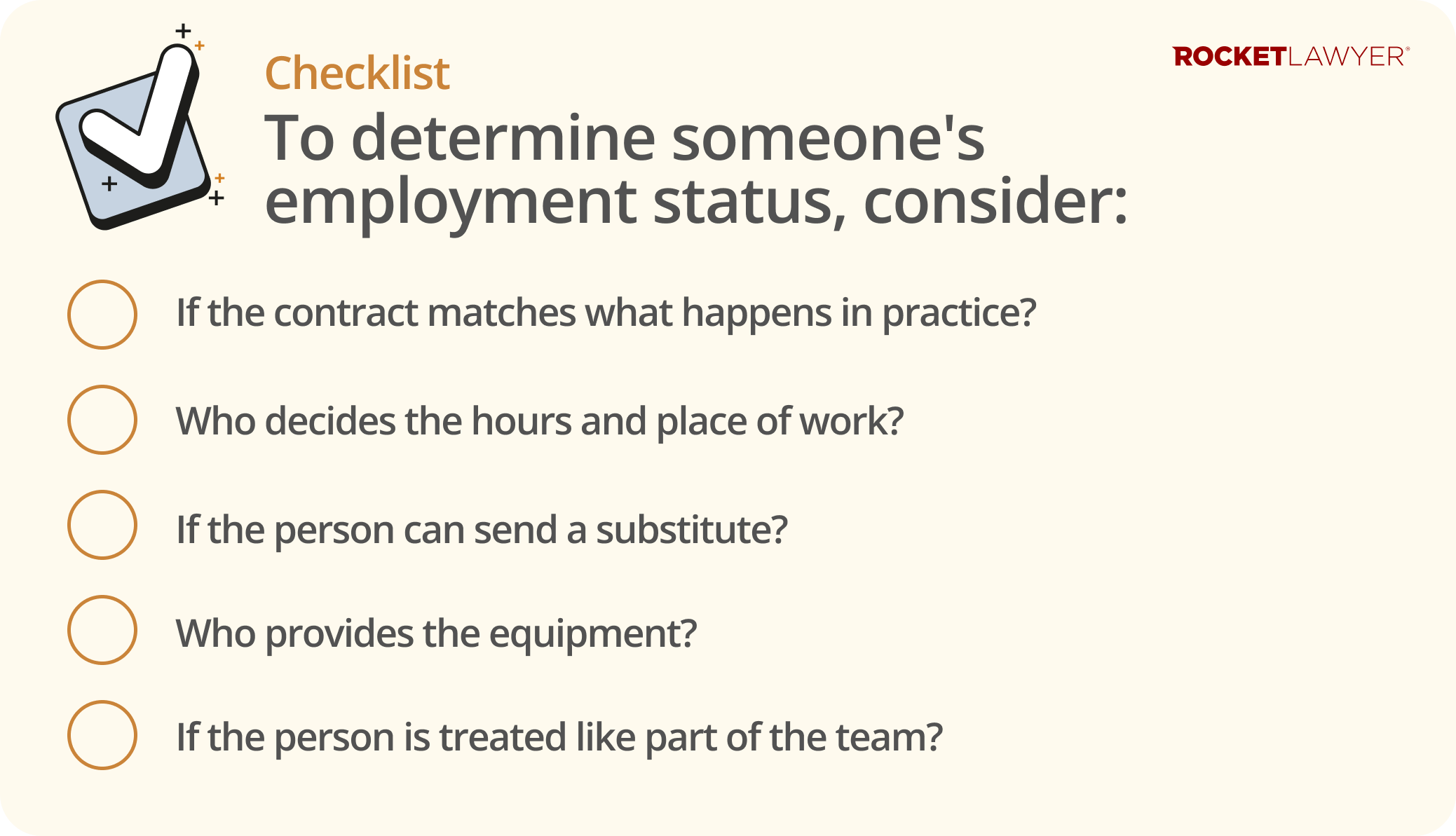
There isn't a single test to determine someone's employment status. Instead, it's based on considering the whole picture of the working relationship.
The key things that define a person's status are:
-
their contract or written statement of employment particulars
-
what was verbally agreed when they were offered the job
-
the reality of how the business and the individual work together day-to-day
To help work out someone's status, you should check if their actual work situation suggests they are an employee, a worker, or self-employed. It’s crucial that the employment status in the contract reflects the actual working relationship, as a tribunal will prioritise the reality of the situation over the written terms.
How have court cases affected employment status?
Recent court decisions have had a major impact on this area of law, especially for gig economy workers.
In a landmark 2021 case, Uber BV v Aslam, the Supreme Court confirmed that Uber drivers are workers, not self-employed contractors. The court focused on the high level of control Uber had over its drivers, including setting fares, dictating contract terms, and monitoring performance through a rating system. This ruling meant thousands of drivers became entitled to minimum wage and paid holidays.
Another key case, Pimlico Plumbers Ltd v Smith, also found that a plumber (providing services for Pimlico Plumbers) was a worker. Although his contract described him as self-employed, he was required to wear a uniform, drive a branded van, and work a minimum number of hours, and could only delegate work to other Pimlico Plumber workers, all of which pointed away from him being a truly independent business owner.
These cases show that tribunals will always look past the labels in a contract to the reality of the working arrangement. For more details, read Gig economy workers.
If you're unsure about the status of the people working for your business, it’s always best to get expert advice. Do not hesitate to Ask a lawyer if you have any questions. If you need to formalise your working relationships, you can make an Employment contract, a Consultancy agreement, or a Zero hours contract.