What are a tenant's rights in Scotland?
Since 1 December 2017, most new private tenancies in Scotland are private residential tenancies. This type of tenancy is open-ended, meaning there's no fixed end date. Your rights as a private tenant are extensive and cover everything from the paperwork you receive at the start to your safety in the property and what happens if your landlord wants you to leave. For a more detailed explanation of tenancy types, read Residential tenancies in Scotland.
What are tenants’ rights at the start of a tenancy?
When you move into a new rented property, your landlord has specific duties to fulfil to ensure your tenancy starts correctly and your security deposit is protected.
The right to a written tenancy agreement
You have the right to receive a written copy of your Private residential tenancy agreement before the end of the day your tenancy starts. Your landlord must also give you a copy of either the Easy-read notes for the Scottish Government model tenancy agreement or the Private Residential Tenancy Statutory Terms Supporting Notes. These documents explain your rights and the terms of your agreement in simple language.
The right to have your deposit protected
If you pay a security deposit, your landlord can't ask for more than two months' rent. They must protect your deposit in a government-approved tenancy deposit scheme within 30 working days of your tenancy beginning. They also have to provide you with specific details about the scheme and your deposit.
If your landlord fails to do this, you can apply to the First-tier Tribunal for Scotland (Housing and Property Chamber).

What are tenants’ rights during the tenancy?
Throughout your tenancy, you have several rights that ensure you can live in the property peacefully, safely, and comfortably.
The right to occupy the property
As a private residential tenant, you have the exclusive right to live in the property as your home. Because the tenancy is open-ended, you can stay until you decide to leave, as long as you stick to the terms of your agreement. If your landlord wants to evict you, they must use one of the legal grounds for eviction and give you the correct amount of notice. For more information, read Tenant eviction in Scotland FAQs.
The right to privacy
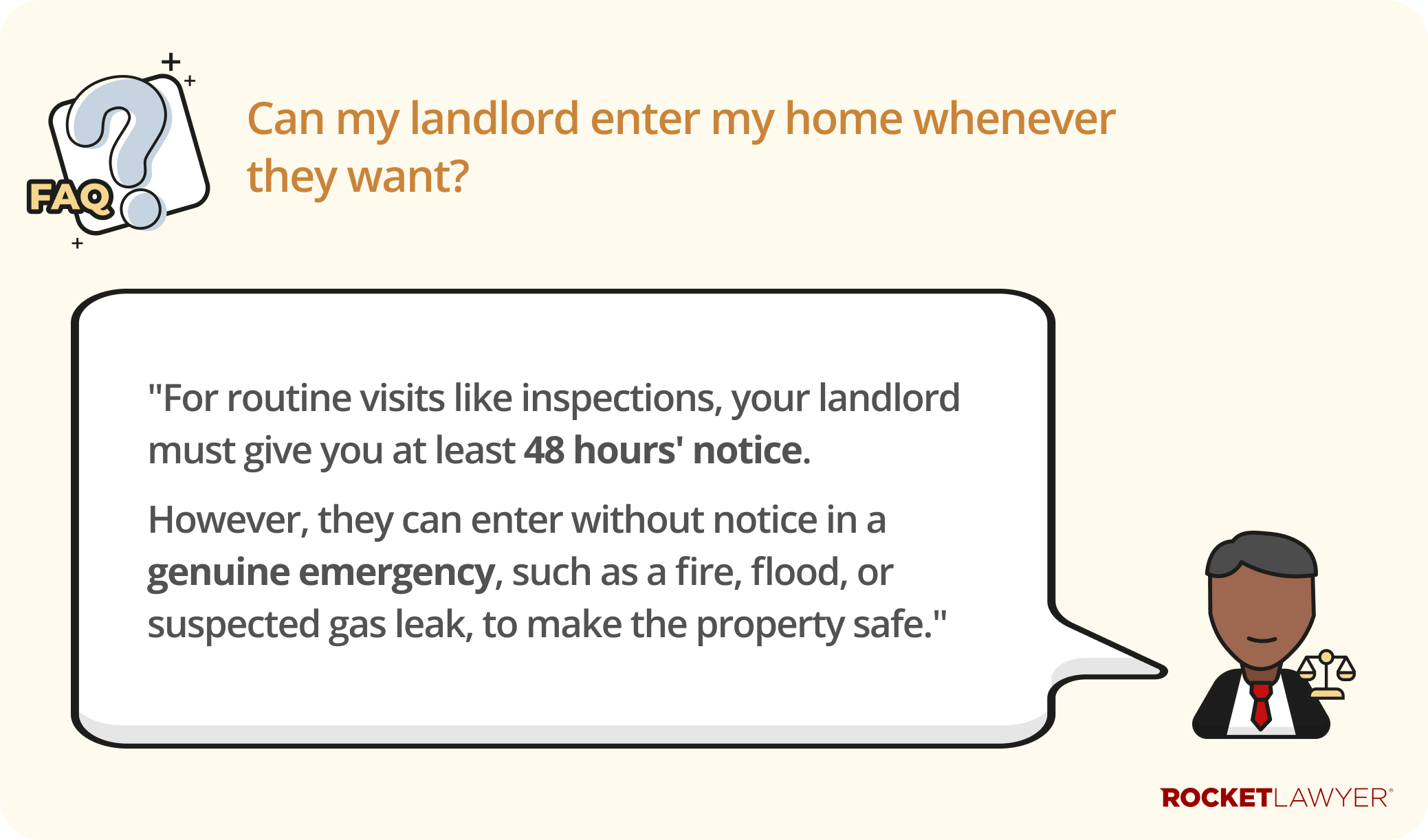
You have the right to live in your home without being disturbed. If your landlord needs to access the property (eg for an inspection or repairs), they must give you at least 48 hours' written notice, unless it's an emergency like a fire or flood. You can refuse entry if they show up unannounced or want to visit at an unreasonable time.
The right to a safe and well-maintained home
Your landlord is responsible for keeping the property in a reasonable state of repair. The property must meet certain legal standards, known as the repairing standard and the tolerable standard. This includes responsibilities for:
-
the structure and exterior of the property (eg walls and roof)
-
installations for water, gas, electricity, and heating
-
any appliances and furnishings your landlord provides
Your landlord must also meet strict legal standards for safety. These duties cover:
-
gas safety - requiring an annual gas safety check of all appliances and fittings by a Gas Safe registered engineer. You must be given a copy of the current gas safety record when you move in and within 28 days of any new check
-
electrical safety - requiring an electrical safety check by a registered electrician at least every five years. You have the right to receive a copy of this report when your tenancy begins and within 28 days of any new inspection
-
fire safety - which includes fitting interlinked smoke and heat alarms and ensuring any provided furniture is fire-resistant. Landlords of houses in multiple occupation (HMOs) have additional duties.
For a full breakdown of these duties, read Legal obligations of a landlord in Scotland.
What other rights do tenants have?
Beyond the condition of the property and the terms of your agreement, your rights as a tenant also cover fair treatment and what happens if your personal circumstances change.
The right to challenge rent increases
Your landlord can only increase your rent once every 12 months and must give you at least three months' notice using the correct form. If you think the proposed increase is unreasonable, you have the right to apply to a rent officer for a decision. For more information, read Private renting rent increases in Scotland.
The right not to be discriminated against
You have the right not to be treated unfairly by your landlord or letting agent because of certain protected characteristics under the Equality Act 2010. These include your age, disability, race, religion or belief, sex, gender reassignment (eg you being trans), or sexual orientation.
The right to succession
If you live with someone and they die, you may be able to take over their tenancy. This is known as succession or succeeding the tenancy. You can succeed a private residential tenancy if the property was your main home and:
-
you were the tenant's spouse or civil partner
-
you were the tenant's unmarried partner or a family member, and you lived there for at least 12 months before their death
-
you were a carer who gave up your home to look after the tenant, and you lived there for at least 12 months before their death
The 12-month period only starts from the date you told the landlord that you had moved into the property. Ask a lawyer if you have any questions about succession rights.
What can tenants do if their rights are breached?
If you think your landlord has breached your rights, the first step is often to talk to them to try and resolve the issue. If that doesn't work, you can apply to the First-tier Tribunal for Scotland (Housing and Property Chamber). The tribunal can order landlords to carry out repairs, pay compensation, or resolve disputes over deposits and illegal evictions. For more information, read First-tier Tribunal for Scotland (Housing and Property Chamber) and costs.
For more information, read Tenants’ and landlords’ obligations in Scotland and Legal obligations of a landlord in Scotland. If you have any questions or concerns, do not hesitate to Ask a lawyer.