What is summary dismissal?
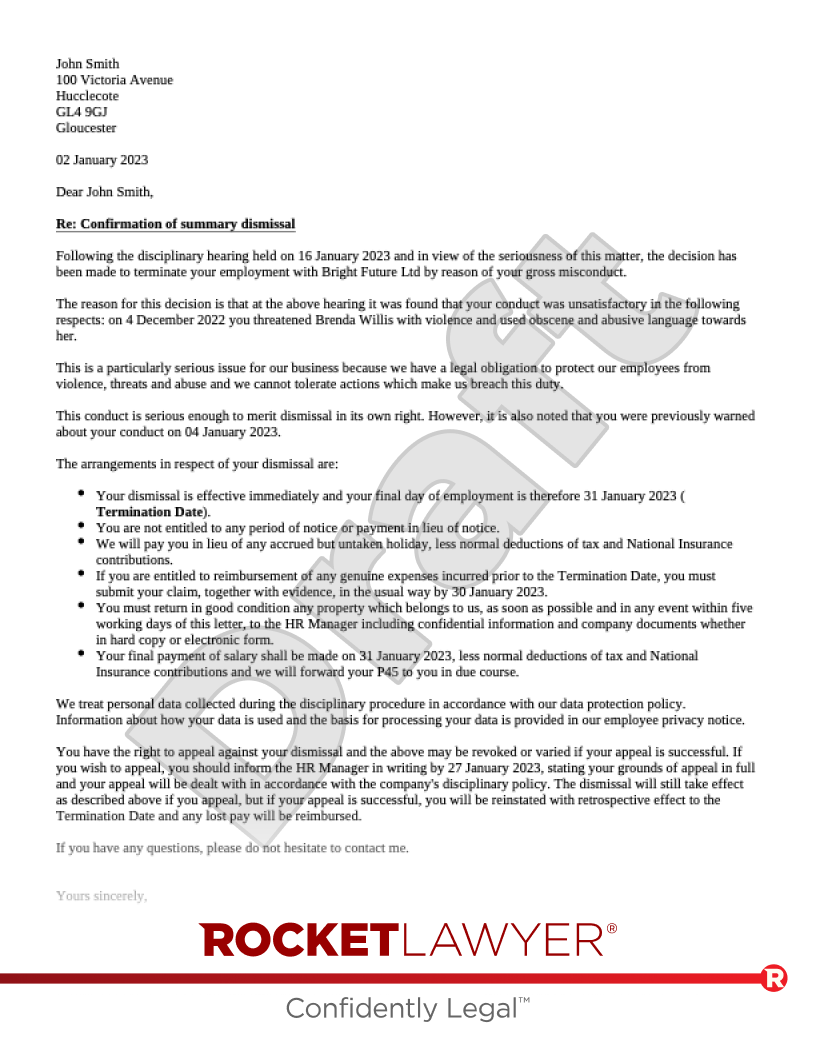
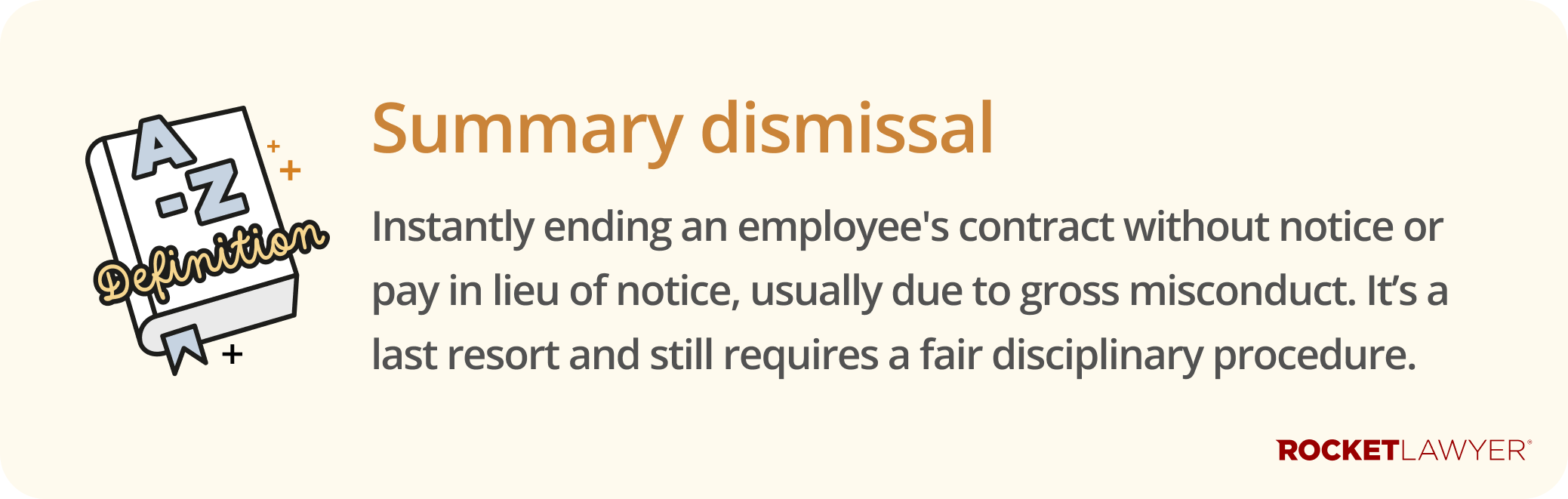
A summary dismissal is when you dismiss an employee instantly, without giving them the notice period they're entitled to under their contract or by law. You also don't give them a payment in lieu of notice (PILON). This is a serious step that’s legally justifiable only in specific circumstances, most often in cases of gross misconduct. It's crucial to understand that 'instant dismissal' doesn't mean you can skip a fair disciplinary process. You must still follow a proper procedure before making a decision. Failing to follow a proper procedure can leave you vulnerable to legal claims at an employment tribunal.
Do I have to pay an employee I've summarily dismissed?
Yes, but only for the work they've already done. When you summarily dismiss an employee, you don't have to pay them for their notice period. However, you must pay their final salary or wages up to their last day of employment. You also need to pay them for any holiday time they've accrued but haven't taken.
What is gross misconduct?
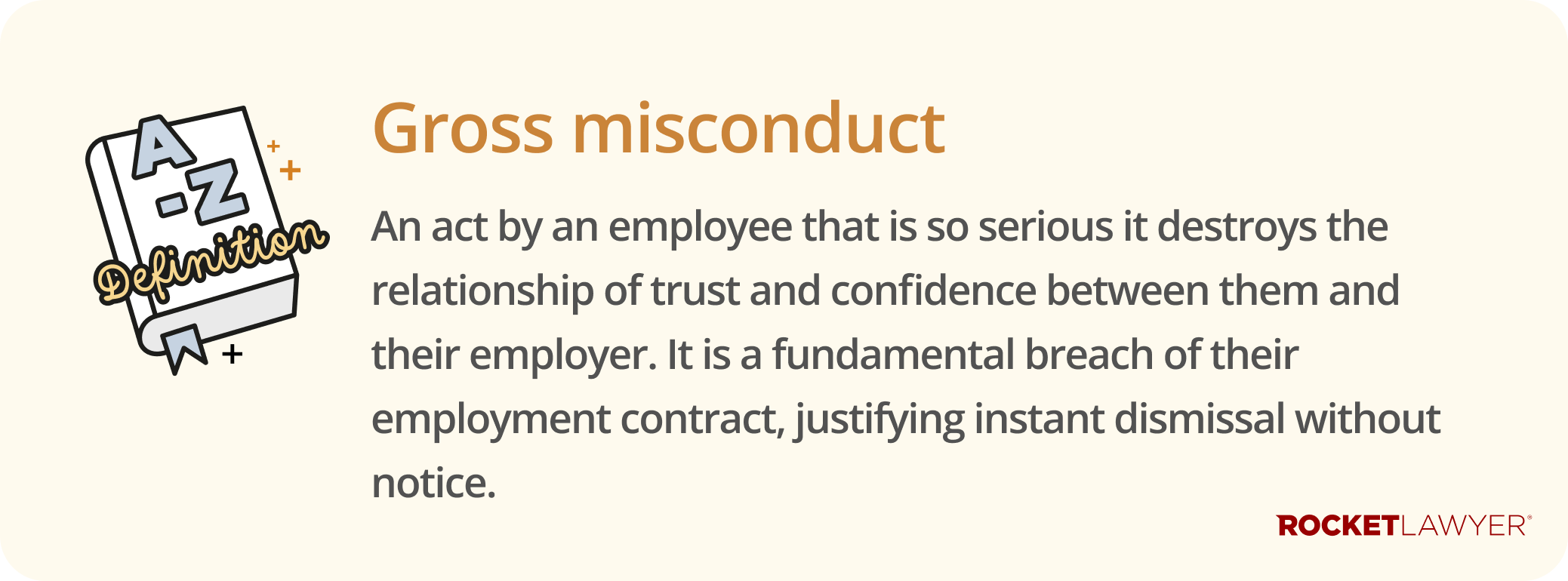
Gross misconduct is actions or behaviours displayed by an employee that are so bad (ie extreme or abnormal) that the employer cannot be expected to employ them anymore. Such conduct is so serious that it undermines the mutual trust and confidence between the employee and their employer and seriously breaches the employment contract.
What's the difference between misconduct and gross misconduct?
It’s important to distinguish between misconduct and gross misconduct.
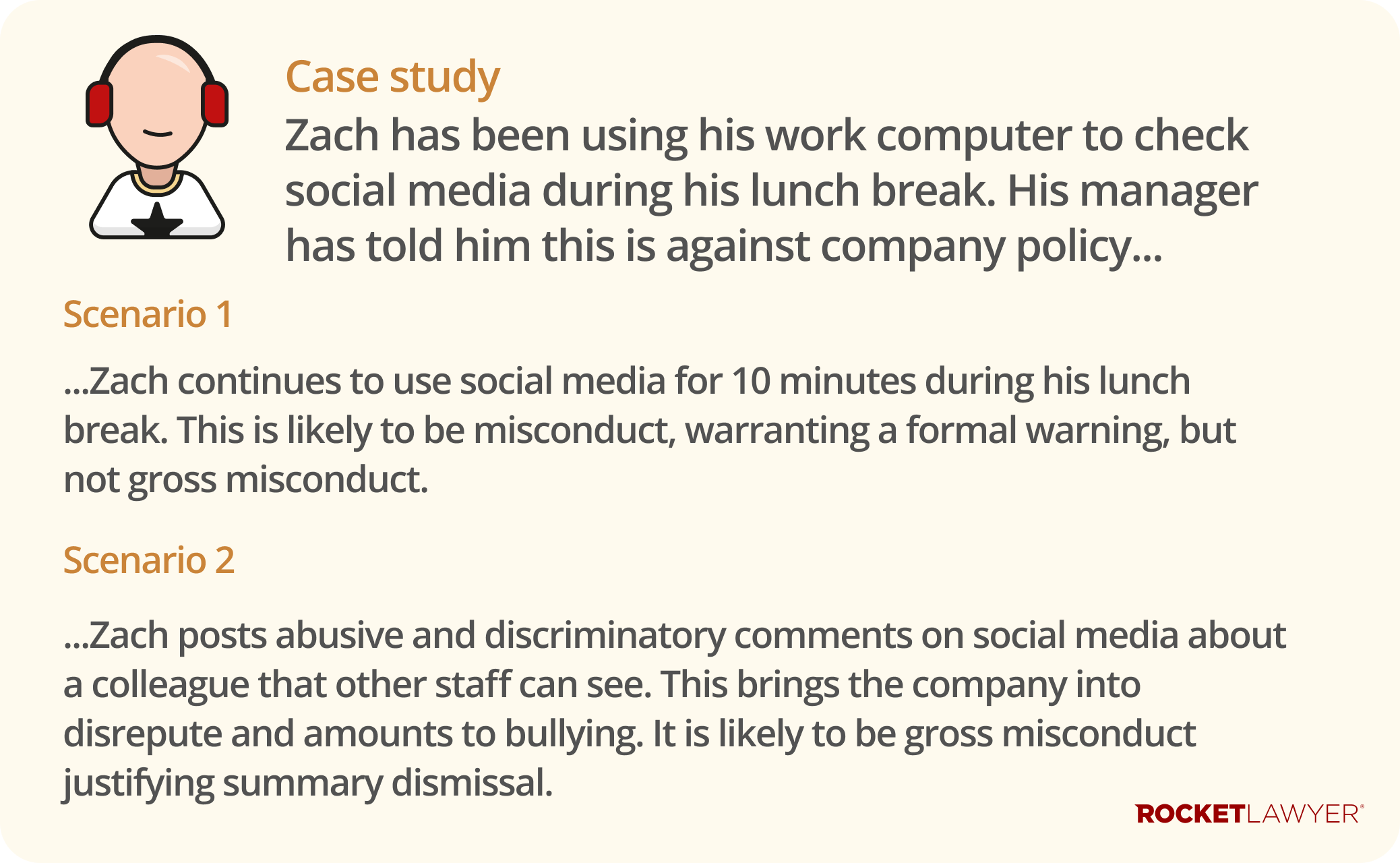
Misconduct is unacceptable behaviour that breaches workplace rules but isn't serious enough to destroy the employment relationship. Examples include occasional lateness or minor negligence. This is typically dealt with through warnings as part of a formal disciplinary process.
Gross misconduct, on the other hand, is so severe that a single act can justify dismissal. It represents a complete breakdown of the employment relationship. While all gross misconduct is misconduct, not all misconduct is gross.
What are examples of gross misconduct?
Whether an employee's behaviour amounts to gross misconduct will always depend on the specific circumstances, including the employee's role and your organisation's rules. What is considered gross misconduct in one job might not be in another.
Because of this, it’s crucial to provide clear examples of what you consider gross misconduct in all Employment contracts, your Disciplinary procedure, and/or an Employee handbook. This helps ensure employees know what behaviour is unacceptable and could lead to them losing their job without notice.
Common examples of gross misconduct
Certain behaviours are almost always considered gross misconduct because they fundamentally break the employment relationship. These include:
-
theft or fraud (eg making a fraudulent expenses claim)
-
physical violence or threatening behaviour
-
serious insubordination (eg deliberately refusing to follow a reasonable and lawful instruction)
-
being under the influence of alcohol or illegal drugs at work (except alcoholism or drug addiction, which may be more suitably dealt with as a capability issue)
-
serious breaches of health and safety rules that endanger others
-
unlawful discrimination, bullying, or harassment
-
causing significant damage to the employer’s property through gross negligence
-
a serious breach of confidentiality (eg sharing sensitive commercial data with a competitor)
-
accepting or offering bribes
-
illegal activities and criminal acts, whether during or outside the course of employment
-
sabotage or other acts intended to harm the business
Potential grey areas
Some actions may or may not be gross misconduct, depending on the context. For these situations, it's crucial that your policies clearly set out when the behaviour will be considered gross misconduct. Examples include:
-
downloading or viewing pornography - this is often gross misconduct, but its seriousness can depend on whether it was a one-off accident or repeated behaviour
-
downloading software or using personal software - where this introduces a risk of viruses or breaches data security, it could be gross misconduct. Your IT policy should be clear on this
-
misusing confidential information or setting up a competing business - the severity depends on the nature of the information and the potential damage to your business
-
misuse of the employer’s internet or social media - bringing the employer into disrepute online could be gross misconduct, but minor personal use of the internet during a lunch break is unlikely to be
-
swearing at work - the context is key. A heated exchange in a factory might be viewed differently from a staff member swearing at a customer
Actions unlikely to be gross misconduct
It's also important to recognise what doesn't typically count as gross misconduct. These issues should usually be handled through other means, such as informal conversations, training, or formal performance management, rather than instant dismissal. Examples include:
-
poor performance or capability issues
-
occasional lateness
-
minor mistakes or errors in judgment
-
a poor attitude or difficulties with colleagues that don't amount to bullying or harassment
-
poor personal appearance
-
minor negligence or substandard work
How to dismiss an employee for gross misconduct
Even when an allegation is serious, you must follow a fair and reasonable process before making any decision. Rushing to judgment is a common mistake that can lead to a successful unfair dismissal claim. The process should always follow the Acas Code of Practice on disciplinary and grievance procedures.
1. Suspend the employee (if necessary)
If the situation is serious, you may need to suspend the employee while you investigate, using a Suspension letter. This should be a neutral act, not a punishment, to protect the investigation, the business, or other employees. The suspension must be on full pay and for as short a time as possible.
2. Investigate the allegation
You must carry out a fair and objective investigation to establish the facts. This could involve gathering evidence (eg emails, CCTV footage) and interviewing the employee and any witnesses. The goal is to determine if there is a case to answer.
3. Hold a disciplinary hearing
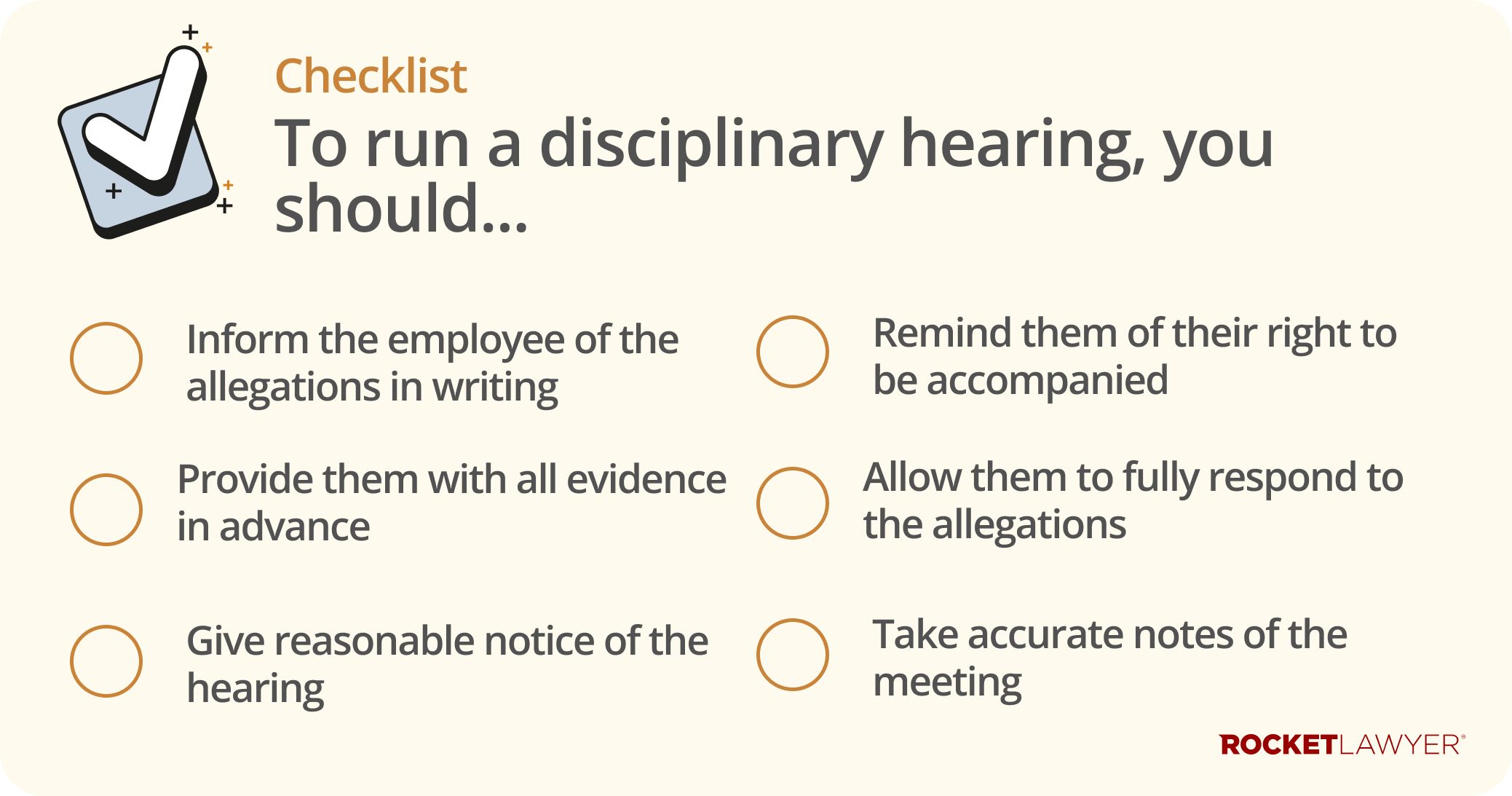
If your investigation shows evidence of gross misconduct, use an Invitation letter to a disciplinary hearing for misconduct to invite the employee to a disciplinary meeting. At the hearing, present the evidence and give the employee a full opportunity to respond and present their own case. For more information, read How to run a disciplinary hearing.
4. Confirm the decision
After the hearing, take time to consider all the evidence before making a final decision. You must inform the employee of your decision in writing. If you decide on summary dismissal, you should clearly explain the reasons. Use a Gross misconduct dismissal letter for this. You must also give the employee the right to appeal against your decision.
5. Consider data protection
The dismissal process involves processing the employee’s personal data, and you should tell employees the types of data you might collect about them and what you’ll do with it in an Employee privacy notice. For more information, read Data protection and employees.
For detailed information on the correct steps to follow, read Disciplinary process.
What are the legal risks of getting it wrong?
Dismissing an employee without a valid reason or without following a fair procedure can lead to significant legal claims at an employment tribunal.
It's important to ensure that you only consider summary dismissal for gross misconduct where this is a reasonable and proportionate response in the circumstances. Furthermore, you should follow the correct procedure (see above) and allow the employee to respond to any allegations.
Unfair dismissal
If an employee has at least two years of service, they are protected from being unfairly dismissed. A dismissal can be unfair if you don't have a fair reason or if you fail to follow a fair process. If a tribunal finds a dismissal was unfair, it can order you to pay compensation. An employee can claim unfair dismissal if they were summarily dismissed for something that doesn't actually amount to gross misconduct. For more details, read Unfair dismissal.
Wrongful dismissal
Wrongful dismissal is a breach of contract claim that any employee can make, regardless of their length of service. It happens when you dismiss someone in breach of their contract; for example, by not giving them their required notice. If you summarily dismiss an employee for a reason that doesn’t legally amount to gross misconduct, you have breached their contract by failing to give notice. For more information, read Wrongful dismissal.
If you need to create or update your policies, you can use an Employee handbook or a stand-alone Disciplinary procedure. Don't hesitate to Ask a lawyer if you have any questions about a specific situation.