Preparing to let your property
Whatever the reasons for letting out your property, here are some practical points to get you started:
-
if you have a mortgage on the property, do you have a buy-to-let mortgage or consent to the letting from your mortgage provider?
-
if you own the property under a long lease, do you have approval for the letting from your freeholder?
-
are you going to use an agent to market the property? For a fee, they can help you with your landlord responsibilities. Make sure any agent carries the 'Safe Agent' kitemark
The property
Once you are ready to move ahead with letting, there are a number of important legal requirements and landlord responsibilities relating to the property (also known as the ‘dwelling’ in Wales) that must be considered:
-
if the property is self-contained, have you got an energy performance certificate (EPC)? This certificate compares the property’s current and potential energy efficiency and carbon dioxide emissions. For more information, read Energy performance certificates (EPCs)
-
does the property have all required smoke detectors and carbon monoxide alarms?
-
have you checked that all gas appliances and equipment have been fully serviced by a registered engineer? You must carry out a gas safety check every 12 months. For more information, read Legal obligations of a landlord
-
are all gas safety records kept in a safe and secure place? You must provide your tenants with an annual gas safety certificate. For more information, read Legal obligations of a landlord
-
has all the electrical wiring been checked and safety approved by a qualified electrician? Is an Electrical Installation Condition Report (EICR) available? For more information, read Legal obligations of a landlord
-
have you updated your Local Authority council tax department that the property will be let?
-
have you spoken to your insurance provider? If you don’t let your insurance provider know you are letting your property, you may not be covered in the event of damage, fire, or theft at the property
-
have you decided what will be included in the letting? It is always important to prepare an Inventory of all the furniture, fixtures, and fittings in the property. Note that in Wales, an inventory must be provided to prospective contract holders within 14 days of them moving in. For more information, read Occupation contracts in Wales
-
do all the furniture, fixtures, and fittings at the property meet the safety guidelines? As a general guide, any furniture made before 1988 is unlikely to meet the standard. For more information, read Legal obligations of a landlord
-
is the property accessible? If a tenant has a disability, a landlord should consider any reasonable adjustments that the tenant requests
Can I charge tenants any additional fees?
Since 2019, the Tenant Fees Act legislation has been in place, banning landlords and agents from charging tenants and prospective tenants certain fees. It is designed to restrict the kinds of payments that landlords and letting agents can charge to tenants in connection with the letting of a property. This includes things like credit checks, admin fees, or cleaning services.
The law also sets out strict regulations for the treatment of holding deposits and cleaning costs.
The following is an exempted list (ie the fees that are permitted):
-
rent
-
utilities and council tax - if this is included within the tenancy agreement
-
a refundable tenancy deposit - capped at no more than five weeks’ rent where the annual rent is less than £50,000 or six weeks’ rent where the total annual rent is £50,000 or above
-
a refundable holding deposit to reserve the property - capped at a week’s rent
-
changes to the tenancy requested by the tenant - capped at £50 or reasonable costs incurred if higher
-
early termination of the tenancy requested by the tenant
-
defaults by the tenant - such as fines for late payment of rent and replacement of a lost key/security device, where required under a tenancy agreement
Any other fees that are not on this permitted list are banned.
In England, under the Renters' Rights Act 2025, it's also illegal to invite or encourage 'rent bidding' where tenants offer more than the advertised rent.
For more information, read Tenant fees.
How much rent should I charge?
In letting out the property, you need to decide what level of rent you will charge. This will involve asking yourself:
-
do you know an acceptable level of rent? Look at similar-sized properties available to rent nearby
-
what will the rent include? Will it be just the rent, or will the tenant also pay all utility bills and council tax, or will the rent include these extra costs?
-
will you be taking a deposit? If a deposit is taken, there are laws concerning how the tenant’s money is kept and prescribed information that must be given to the tenant
-
do you have a rent book, or similar document, to keep track of payments made and payments due? Consider using a Rent receipt to confirm (part) receipt of rent paid to you
Note that specific rules apply to increasing the rent, which are different across England and Wales.
What type of tenancy agreement should I use?
Different types of tenancy are available depending on what you want and what you have to offer. You will need to consider whether you:
-
will be living at the property
-
are letting the property to a tenant or your family members
-
want to let individual rooms to a number of different tenants
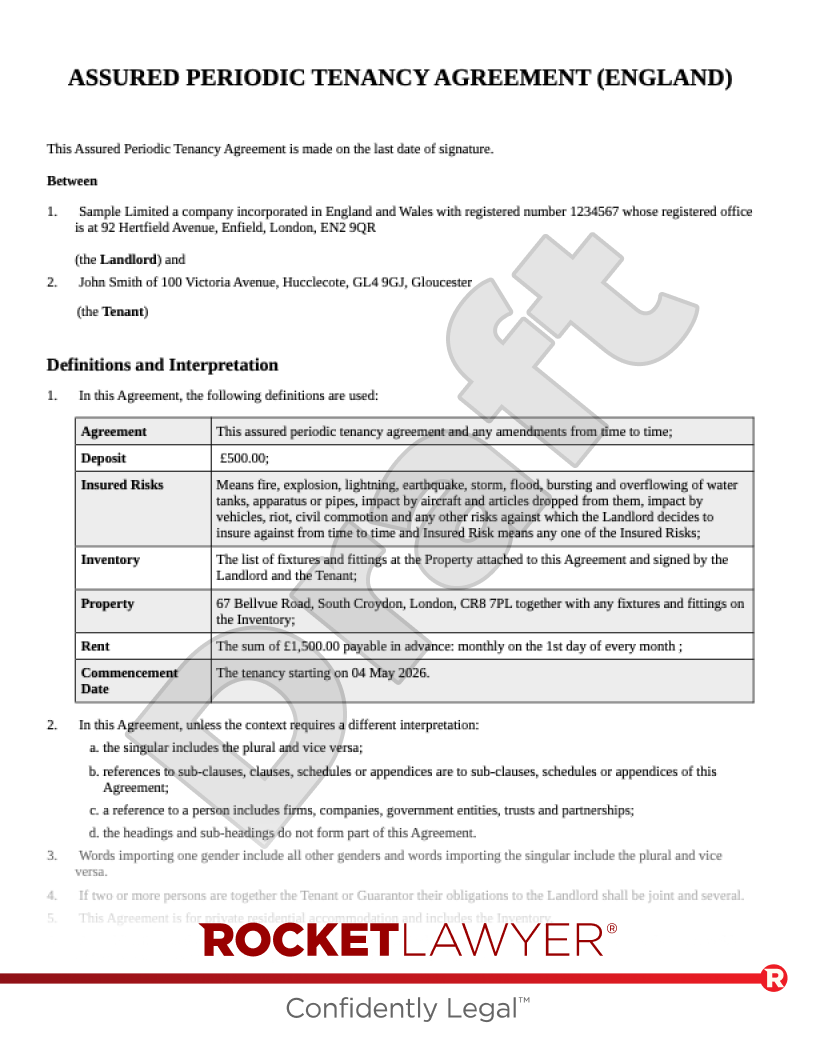
In England, under the Renters’ Rights Act 2025, assured shorthold tenancies (ASTs) have been replaced by assured periodic tenancies (APTs). These tenancies are rolling, meaning they do not have a fixed term and continue until ended in accordance with the law.
In Wales, under the Renting Homes (Wales) Act 2016, most private residential tenancies are occupation contracts. These can be for a fixed-term or rolling.
Whichever agreement you choose, it is a contract between you and the tenant(s). It will contain rights for both of you and record the rent to be paid.
You can make your rental documents using Rocket Lawyer’s various Tenancy agreements. For more information on the different types of residential letting documents, read Residential tenancies and Residential tenancies in Wales. Do not hesitate to Ask a lawyer if you have any questions or concerns.