What are a tenant's obligations in Scotland?
A tenant's obligations are set out in their Private residential tenancy agreement. While you can negotiate the exact terms, there are some key responsibilities that a tenant is expected to uphold. It's important for tenants to stick to these terms to avoid any disputes or potential eviction.
A tenant's main responsibilities usually include:
-
paying rent on time
-
taking good care of the property and keeping it clean
-
reporting any damages or need for repairs to the landlord promptly
-
carrying out minor property maintenance (eg changing light bulbs)
-
not causing damage to the property, not acting antisocially, or causing a nuisance to neighbours
-
allowing the landlord reasonable access for inspections and repairs
-
informing the landlord if they're going to be away from the property for a long period (eg more than 14 days)
-
keeping the property reasonably heated and ventilated (to avoid dampness and frozen pipes)
-
reporting damages to the property and repairs needed as soon as possible
-
giving at least 28 days’ notice if they want to leave the property
-
getting the landlord's permission before subletting, decorating, or keeping pets
Tenants also have important rights. For more information, read Tenants’ rights in Scotland.
What are a landlord's obligations in Scotland?
Just like tenants, landlords have responsibilities they must follow, which should be detailed in the tenancy agreement. These obligations are designed to ensure the property is safe, habitable, and legally compliant. Failing to meet these responsibilities can lead to disputes and legal action from the tenant.
Some of a landlord's main duties include:
-
registering as a landlord with the relevant local authority
-
providing the tenant with a copy of the tenancy agreement and its supporting notes
-
protecting the tenant's deposit in a government-approved scheme and providing certain prescribed information
-
ensuring the property is safe and meets legal standards (eg by having valid gas and electrical safety certificates)
-
giving the tenant the correct amount of notice (usually 48 hours) before visiting the property
-
installing smoke, heat, and carbon monoxide alarms
-
where applicable, applying for and maintaining an HMO licence
-
giving the necessary notice to tenants when ending the tenancy based on the ground for eviction
For a complete overview of a landlord's legal duties, read Legal obligations of a landlord in Scotland.
Who is responsible for repairs under a private residential tenancy?
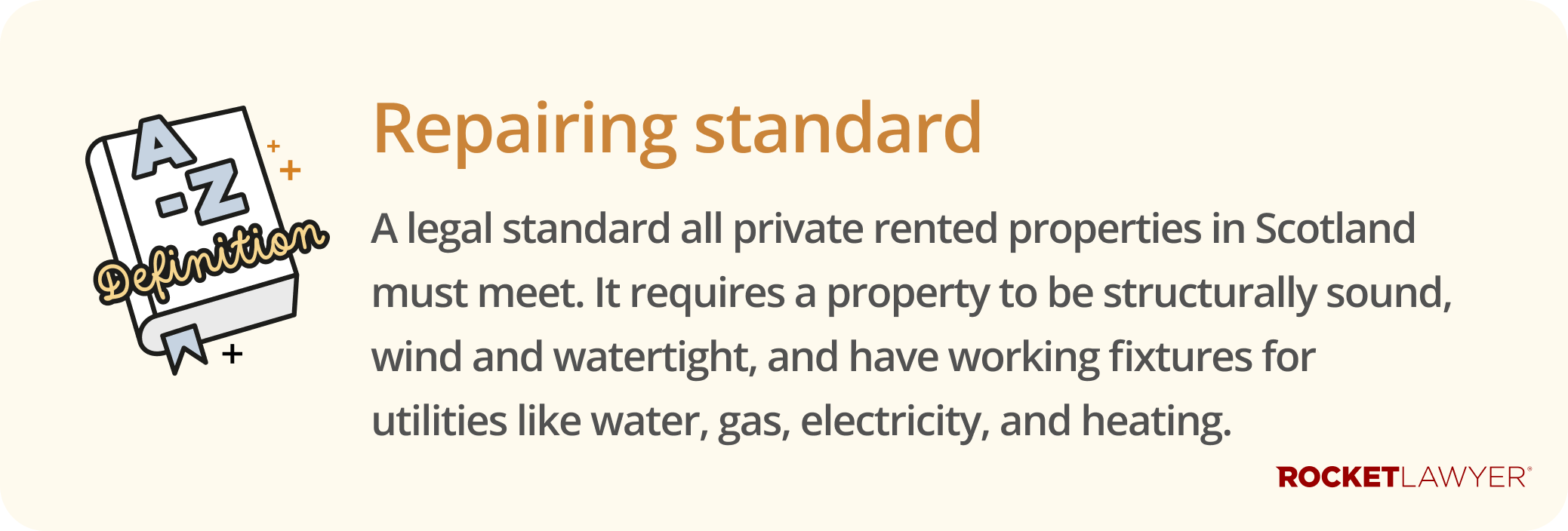
Generally, the landlord is responsible for most repairs to the property. This is because, by law, landlords must ensure that a rental property meets the repairing standard. This means the property must be wind and watertight, and that installations for things like water, gas, electricity, and heating are in reasonable working order.
This means a landlord must carry out repairs to:
-
the structure and exterior of the property (eg walls, roof, windows, and drains)
-
installations for supplying water, gas, and electricity (eg pipes, wires, and boilers)
-
any fixtures, fittings, and appliances that they provided as part of the tenancy (eg a fridge or washing machine)
Tenants are usually responsible for minor repairs that come from general wear and tear and for repairing any damage they or their visitors have caused.
Landlords are not typically responsible for property improvements (eg redecorating), unless they're needed to meet the repairing standard. If a tenant wants improvements to be made, they are typically responsible for the work and the costs. This can be risky for tenants, as they won't get their money back if they move out. Tenants should always get their landlord’s permission in writing before making any changes to the property.
Note that disabled tenants may be entitled to help with improvements or repairs under the scheme of assistance. For more information, see Citizens Advice Scotland.
How should tenants report repairs?
Tenants should tell their landlord about any required repairs as soon as they become aware of them. If a tenant doesn't report an issue, they could be held responsible for any further damage it causes.
It’s best to report repairs in writing (eg by email) so there's a clear record of communication. When reporting an issue, tenants should:
-
describe what needs to be fixed
-
explain what damage it has caused
-
include photos of the problem if possible
How long should repairs take?
Landlords must carry out necessary repairs within a reasonable time. What's 'reasonable' depends on how urgent the repair is. For example, a broken boiler in winter should be fixed much faster than a dripping tap.
What if the landlord doesn’t comply with their repair obligations?
If a landlord doesn't carry out repairs in a reasonable time, the tenant can apply to the First-tier Tribunal for Scotland (Housing and Property Chamber). The tribunal can order the landlord to do the repairs.
Before applying, the tenant should send the landlord a final letter in writing, warning them that they plan to take the issue to the tribunal if the work isn't done. If the landlord still doesn't act, the tenant can apply to the tribunal. This involves filling out an application and sending it with evidence like their tenancy agreement, copies of letters sent to the landlord, and photos of the problem.
If the problem is affecting the tenant's health, they can also contact their local council's environmental health department. They have the power to order a landlord to fix issues that are a health risk.
A tenant can also apply to the tribunal for a rent abatement (ie a rent reduction) if the lack of repairs has:
-
cost them money
-
affected their health
-
damaged their belongings
-
caused them major inconvenience (eg they couldn't use parts of their home)
How can landlords maintain a good relationship with their tenants?
It's always a good idea for landlords and tenants to have a positive, professional relationship, as this can help prevent problems from developing. To help build this relationship, landlords should:
-
treat tenants respectfully and without discrimination
-
be clear about everyone's responsibilities under the Tenancy agreement
-
stay on top of regular property maintenance and carry out repairs promptly
-
respond to tenants' issues quickly
-
maintain clear communication (eg by agreeing on the best way to stay in touch)
For more detailed information, read Tenants' rights in Scotland and Legal obligations of a landlord in Scotland. Note that this guidance is for private residential tenancies; the rules may differ for other types, like assured or public-sector tenancies. If you have any questions or concerns, do not hesitate to Ask a lawyer.