What is a break clause?
A commercial break clause is a specific term included in a Commercial lease. It gives either the landlord, the tenant, or both the option to end the lease early, before the full lease term has finished. If a lease doesn't have a break clause, neither party can end it early unless the other agrees.
Break clauses must be negotiated and agreed upon before the lease is signed. They often specify a fixed break date (ie a specific date on which the break clause can be triggered, for example, 'on the fifth anniversary of the lease') or can be rolling (ie a date from which point forward the break clause can be triggered, for example, 'at any time after the third year').
Should I include a break clause in my lease?
Whether a break clause is a good idea depends on your position.
For tenants, a break clause offers vital flexibility. If your business needs change (perhaps you outgrow the space or need to downsize), a break clause provides an exit strategy. In an uncertain market, it also provides significant leverage to renegotiate rent or other terms.
For landlords, a break clause can be a risk, as it can lead to an unexpected 'void period' with no rental income. However, offering a tenant break clause can make the property more attractive in a competitive market. A landlord-only break clause can also be useful if you plan to redevelop the property or if you expect market rents to rise significantly.
How do I use a commercial break clause?
To successfully use a break clause (ie 'exercise the break’), you must follow the conditions set out in the lease exactly. Courts interpret break clauses very strictly; any mistake, no matter how small, can make the break invalid and trap you in the lease.
Check your dates
Your lease will specify when the break can be used. This might be a single, fixed date (eg 'on 29 September 2028') or a 'rolling' break (eg 'at any time after the third year by giving six months' notice').
Serve the break notice correctly
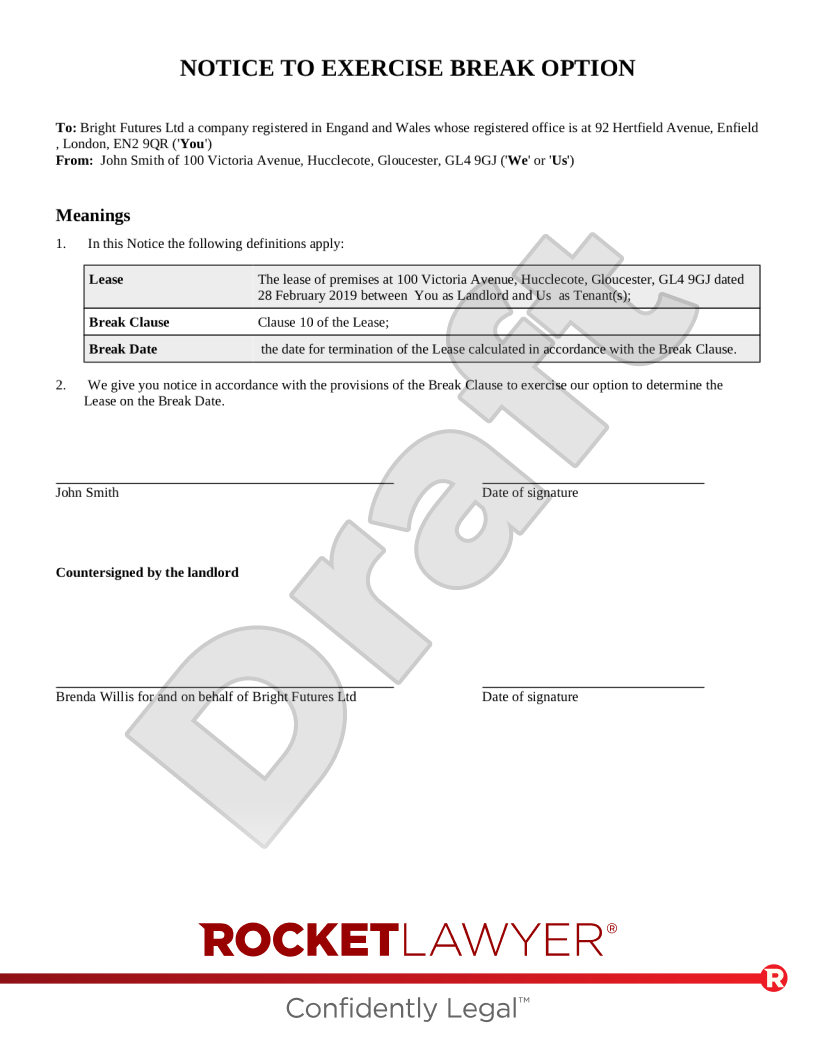
The most important step is serving a formal notice (eg using a Break notice). The lease will specify:
-
the notice period - how much notice you must give
-
the format - whether it needs to be in a specific form
-
how it's served (ie the method of service) - for example, it might have to be sent by registered post
-
where it should be sent - exactly which address must be used (eg the landlord's registered office, not their managing agent)
You must follow these instructions perfectly. It's good practice for tenants to check the landlord's current details with the Land Registry, Companies House, or Registers of Scotland to ensure you're serving the notice on the correct legal entity.
Always get proof of service (eg a post office receipt for registered post). If you have any doubts about the method, consider using multiple service methods to be safe. If your landlord is an overseas company, allow plenty of extra time for service.
Note that once a break notice is served, it cannot be withdrawn, even if you change your mind, unless the other party agrees.
What are the common conditions and pitfalls?
Most break clauses (especially for tenants) are conditional. This means the break is only valid if you have met certain obligations by the break date. This is a major area for legal disputes.
Paying all rent
The lease will almost always require the tenant to have paid 'all rent' or 'all sums due'.
Be careful: this can be a trap. It may include not just the principal rent but also service charges, insurance, VAT, and even interest on past late payments. Settle all invoices as soon as you get them and ask your landlord for a written confirmation that all payments are up-to-date.
A common dispute is paying rent for the final quarter. If your break date is in the middle of a rent quarter, the lease may still require you to pay the full quarter's rent to validly exercise the break. When negotiating your lease, try to add a term that requires the landlord to refund any rent paid for the period after the break date.
Complying with tenant obligations
This condition may require you to have 'reasonably' or 'materially' complied with all your lease obligations, particularly concerning the state and condition of the property.
This is often the most difficult condition to meet. Before the break date, it's wise to hire a surveyor to conduct a compliance audit. This will inform you of any breaches of your repair obligations and provide you with time to rectify them. Your landlord should be able to provide a schedule of dilapidations (ie a list of repair works needed). It's best to complete or agree on these works before the break date.
Giving vacant possession
The tenant must leave the property completely empty (to give vacant possession). This means:
-
no people (including subtenants)
-
no belongings, rubbish, or stock
-
all tenant-installed fixtures are removed (unless the lease says otherwise)
-
keys are returned
Essentially, there must be nothing to interfere with the landlord’s immediate use of the property. Be aware of any work you need to do (eg removing partition walls) to return the property to its original state, as required by your lease.
What happens if I fail to meet a condition?
If your notice is invalid or you fail to meet a condition (eg you're a day late with a rent payment or you leave behind rubbish), the break fails. The lease continues as if the notice was never sent.
You will remain responsible for the lease (including paying rent and all other obligations) until the next break date (if there is one) or until the full term of the lease ends. This can be a very expensive mistake.
Can we agree to a settlement instead?
Yes. If meeting all the conditions (especially repairs) is difficult or uncertain, it's possible to negotiate a financial settlement with your landlord.
This 'buy-out' agreement releases the tenant from the pre-conditions (usually in exchange for a cash payment). This provides certainty for both parties that the lease will end on the break date. This should be negotiated and formally documented as early as possible.
Exercising a break clause is a high-risk area of property law, where even small mistakes can have serious financial consequences. Do not hesitate to Ask a lawyer if you have any questions about your lease or a break clause. If you're ready to serve a notice, you can make a Break notice.