What are commercial property repair obligations?
Commercial property repair obligations are the responsibilities set out in a lease that detail who must repair and maintain the property. These duties can range from minor internal decorations to major structural repairs.
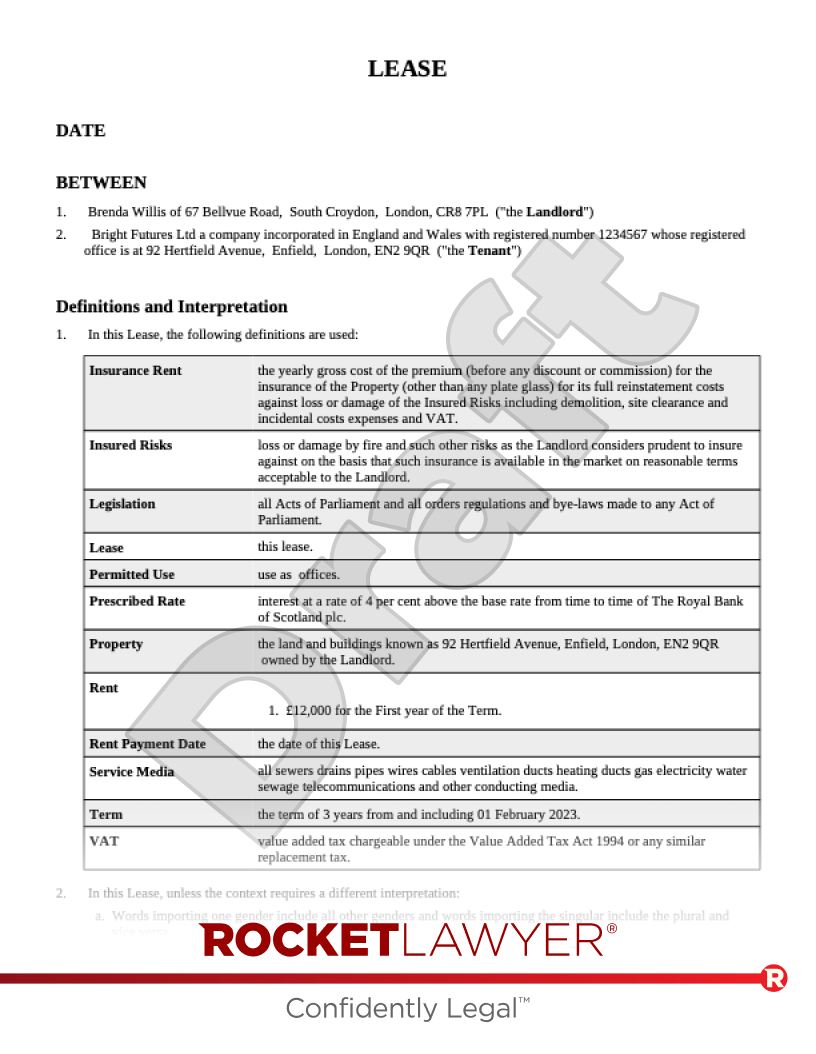
The Commercial lease is the most important document for defining these responsibilities. If the lease is unclear, there can be serious disagreements. Most modern leases aim to pass as much responsibility as possible onto the tenant, especially through a full repairing and insuring (FRI) lease.
Who is responsible for repairs?
This depends almost entirely on what you agree in the lease. Responsibilities are split between the tenant and the landlord.
The tenant's responsibilities
In most commercial leases, the tenant has the primary responsibility for repairs. This usually includes:
-
the internal parts of the property
-
shopfronts, windows, and doors
-
fixtures and fittings (eg boilers, air conditioning, or plumbing) that only serve the tenant's property
-
decorating the inside of the property at regular intervals
In a FRI lease, the tenant's responsibility extends to all repairs, including the structure and exterior (like the roof and foundations). If the lease is for only part of a building (eg one floor in an office block), the tenant will be responsible for their part and will also pay a service charge to the landlord to cover repairs to the shared areas.
The landlord's responsibilities
Unless the tenant has an FRI lease for the whole building, the landlord is typically responsible for repairing:
-
the main structure and exterior of the building (eg the roof, foundations, and external walls)
-
common or shared areas (eg lifts, staircases, and car parks)
-
any systems or services that serve the whole building
Even in an FRI lease, the landlord is usually still responsible for arranging the building's insurance (though the tenant pays the premium).
What is a full repairing and insuring (FRI) lease?
A FRI lease is the most common type of commercial lease. It places the maximum responsibility on the tenant.
Under an FRI lease, the tenant is responsible for all costs of repairing and maintaining the property, including the structure. The tenant also pays the costs of the building's insurance. This makes the property a hands-off investment for the landlord, as the tenant bears all running costs.
What does 'keep in repair' mean?
This is a key phrase to look out for in an FRI lease. Many tenants believe an obligation to 'keep' the property in repair only means they must fix damage that occurs during their tenancy.
Legally, this isn't true. A duty to 'keep' a property in repair also includes an obligation to 'put' it into repair first. This means that if you sign a lease for a property that is already in poor condition, you could be immediately responsible for fixing all the pre-existing problems at your own cost.
What about inherent defects?
A key risk for tenants in an FRI lease is liability for inherent defects. These are fundamental flaws in the building's original design or construction (eg a badly designed roof that always leaks, or faulty foundations). Unless the lease specifically excludes them, an FRI lease can make the tenant responsible for fixing these major, expensive issues, even though the tenant did not cause them.
How can repair disputes be avoided?
The best way to prevent disputes is to have a clear, comprehensive Commercial lease that precisely defines who is responsible for every part of the property. In England and Wales, professionals often follow industry guidance like the Royal Institution of Chartered Surveyors (RICS) Code for Leasing Business Premises, which aims to ensure leases are clear and fair, helping to prevent disagreements later on.
For tenants, the most effective tool to limit liability and avoid future arguments is a schedule of condition. This is a detailed report, usually prepared by a surveyor, that records the exact condition of the property with text and photographs before the lease starts. This report is then attached to the lease.
This changes the tenant's repair duty from 'keeping it in good repair' to 'keeping it in no worse condition than as shown in the schedule of condition'. This prevents the landlord from forcing you to pay for fixing pre-existing damage or to return the property in a better state than it was when you moved in.
How do health and safety laws affect repair obligations?
Separate from the repair duties you agree in the lease, certain health and safety laws also impose specific maintenance and repair obligations on both landlords and tenants. These are legal duties that you can't contract out of.
Gas and electrical safety
The landlord is responsible for ensuring any gas appliances they provide are safely maintained and have an annual gas safety check. They must also ensure the fixed electrical installations (eg the wiring, sockets, and fuse box) are safe when the lease begins.
The tenant is then responsible for maintaining these systems and for the safety of any electrical or gas appliances they install themselves.
Fire safety
This is a shared responsibility, and the law designates a responsible person for different parts of a building. This is the individual legally accountable for fire safety in that specific area. The:
-
tenant is usually the responsible person for the premises they actually occupy (eg their own office or shop). This means they are legally responsible for the fire safety of everyone in those premises
-
landlord remains the responsible person for all common areas (like shared hallways or lifts) and must also ensure the building's overall structural fire safety (eg fire escapes) is compliant
For more information on fire safety and the duties of the responsible person, read Conducting a fire risk assessment.
Asbestos
When it comes to asbestos, the responsibility is split. The landlord has a duty to find out if asbestos is present in the building (eg by getting an asbestos survey) and must provide this information to the tenant.
Once the tenant has this information, the legal responsibility to actually manage the asbestos typically passes to them. This person is known as the dutyholder, and in an FRI lease, this is the tenant. This legal duty to manage is a specific responsibility to monitor, maintain, and repair any asbestos-containing materials to keep them safe. Ask a lawyer for more information.
What happens if repairs aren't done?
When the lease ends, if the tenant hasn't met their repair obligations, the landlord can make a dilapidations claim for the losses they've suffered as a result.
The landlord will serve a schedule of dilapidations, which lists every breach (eg 'stained carpets' or 'broken window') and the cost to fix it. This is a claim for damages (ie money), not a demand for the tenant to come back and do the work.
Dilapidations in England and Wales
In England and Wales, under the Landlord and Tenant Act 1927, a landlord's claim for disrepair is limited by a statutory cap. This works in two ways:
-
the claim cannot be more than the fall in the property's value caused by the disrepair. This is often much less than the total cost of the repairs
-
the landlord cannot claim anything for repairs if they plan to demolish the building or make such significant changes that the repairs would be pointless
Both parties must also follow the formal Dilapidations Protocol, which sets out a strict timetable for exchanging information and encourages alternative dispute resolution (ADR), such as mediation, to settle the dispute without going to court.
Dilapidations in Scotland
The rules in Scotland are very different, as there is no statutory cap on dilapidations claims. The tenant's liability depends entirely on the exact wording of the lease:
-
damages claim - if the lease is silent, the landlord can make a common law claim for damages. They must prove the actual loss they have suffered, which might be the cost of the works or the drop in the property's value
-
payment clause - most modern Scottish leases contain a payment clause requiring the tenant to pay the full estimated cost of the repairs listed in the schedule, even if the landlord has no intention of actually doing the work
Unlike in England and Wales, there is no binding protocol in Scotland. To avoid court, parties can agree within the lease itself to use arbitration to resolve any disputes.
If you need to make or review your lease, you can use our Commercial lease. Use our Bespoke drafting service if you need a lease drafted or amended. If you have questions about your repair obligations or are in a dispute, you should Ask a lawyer.