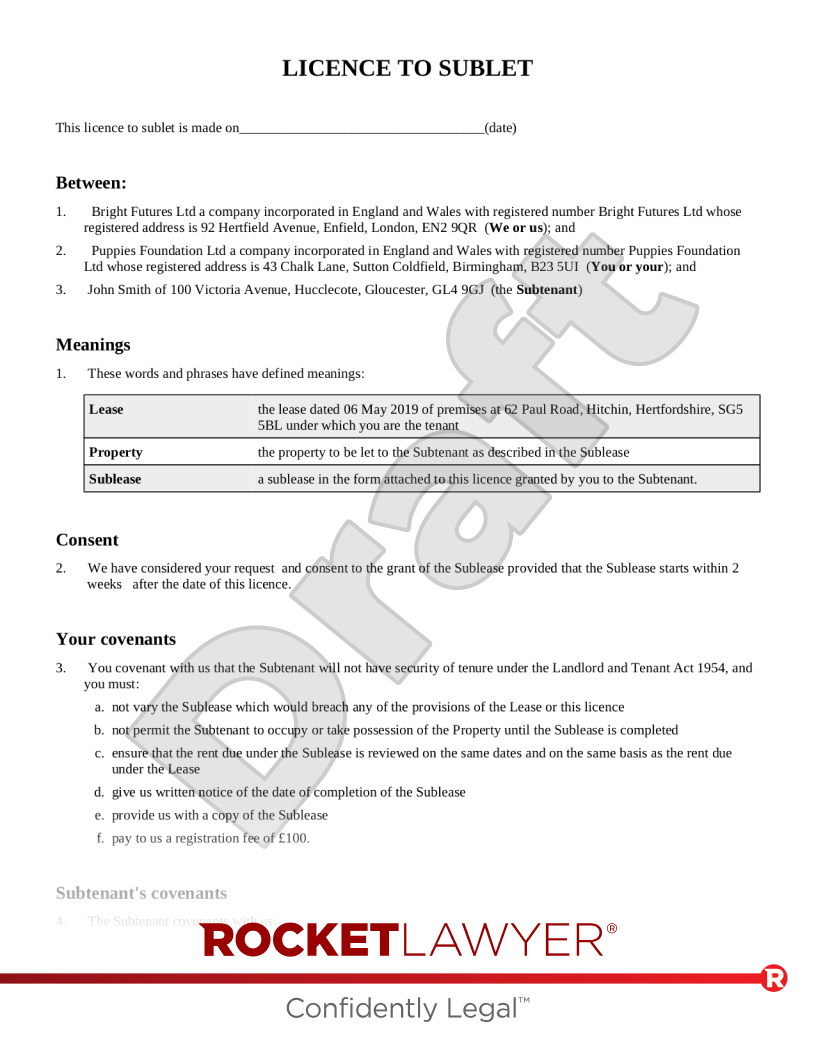
What is subletting business premises?
Subletting is when an existing tenant (ie the original tenant or lessee) lets all or part of the property they're renting to a new, third-party tenant (ie the subtenant or sublessee). The original tenant effectively becomes the landlord for the subtenant.
This creates a new lease, known as a sublease (or underlease), between the original tenant and the subtenant. However, the original lease between the landlord (ie the head landlord) and the original tenant (known as the head lease) continues to exist. The original tenant is still fully responsible for all the obligations under the head lease, including paying rent to the head landlord.
When can a tenant sublet a commercial property?
Your right to sublet depends entirely on what your original Commercial lease says. You must check the lease terms carefully before you do anything else. Generally, you'll find one of three situations:
-
subletting is forbidden - the lease may contain an absolute prohibition, which means you can't sublet under any circumstances
-
subletting is allowed with the landlord's consent - this is the most common situation. The lease will usually state that the landlord's consent must not be unreasonably withheld. A landlord would likely be acting unreasonably if they refused consent based on grounds that have nothing to do with the landlord-tenant relationship (eg personal dislike of the proposed subtenant)
-
subletting is allowed without restriction - this is very rare in commercial leases
How do you get permission to sublet?
If your lease allows you to sublet with your landlord's consent, you'll need to make a formal written request. This typically involves providing the landlord with details about the proposed subtenant so they can assess their suitability.
Vetting the subtenant
Before approaching your landlord, you should gather information from the potential subtenant to show they'll be reliable. This includes:
-
references - from previous landlords, banks, or trade partners
-
their proposed use of the property - to ensure it complies with the terms of the original lease
-
financial information - to prove they can afford the rent
You might also consider asking the subtenant for a rent deposit under a Rent deposit deed or a guarantor as extra security.
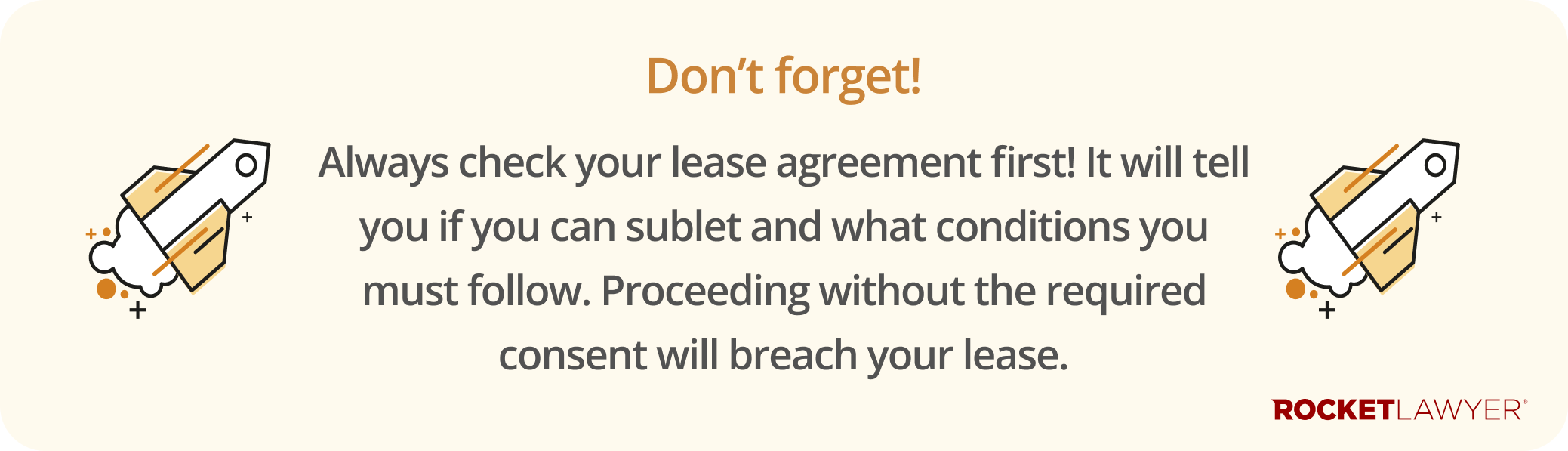
The licence to sublet
If the landlord agrees to the subletting, their formal consent is recorded in a legal document called a Licence to sublet. This document is signed by the landlord, you (the original tenant), and the new subtenant. It sets out the terms of the consent and ensures that all parties are aware of their rights and obligations. It doesn't replace the sublease itself, which is a separate agreement between you and your subtenant.
What's the difference between subletting and assigning a lease?
People often confuse subletting with assigning a lease, but they are very different. This is because:
-
subletting involves creating a new lease where you remain the tenant and act as landlord to a new subtenant
-
assigning involves transferring your entire interest in the lease to a new tenant, who takes your place completely. It involves a License to assign
For more information, read Assigning a business lease.
What are the pros and cons of subletting?
Subletting has different implications for the original tenant, the landlord, and the new subtenant. Before proceeding, it's a good idea to weigh the benefits and drawbacks.
For the original tenant
The main advantage for a tenant is generating rental income from unused space while keeping the original lease, which allows them to reoccupy the property later. However, the tenant remains fully responsible for paying the total rent to the landlord and for any lease breaches caused by the subtenant. They also have the added responsibility of managing the subtenant relationship.
For the landlord
For a landlord, the main benefit is that their property remains occupied and the rent continues to be paid by their original, vetted tenant. The drawback is the added complexity of having another party on the premises over whom they have no direct control. Any issues caused by the subtenant must be addressed through the original tenant.
For the subtenant
A subtenant often benefits from more flexible lease terms and potentially lower costs than if they rented directly from a landlord. The significant risk is that their sublease is tied to the original lease. If the original tenant breaches their lease and the landlord terminates it, the subtenant’s right to occupy the property ends automatically.
Are there different rules for subletting in Scotland?
While the core principles of subletting are similar across Great Britain, Scotland has a key difference regarding the length of the sublease.
In Scotland, it's possible for a tenant to sublet the property for the entire remaining period of their original lease. In England and Wales, a sublease must be granted for a shorter term than the original lease (for example, by one day). If a sublease in England or Wales is for the full remaining term, the law treats it as an assignment of the lease instead.
Other key aspects remain the same in Scotland. The original lease continues, and if it's terminated, the sublease will also end. The original tenant is still responsible for any breaches of the lease committed by their subtenant, and there is no direct legal relationship between the head landlord and the subtenant.
If you need to get your landlord's consent, you can make a Licence to sublet. To have a commercial sublease agreement drafted for your specific situation, you can use our Bespoke legal drafting service. For any other questions, don't hesitate to Ask a lawyer.