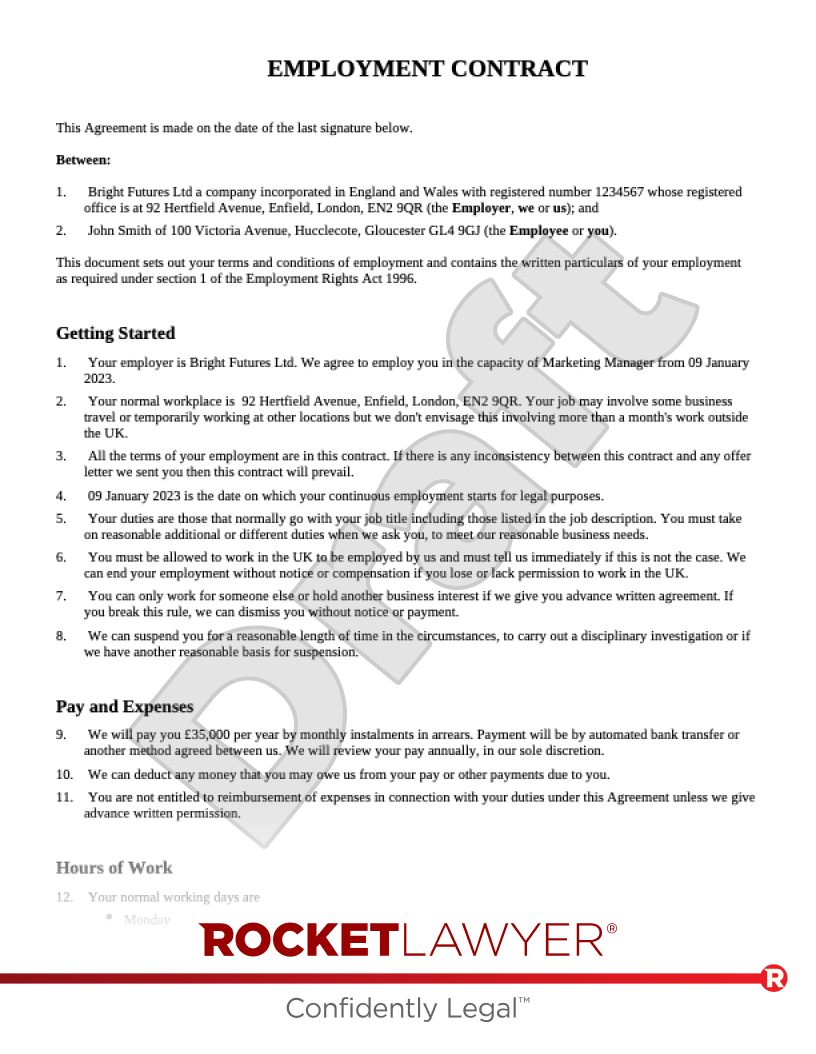
What are wages?
Wages are the payments you make to your staff for the work they do. This is usually a set amount paid weekly or monthly, often called a salary. It can also be an hourly rate.
Wages don't just include the basic pay. They can also cover other payments you make, like bonuses, commission, or holiday pay. It's important to set out exactly what's included in an employee's wages in their contract.
What's the difference between wages and a salary?
Although the terms are often used interchangeably, there's a technical difference:
-
a salary is a fixed amount paid to an employee, usually stated as an annual figure (eg £25,000 per year). This is then divided into regular pay instalments (eg monthly). It doesn't usually change based on the specific hours worked in that pay period
-
wages are payments based on the exact time a staff member has worked, typically calculated at an hourly rate (eg £19 per hour). The final pay packet will vary depending on the number of hours they worked
How much should wages be?
The amount you pay your staff is largely up to you, but it must be at least the legal minimum. This is known as the National Minimum Wage (NMW).
The NMW is the minimum amount you must pay most workers per hour. The specific rate depends on the worker's age. For workers aged 21 and over, this is called the National Living Wage (NLW), which is the highest rate.
You must check the current rates and make sure you're paying at least the correct minimum for all your staff. For detailed information on the different rates and who is entitled to them, read Minimum wage.
Under the Employment Rights Act 2025, a new government body, the Fair Work Agency (FWA), has been established. The FWA brings together existing regulatory authorities to oversee a range of employment rights, including the NMW. The FWA’s powers will include:
-
carrying out payment record inspections without prior notice
-
imposing financial penalties (eg fines) for breaches
-
publicly naming employers who fail to comply
For more information on the FWA’s enforcement powers, including what they can do if the NMW is not paid correctly, read Checklist for new employers.
How is pay agreed and communicated?
Generally, you and your staff member agree on the rate of pay. In some cases, it might be set by a collective agreement with a trade union.
You must give all employees and workers a written statement of employment particulars on or before their first day. This document must state their pay rate and how often they'll be paid. This written statement is often part of their main contract, like an Employment contract or Zero hours contract.
What about equal pay?
You must ensure you're providing equal pay. Staff have the right not to be paid less than someone else doing the same or similar work based on their sex, race or ethnicity, part-time status, or temporary status (eg as a fixed-term worker). This is discriminatory and can result in an employment tribunal.
When are wages paid?
Salaried employees (ie those who get an annual salary) are usually paid monthly. Staff paid by the hour (like casual staff) are often paid weekly or monthly, though some employers may pay bi-weekly.
The pay frequency (eg 'monthly' or 'weekly') must be clearly stated in the written statement of employment particulars.
Can the payment date be changed?
Employers can typically change employment terms (including when or how frequently someone gets paid). You should discuss the proposed changes with your staff and come to an agreement. Use a Change to employment terms letter agreement to record any changes in writing.
Failure to consult with affected staff and simply imposing the change can result in a breach of contract, giving the staff member a legal claim. For more information, read Changing employment terms.
What is a payslip?
A payslip is a written, itemised statement that shows an employee's total pay before and after any deductions. You must give a payslip to all your employees and workers (unless they're a contractor, freelancer, or in a specific role like the police service).
You have to provide the payslip on or before their payday.
Payslips can be used as proof of earnings, income tax paid, and pension contributions.
What information must be on a payslip?
Payslip must clearly show:
-
the employee's total pay before any deductions (ie their gross pay)
-
the total amount of their pay after all deductions (ie their net pay)
-
the amount of any deductions that change with each payslip (eg income tax and National Insurance (NI))
-
the number of hours they worked, if their pay changes based on the hours worked
The deductions for income tax and National Insurance are often made through HMRC's Pay As You Earn (PAYE) system. This is where you collect these taxes from your staff's pay and pay them directly to HMRC. You may also see an NI category letter on the payslip. Category A is the most common and the standard rate for most employees aged 21 or over and under the state pension age.
For more information on deductions employers can make, read Deducting employees' wages.
What about fixed deductions?
For deductions that don't change from one payday to the next (eg a season ticket loan repayment or trade union subs), you don't have to itemise them on every single payslip.
Instead, you can give your staff a separate, written statement that lists these fixed deductions. You must give them this statement before their first payslip and then provide an updated copy at least once a year.
For more information on deductions, read Deducting employees' wages.
How should I give payslips to staff?
Payslips can be given to your staff either as a physical paper document or in an electronic format (eg as a PDF by email or via an online portal). If you provide them electronically, you must make sure your staff can access them easily and securely.
If you need to make or update your employment documents, you can make an Employment contract or Zero hours contract. Do not hesitate to Ask a lawyer if you have any questions or concerns about wages and payslips.