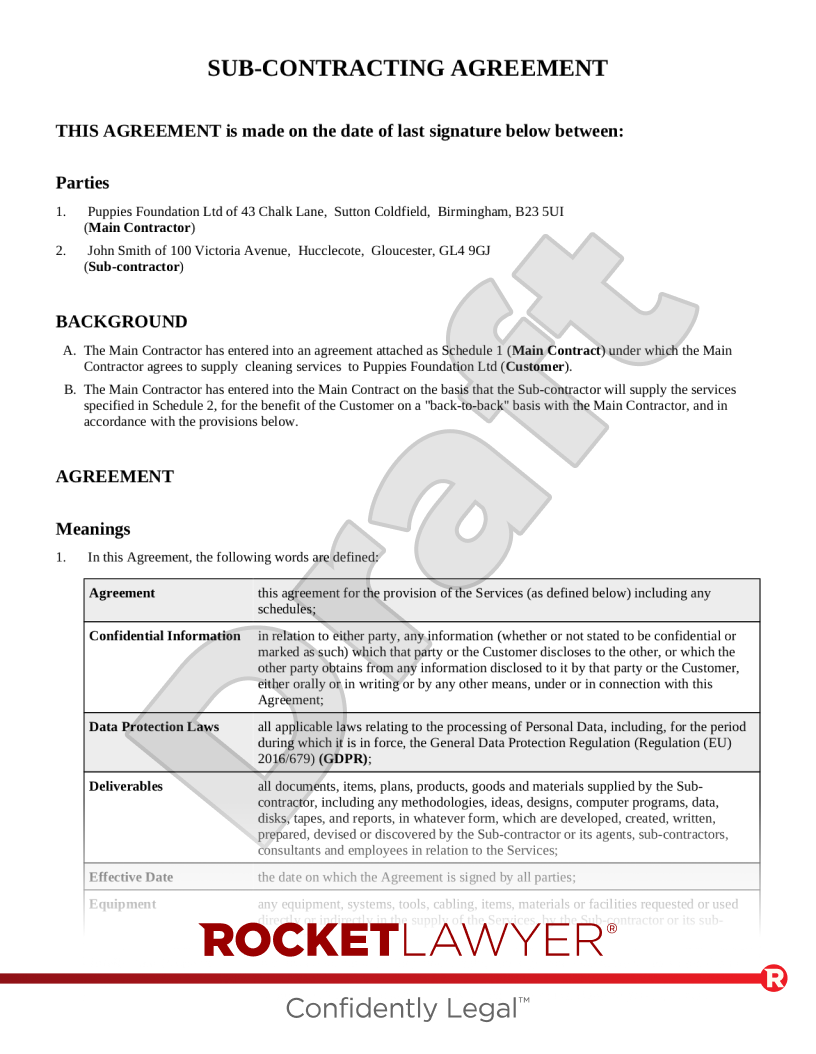
What is subcontracting?
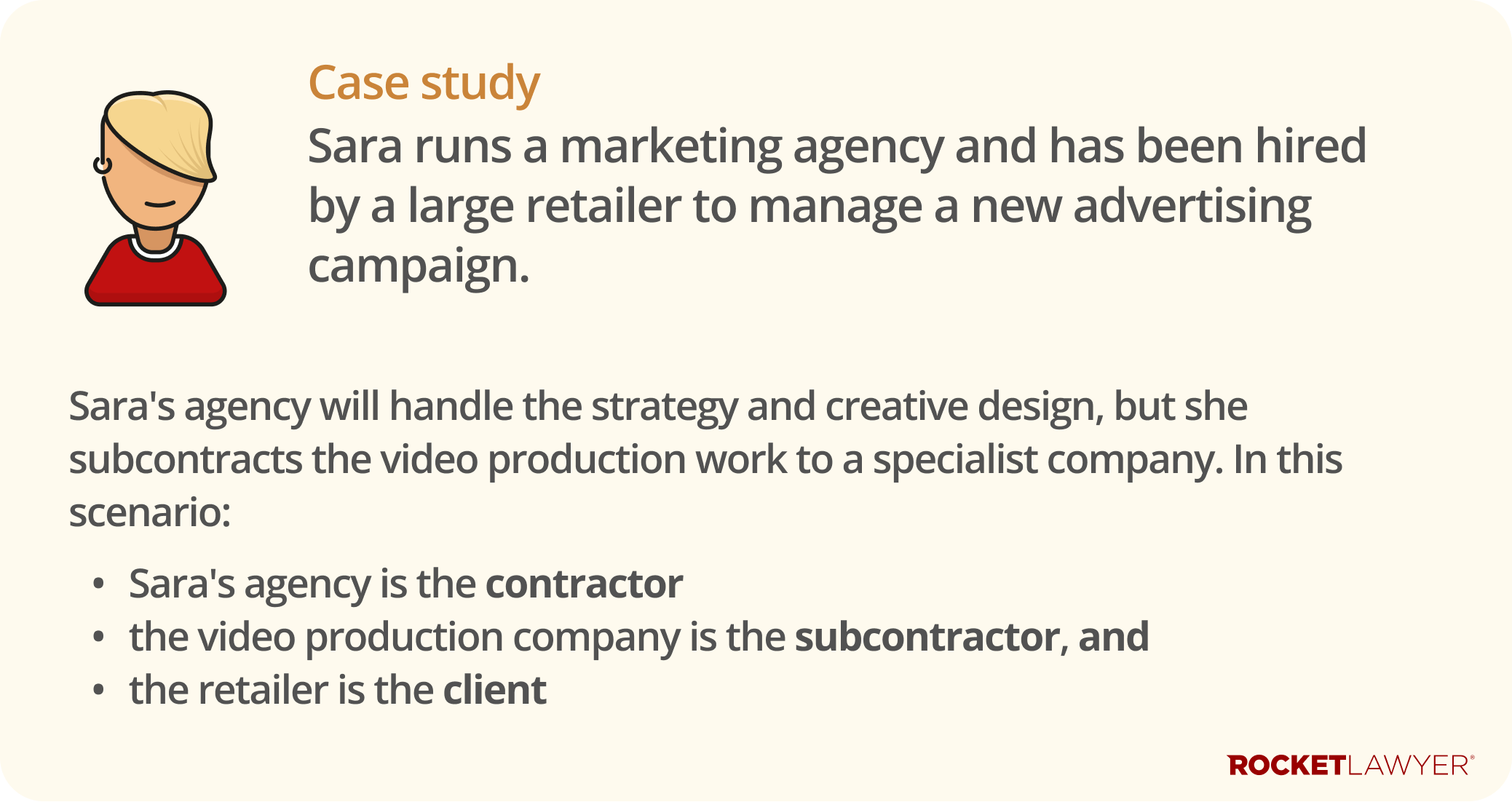
Subcontracting is when a business (the ‘contractor’ or ‘main contractor’) hires another person or business (the ‘subcontractor’) to carry out some or all of the work that they have promised to a client.
Some examples of subcontracting include:
-
a digital marketing executive contracting out content creation and copywriting tasks to a freelance copywriter
-
a construction company subcontracting an electrician to complete specialist electrical wiring of a new building
-
a graphic designer subcontracting another graphic designer to deliver a logo for a business
-
a web designer contracting out programming tasks to a developer
What is a subcontractor?
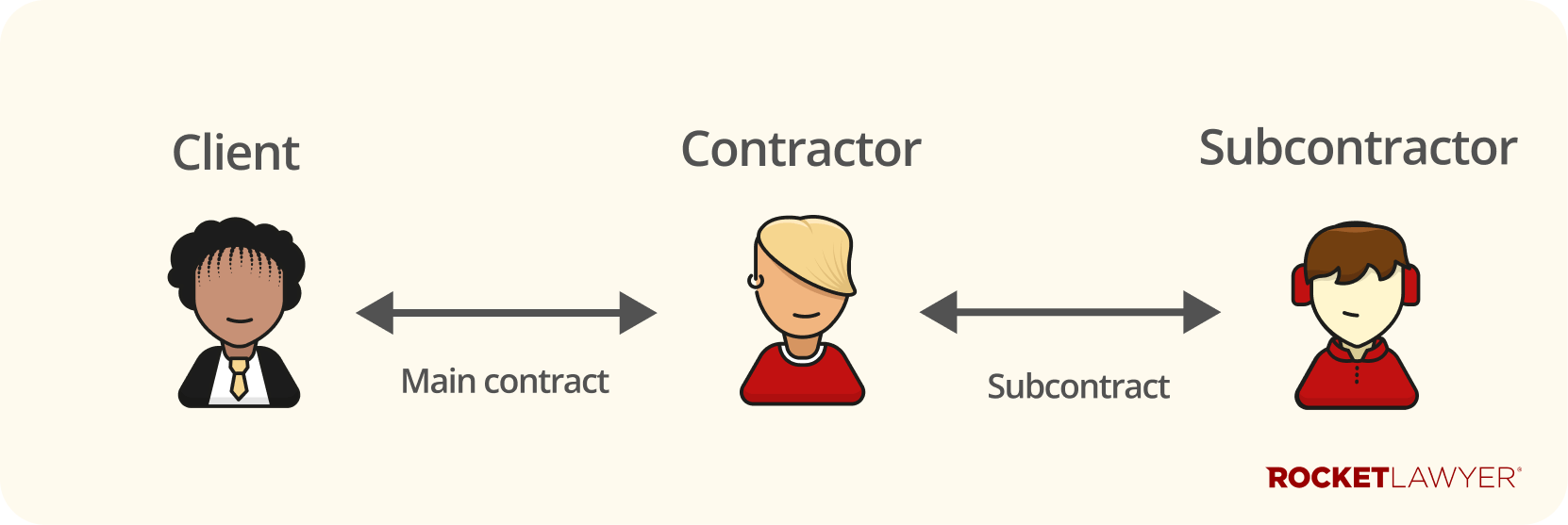
A subcontractor is a self-employed individual or a business hired by a contractor to carry out a specific task as part of a larger project. The key thing to remember is that the subcontractor has a contract with the contractor, not with the end client. They are responsible for completing their assigned tasks to the standard set out in their Subcontracting agreement with the contractor.
What should I do before subcontracting?
Before you even think about hiring a subcontractor, there are two crucial checks you must make.
Check your main contract
First, you must check the main contract with your client to see if subcontracting is allowed. Some contracts will prohibit it entirely, while others might require you to give notice or get the client’s written approval first. If the contract doesn't mention subcontracting at all, it's generally allowed. However, be careful if the work is of a very personal nature or if your business was chosen for its specific skills or qualifications, as subcontracting is unlikely to be permitted in these situations.
Do your due diligence
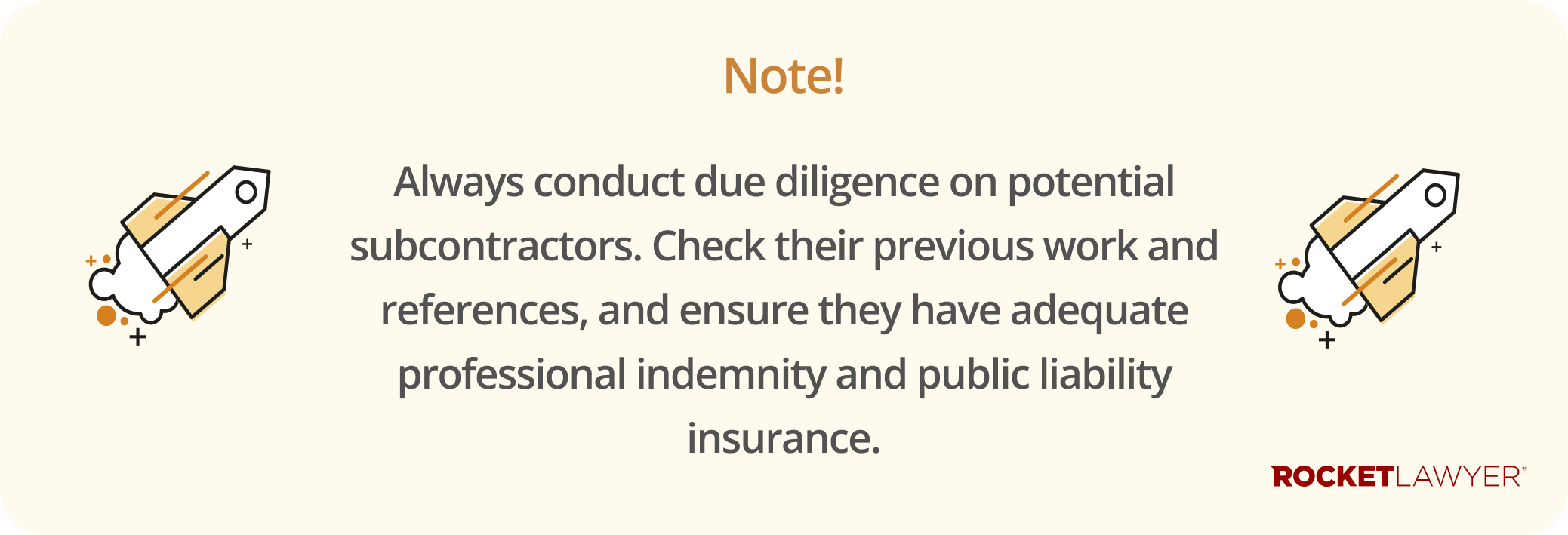
Your business's reputation is on the line, so it’s vital to choose subcontractors carefully. Always conduct due diligence by:
-
checking references and examples of their past work
-
verifying their qualifications, experience, and any required certifications
-
ensuring they have adequate insurance, such as public liability and professional indemnity insurance
How do I protect my business when subcontracting?
Once you've decided to subcontract, the key to protecting your business is a strong Subcontracting agreement that manages your risk.
Mirror the terms of your main contract
Your subcontracting agreement must mirror the key obligations of your main contract with the client. This is essential to ensure there are no gaps in performance or liability. For example, if your main contract requires that you deliver the work within 30 days, your subcontractor should have the same deadline (or an earlier one to give you time to review their work). Likewise, if you can be held liable for a certain amount in damages, the subcontractor’s liability should be set at the same level.
Get indemnified by the subcontractor
Remember, you remain fully liable to your client for the entire project, even the parts done by your subcontractor. Because of this, it’s vital that your subcontracting agreement includes an indemnity clause. This clause means that if the subcontractor performs poorly or fails to deliver, and you suffer a loss as a result (eg the client sues you), you can recover those losses from the subcontractor. You should also require the subcontractor to have adequate insurance to cover any potential payouts under the indemnity.
Respect their basic rights
Even though they aren't your employees, subcontractors who work on-site have certain rights. You have a legal duty to provide them with a safe working environment and to protect them from discrimination.
What are the main advantages of subcontracting?
Subcontracting offers significant benefits for both the main contractor and the subcontractor, which is why it's such a popular way of working.
Benefits for the contractor
For main contractors, subcontractors provide flexibility and access to specialist skills without the long-term commitment of hiring permanent employees. If you're tackling a large project, you can bring in extra resources to lighten the workload. Subcontracting also allows you to access expertise your in-house team may not have, letting you offer a wider range of services to your clients.
Benefits for the subcontractor
For subcontractors themselves, the main advantage is control. As a self-employed professional, you can choose which jobs you take on and aren't tied into a long-term employment contract. You can often work with several different businesses at once, and because skilled subcontractors are frequently in high demand, it can be a secure and reliable way to work.
What are the main risks of subcontracting?
While subcontracting offers many benefits, like flexibility and access to expertise, it also comes with certain risks that contractors need to manage carefully.
Responsibility to the client
One of the biggest risks is that the contractor remains fully responsible to the end client for the quality and delivery of the entire project. If your subcontractor does a poor job, misses a deadline, or goes out of business, the contractor is the one who is in breach of the main contract with the client. It’s the contractor’s responsibility to fix the problem, and they could face financial penalties or legal action from the client.
This is why it’s crucial to vet subcontractors thoroughly and have a strong Subcontracting agreement in place that allows you to claim for any losses you suffer due to the subcontractor’s failures.
Tax and employment status
Another significant risk is misclassifying a subcontractor’s employment status. If HMRC decides that a subcontractor should actually be treated as an employee, the contractor (as the ‘employer’) could be liable for unpaid income tax and National Insurance contributions, plus interest and penalties. The rules around this (known as IR35 or the off-payroll working rules) are complex and can have serious financial consequences if you get them wrong. For more information, including on how to determine a subcontractor's employment status, read IR35.
Who is responsible for a subcontractor's work?
This is one of the most important things to understand: the contractor is ultimately responsible to the client for the subcontractor's work.
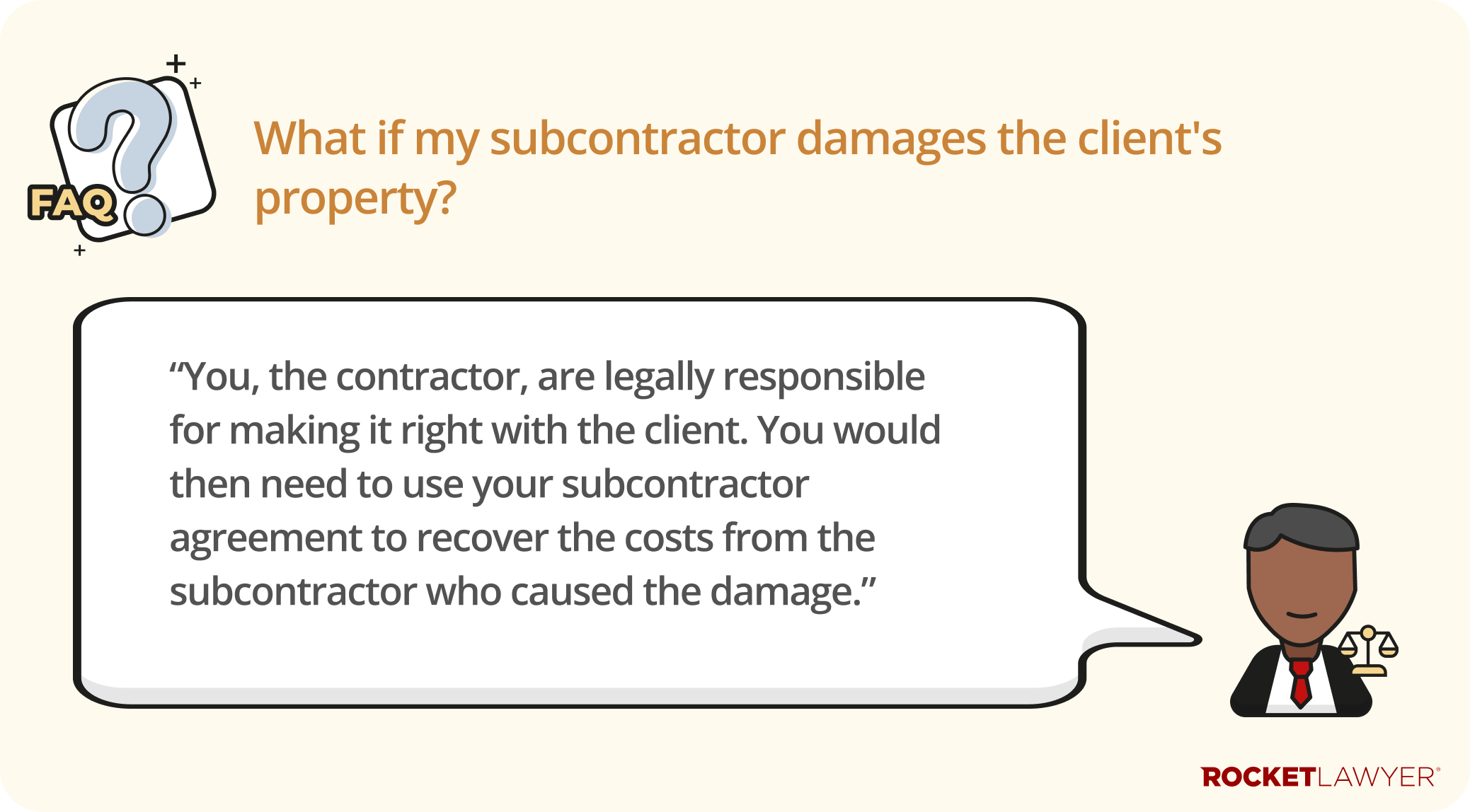
Think of it like this: if you hire a builder to build an extension, and their subcontracted plumber causes a leak, you hold the builder responsible for fixing it, not the plumber you never hired. The same applies in business. Your main contract is with your client, and you are responsible for fulfilling all of its terms, regardless of who carries out the work. If your subcontractor makes a mistake, the client’s legal claim is against your business. You must then, in turn, use your subcontractor agreement to hold the subcontractor liable for their error. Without this written agreement, it can be very difficult to recover your costs.
If you need to hire a subcontractor, you can make a Subcontracting agreement to clearly set out the terms of your relationship. If you have any questions or need help ensuring your business is compliant, do not hesitate to Ask a lawyer.