What is an employment tribunal?
An employment tribunal (ET) is a independent judicial body that hears and decides workplace disputes between employers and employees. It operates under the Employment Tribunals Act 1996 and the Employment Tribunal Procedure Rules 2024.
Not every workplace problem ends up at an ET. Tribunals are typically a last resort, used once a dispute cannot be resolved directly or through Acas conciliation (more on this below).
Cases are heard by a tribunal panel, usually an employment judge sitting alone, though a full panel of three (the judge plus two lay members) is used for certain cases, such as discrimination and whistleblowing claims. Although they are less formal than courts, ET decisions are legally binding and must be followed by both employer and employee.
Some employment disputes heard in the ET can concern unfair dismissals, redundancy payments, discrimination or harassment.
Who can bring a claim to an employment tribunal?
Usually, it's the employee or worker themselves, either directly or through a lawyer or other representative acting on their behalf.
The Fair Work Agency, a new enforcement body launched in 2026, also has powers to bring a claim on a worker's behalf, stepping in so the worker doesn't have to bring the case themselves.
What is the Acas Early Conciliation Service?
Before a claim is lodged with the employment tribunal, it’s first necessary to submit an early conciliation notification form to Acas. This free process is designed to give employers and employees a chance to resolve their disputes through conciliation. If both parties agree to try this route, the claim will be passed to an Acas conciliator.
Resolving disputes through an independent conciliator is usually faster, cheaper and less stressful than going to the ET. However, if both parties do not agree to try early conciliation or if they try it but it fails to resolve the issue, Acas will send out an early conciliation certificate. This certificate can then be used to lodge the claim at the ET.
For more information on conciliation in general, read Conciliation.
What is alternative dispute resolution (ADR) in employment tribunals?
If early conciliation doesn't resolve a dispute and a claim goes ahead, the ET has three further ways to help both sides settle before a final hearing: judicial mediation, judicial assessment and dispute resolution appointments.
What is judicial mediation?
A trained employment judge acts as an independent mediator helping the parties reach a voluntary settlement without a formal hearing.. The judge doesn't give an opinion on who's likely to win, they just help both sides talk and find a compromise..
Both parties must agree to take part and can withdraw at any time without giving a reason. It's usually offered in cases listed for three days or more, most often discrimination, whistleblowing, or complex unfair dismissal claims, and is typically arranged at a preliminary hearing.
If it succeeds, the settlement is recorded through Acas (a COT3) or a settlement agreement.
What is judicial Assessment?
Judicial assessment happens early in proceedings, often at an initial hearing. A judge gives both parties a provisional, confidential view on the strength of their case and the likely outcome at a final hearing, including whether either side seems unrealistic about their prospects or the value of their claim. If someone's expectations seem unrealistic, the judge will say so.
As with judicial mediation, both sides have to agree to take part, it isn't forced on anyone. If the case doesn't settle, a different judge decides the claim at the final hearing, so nothing said during the assessment affects the outcome.
What is a dispute resolution appointment?
A dispute resolution appointment (DRA) is the newest form of tribunal ADR, introduced nationally in 2023. It works differently from judicial mediation or judicial assessment: the ET can order both sides to attend even if neither of them asked for it or wants to be there.
DRA is used for the most complicated, lengthy cases (usually six days or more in tribunal), and happens later on, once both sides have already exchanged their witness evidence. A judge reviews everything and gives a view on how strong each side's case is, with the goal of either settling the dispute or at least narrowing down what still needs deciding. Attendance is compulsory, though settling isn't.
How do you lodge an employment tribunal claim and what happens next?
Employment tribunal claims can be submitted online, by post or by telephone. Time limits need to be observed. You do not have to pay a fee to make a claim to the employment tribunal, even if it says so on the form.
Once a claim has been made, the other party has to reply in writing within 28 days, setting out their arguments. A preliminary hearing may be held to decide on practicalities (such as the time and date of the full hearing) and whether part or all of the claim can go ahead. Documents need to be arranged and exchanged before the full hearing and witnesses organised.
For more information, read the government’s guidance on making claim to an employment tribunal.
Note that witness statements are normally not used in Scotland. The hearing will then take place and both employee and employer will submit their arguments. The ET will either come to a decision immediately or it may take a few days or weeks to be notified of their ruling.
Can you appeal an employment tribunal decision?
In the first instance, an ET decision can be appealed to the Employment Appeal Tribunal (EAT), which may dismiss the appeal or send it back to the ET for reconsideration. If the judgment was sent to you without reason, you must make sure to ask for reasons within 14 days.
You must then submit your appeal within 42 days of the date the reasons for the judgment were sent to you. These reasons can include the release of new evidence, procedural errors or you weren’t told about the hearing. Further appeals can also be made to the Court of Appeal and the Supreme Court.
What are the time limits for making an employment tribunal claim?
From October 2026, under the Employment Rights Act 2025, employees will have up to six months to bring a claim before an employment tribunal. This doubles the previous limit of three months.
This means that generally ET claims must be submitted within six months of the earlier date of either:
-
the date on which employment ceased, or
-
the date on which the incident/issue occurred
The time limit is not affected by the mandatory early conciliation procedure. The period between the early conciliation notification being submitted and the certificate being returned by Acas does not count towards these time limits. Effectively, the conciliation procedure ‘stops the clock’ on the time limit.
What can an employment tribunal award?
If your claim succeeds, the tribunal can order the employer to:
-
pay you compensation
-
reimburse any witness expenses you've paid
-
take steps to reduce the effects of discrimination against you
-
give you your job back, through reinstatement or re-engagement, though this is rare
How much compensation you get depends on the type of claim (some have a statutory cap, others don't), how much you've lost financially and factors like your age, length of service and salary.
What financial penalties can employers face at tribunal?
On top of paying your compensation, an employer can be fined by the tribunal if it decides they've behaved particularly badly, for example, by breaking the rules deliberately or repeatedly. This fine is separate from your compensation: it goes to the government, not to you.
It's calculated as half of your compensation award, up to a maximum of £20,000. It isn't automatic; most successful claims don't result in one. It only happens if the tribunal decides the employer's conduct was bad enough to deserve it.
Should you settle an employment tribunal claim?
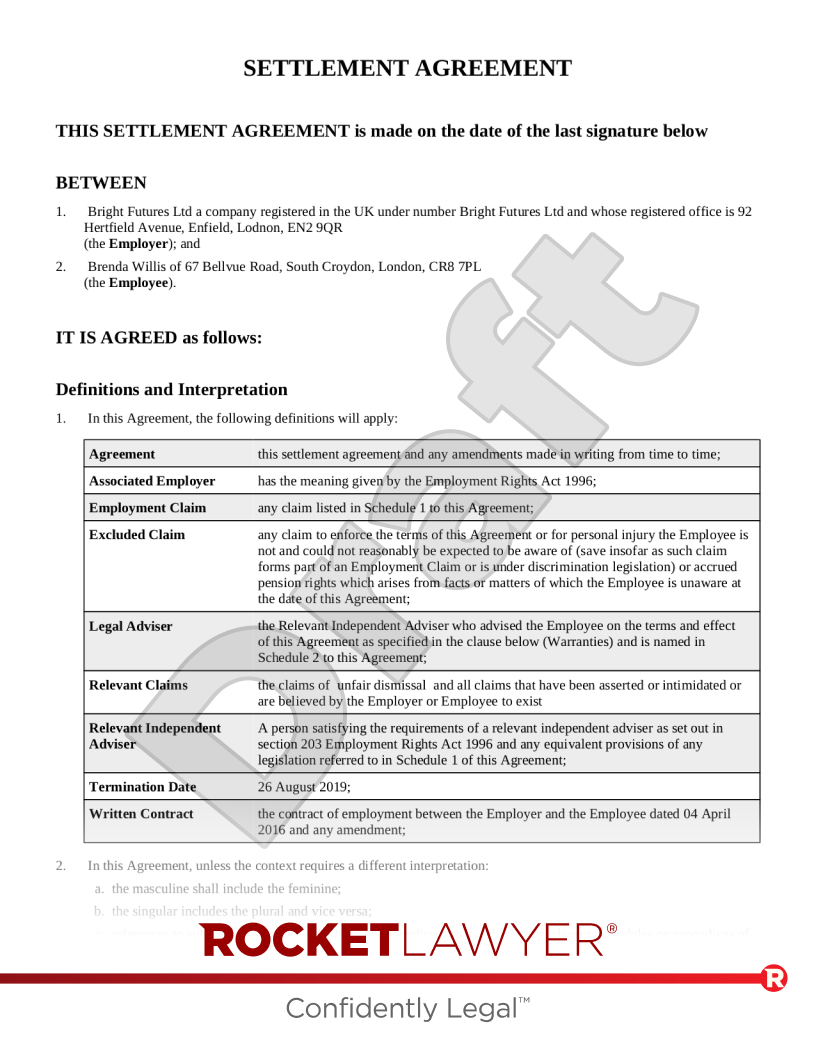
It’s generally cheaper for employers to settle a claim rather than go to an employment tribunal. For more information, read Settlement agreements with employees and consider using our Settlement agreement. To discuss your particular situation, do not hesitate to Ask a lawyer.