What taxes apply to buy-to-let properties?
There isn't one single buy-to-let tax. Instead, different taxes will apply at various stages of your landlord journey. The main taxes you'll typically face are:
-
a one-off property purchase tax when you first buy the property
-
income tax paid annually on the rental profits you make
-
capital gains tax (CGT) when you sell the buy-to-let property if it has increased in value
Tax when you buy a buy-to-let property
When you buy a BTL property, you must pay a one-off tax on the purchase. In all parts of Great Britain, you'll have to pay a higher rate or surcharge if the property is an additional dwelling (ie not the only property you own), which is common with BTL landlords.
The specific land tax you pay on the purchase depends on the property's location:
In England
You'll pay stamp duty land tax (SDLT). BTL landlords normally pay the higher rate for additional dwellings, which adds a surcharge on top of the standard SDLT rates. For more information on SDLT, including up-to-date tax rates and how to pay SDLT, read Stamp duty on property.
In Wales
You'll pay land transaction tax (LTT). You'll typically be subject to the higher residential rates, which apply to most second home or BTL purchases. For more information on LTT, including up-to-date tax rates and how to pay LTT, read Land transaction tax in Wales.
In Scotland
You'll pay land and buildings transaction tax (LBTT). For BTL properties, you must normally pay the additional dwelling supplement (ADS) on top of the standard LBTT. For more information on LBTT, including up-to-date tax rates and how to pay LBTT, read Land and buildings transaction tax (LBTT).
How is buy-to-let rental income taxed?
You must pay income tax on the profit you make from your rental properties, not the total rent you receive. Your profit is the amount left after adding together your rental income and deducting the allowable expenses you can claim.
If you rent out more than one UK property, you'll add the profits and losses from all of them together. This provides a single figure for profit or loss for your property business.
You declare this income to HMRC each year by completing a Self Assessment tax return. The profit is added to your other earnings (eg from your main job) to determine which income tax band you fall into.
For more information on income tax, including the tax brackets and rates, read Income tax and Income tax in Scotland.
What expenses can I deduct?
To calculate your taxable profit, you can deduct allowable expenses. These are costs that are wholly and exclusively for the purpose of renting out the property. Common examples include:
-
letting agent and property management fees
-
landlord insurance
-
utility bills and council tax (if you pay them, not the tenant)
-
service charges and ground rent
-
direct maintenance and repairs (like fixing a broken boiler or repainting)
-
accountancy fees
What about mortgage interest?
You cannot deduct your mortgage interest payments directly as an allowable expense to reduce your rental profit. Instead, you receive a tax credit equivalent to 20% (ie the basic income tax rate) of your mortgage interest payments. This credit is deducted from your final tax bill.
Is there an alternative to personal income tax?
Some landlords set up a limited company to own their BTL properties. If you do this, you won't pay personal income tax on the rental profits. Instead, the property company pays corporation tax on its profits. This can be more tax-efficient, but it's also a more complex way to manage your properties. For more information, read Setting up a property company as a landlord.
How does co-owning a buy-to-let property affect tax?
If you own a BTL property with someone else, the way you legally co-own it has a direct impact on how your rental income is split for tax purposes. While property law terms differ across Great Britain, the core tax rules from HMRC remain the same.
The UK-wide tax rule for spouses
If you're married or in a civil partnership and own a property together, HMRC will always treat you as splitting the rental profit 50/50 for tax. This is the default, regardless of who paid for what.
However, if you actually own the property in unequal shares, you can make a declaration to HMRC to be taxed on those shares instead. The legal way you own these unequal shares depends on where your property is.
Co-ownership in England and Wales
Property is co-owned in two ways:
-
as joint tenants - you both own 100% of the property together. You can't own separate shares. For tax, the 50/50 rule for spouses is fixed, and you cannot declare an unequal split
-
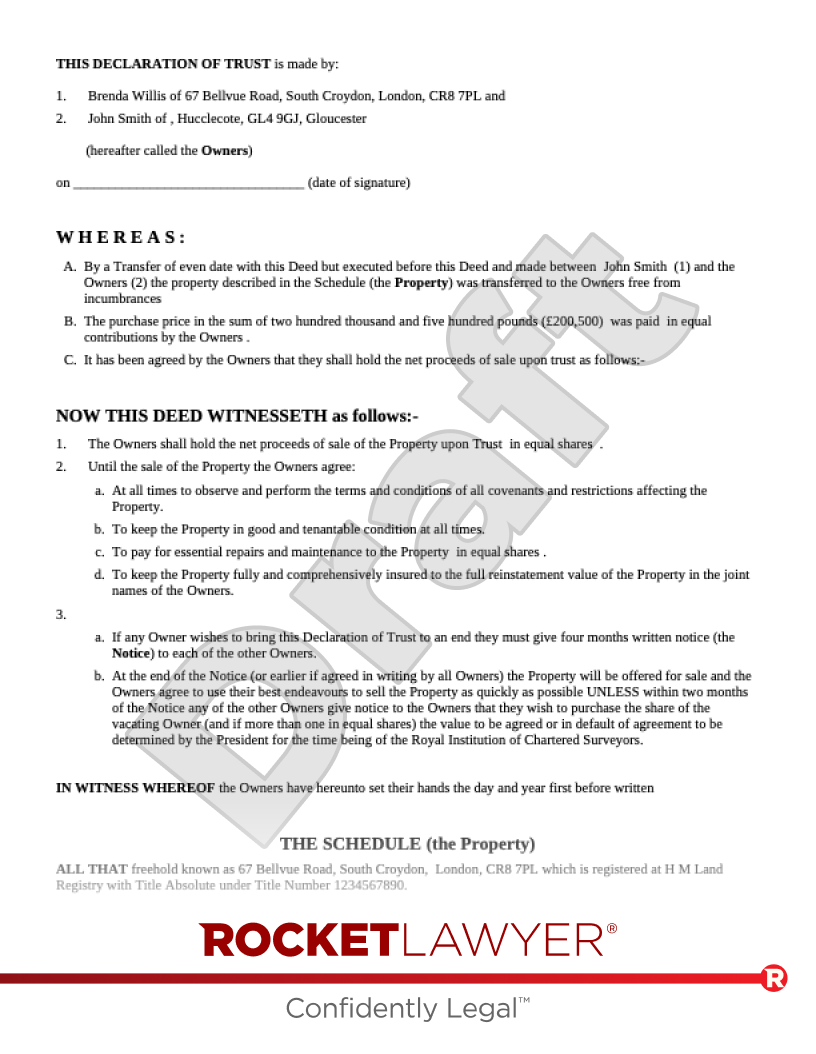
as tenants in common - this is the flexible option. You each own a distinct, separate share (eg 70/30 or 60/40). This allows you to file a Form 17 with HMRC (supported by a legal document like a Declaration of trust) to have profits taxed based on these unequal shares
For more information, read Co-ownership of property and Declaration of trust for property.
Co-ownership in Scotland
Scotland has its own property law terms, and property is co-owned as:
-
joint owners (with a survivorship destination) - this is similar to joint tenancy. When one owner dies, their share automatically passes to the survivor. For tax, the 50/50 rule for spouses is fixed
-
common owners (pro indiviso) - you each own a distinct, separate share (eg 70/30). This allows you to make a declaration to HMRC to have your rental profits taxed according to your actual shares. You must provide evidence (like your title deeds) to HMRC that you own the property in these unequal shares
For more information, read Co-ownership of property in Scotland.
Does capital gains tax apply to buy-to-let properties?
Yes, capital gains tax (CGT) does apply to buy-to-lets. When you sell your BTL property, you must pay CGT on the gain. The gain is the difference between the price you bought it for and the price you sold it for.
You can deduct certain costs from your gain, including the original stamp duty (ie SDLT, LTT, or LBTT) you paid, lawyer’s fees, and estate agent fees. You have an annual CGT allowance, but any gain above this threshold is taxed. The CGT rate you pay depends on your income tax band. For more information, read Capital gains tax.
If you're ready to rent out your property, make sure you have the right legal protection with a Tenancy agreement. For a full overview of your other duties, read Landlord responsibilities and Renting property and Renting out property in Scotland. If you have questions or concerns, don't hesitate to Ask a lawyer.