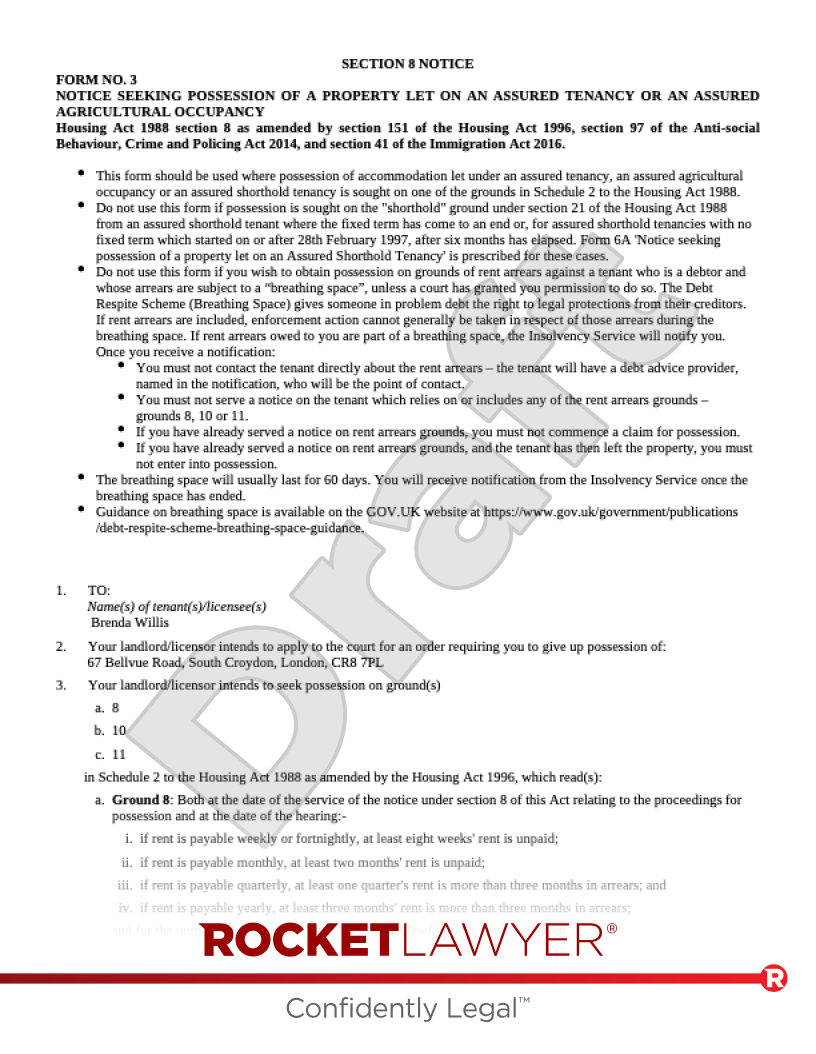
What is the section 8 process and section 8 notices?
Since 1 May 2026, there is a single route for recovering possession of assured periodic tenancies (APTs) under the Housing Act 1988 and the Renters’ Rights Act 2025 in England. This process is known as a ‘section 8 eviction’ and must be based on one or more prescribed legal grounds for possession.
To evict a tenant under the section 8 procedure, a Section 8 notice must be used. This is a formal written notice given by a landlord to a tenant informing the tenant that the landlord wants possession of the property and will be applying to the court for an order for possession (ie they’re evicting the tenant).
For more information on the section 8 grounds for eviction, read Grounds for eviction and possession.
What are the most common grounds for possession?
The most common ‘fault-based’ grounds for evictions typically relate to the non-payment of rent. The applicable eviction grounds are Grounds 8, 10, and 11.
Aside from issues relating to rent payments, fault-based evictions often also relate to damage to the property. Ground 13 should be used for this reason.
Ground 8
Ground 8 is a mandatory ground to be used when the tenant is in serious rent arrears. The court must make a possession order, provided it is satisfied that at the time the notice was served and at the time of the hearing, the rent was:
-
at least 13 weeks’ in arrears (where rent is payable weekly or every two weeks)
-
at least three months’ in arrears (where rent is payable monthly)
Grounds 10 and 11
Grounds 10 and 11 are discretionary grounds for rent arrears. They have a broader scope in relation to the tenant’s non-payment of rent than Ground 8:
-
Ground 10 applies where the tenant is in any amount of arrears and has a four-week notice period
-
Ground 11 only requires that the tenant has regularly paid rent late, whether or not the tenant is actually in arrears at the time the notice is served or proceedings are started, and also carries a four-week notice period
Since both grounds are discretionary, the court may grant a possession order, but does not have to. These grounds should always be included when filing under Ground 8 as a fallback, where applicable.
Ground 13
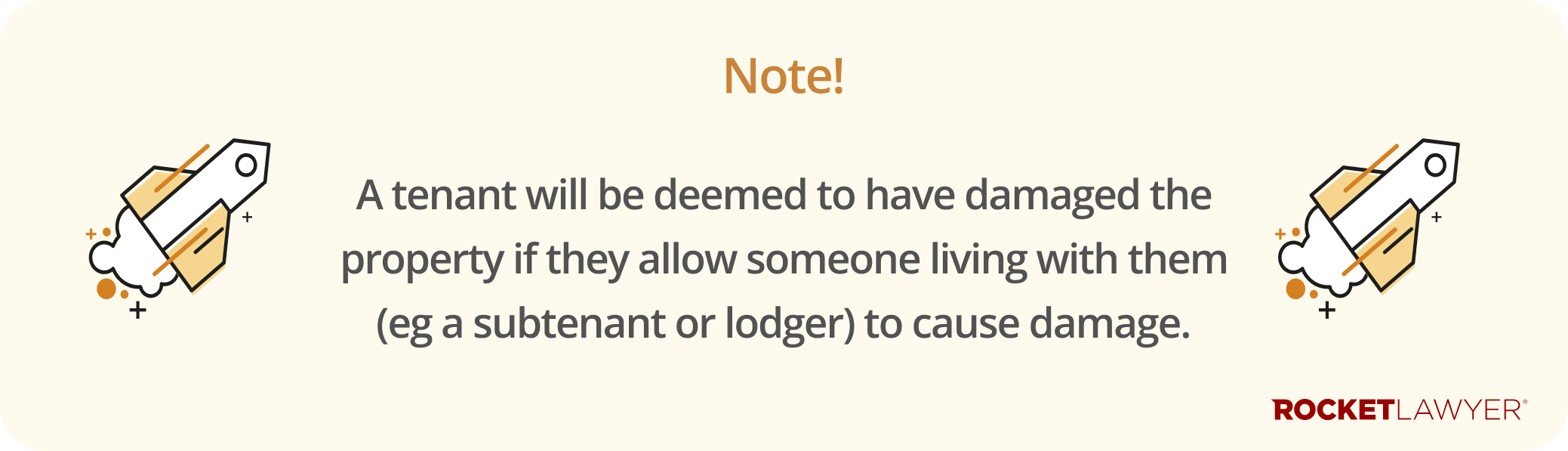
Ground 13 can be used as a ground for repossession if the tenant, or anyone living with them, has damaged the property, and it carries a two-week notice period. Damage to property includes damage to any common areas to which the tenant has access in the building in which their property is located.
For more information on the different grounds for possession, including applicable notice periods, read Grounds for eviction and possession.
If you still need help, you can Ask a lawyer.
How to make a section 8 notice
The section 8 eviction procedure is a formal process. You must follow it correctly in order to legally evict a tenant. If you make a mistake, a court might not grant a possession order, or the tenant might successfully challenge the eviction.
Before serving a notice, you must ensure you have met your legal obligations. A section 8 notice may be invalid if:
-
you have not provided the tenant with a written statement of terms
-
you have not properly protected the tenant's deposit, or didn’t give them the prescribed information (note, this does not apply to Grounds 7A or 14)
-
you have not refunded any prohibited fees or excess deposits under the Tenant Fees Act 2019
To ensure compliance with the section 8 process, you can use a personalisable Section 8 notice template based on the government’s prescribed form.
When filling out your form, you must include the following key information:
-
the tenant’s full name
-
the full address of the rented property
-
at least one of the grounds set out by section 8 of the Housing Act 1988 (as amended by the Renters’ Rights Act 2025). This is the legal reason for eviction
-
a brief explanation of why the ground(s) apply to your specific circumstances
-
the correct notice period required for the ground(s) used (this varies depending on which grounds you choose)
-
the earliest date on which court proceedings may begin
-
your full name and contact details
You can state any of the relevant eviction grounds. It's best to be sure that any ground you state can be proven, as the court may dismiss your case if you can't provide sufficient evidence. Remember that you can use both mandatory grounds (where the court must grant an order if proven) and discretionary grounds (where the court decides if it's reasonable to grant an order).
How to serve a section 8 notice?
Once completed, the section 8 notice must be served on (ie delivered to) the tenant. You should do this using the method(s) outlined in the tenant’s tenancy agreement. It will generally involve the notice being:
-
handed to the tenant in person
-
posted through the property letterbox
-
sent by mail (using recorded delivery)
Remember that you may be prevented from serving an eviction notice for a period if your tenant is in a debt enforcement moratorium under the Debt Respite (Breathing Space) Scheme.
How to apply for a possession order
Once your tenant receives the section 8 notice, you must wait until the date specified in the notice (ie the notice period) has expired. If the legal ground(s) you cited still apply at that point (eg the tenant hasn't cleared their rent arrears), you may apply to the court for an order for possession. You do this by filing two forms with the court:
-
Form N5 (the claim for possession form), and
-
Form N119 (the particulars of claim form)
If you are seeking possession only based on rent arrears (ie Grounds 8, 10, and/or 11), you can submit your court application online using the government's Possession Claim Online service. For all other grounds, you will need to hand-in or post the forms to your local county court. You must pay a court fee regardless of the method you choose.
What happens at court?
Once the court approves your application, it will typically send the tenant a copy of your application, and a defence form (ie Form N11R). This gives the tenant a chance to defend the claim, and they typically have 14 days to:
-
give the court an explanation of their situation
-
provide reasons why they should be allowed to stay in the property
-
challenge the validity of the information you provided
The court will fix a date for the hearing and notify all parties.
For more information on what happens at the hearing, read Enforcement of possession orders.
Obtaining a possession order
A possession order is an order granted by the court that gives you, the landlord, the legal right to reclaim your property from the tenant.
If the court issues an outright possession order, the tenant must leave the property by the specified date, which is usually 14 days after the order is made. If the tenant refuses to leave by that date, you must then take further steps to enforce the order.
For more detailed information on how to legally enforce the order and regain possession of your property, read Enforcement of possession orders.
If you need to evict a tenant using the section 8 eviction procedure, you can start by making a Section 8 notice. If you need help completing or sending your eviction notice, or if you require assistance applying to the court, use our Tenant eviction service. Do not hesitate to Ask a lawyer if you have any questions or concerns about the eviction process.
For more general information on how the Renters’ Rights Act 2025 has changed renting laws, read our guide on the Renters’ Rights Act.