What is a roommate, flatmate, or housemate?
The terms ‘flatmate’, ‘housemate’, and ‘roommate’ are often used interchangeably to describe someone you share a home with. In other words, someone you cohabit with. However, these terms don't actually have a specific legal meaning. A person's rights depend on the nature of their living arrangement and any agreement that's in place. Understanding this is the first step to knowing how an eviction must be handled.
The person you live with will generally fall into one of these categories:
-
a lodger, if they rent a room in your home and share living spaces (like the kitchen or bathroom) with you, the owner or primary tenant
-
a subtenant, if they rent a part of the property from you and have exclusive access to it (eg their own floor or an annexe), without sharing living spaces
-
a joint tenant, if both of you signed the same tenancy agreement with the landlord and share equal responsibility for the property (this is common with flatmates or housemates)
Can I evict my flatmate if they’re a lodger?
Yes, you can evict your flatmate if they’re a lodger. In fact, you don’t need to go to court to evict them as they're usually 'excluded occupiers'. However, you must give notice in accordance with their contract or, if no notice period is set, reasonable notice to leave. This is usually the same as their rental period (eg one month’s notice if they pay rent monthly). The notice doesn’t have to be in writing, but it’s a good idea to put it in writing and keep a copy as proof.
If they refuse to leave by the date specified in the notice, you can remove them peacefully (eg by changing the locks on their room and the outside doors while they are out).
Note that the Renters' Rights Act 2025 doesn't affect most lodgers.
For more information on the eviction process, read How to evict a lodger.
Can I evict my flatmate if they’re a subtenant?
Yes, you can typically evict a flatmate who is your subtenant, but only if you are their landlord (ie you sublet part of the property to them directly).
If the subtenant rents from someone else (eg a different flatmate), you cannot evict them; only their landlord can.
A subtenancy is generally ended in the same way as a standard tenancy, by serving the correct legal notice and obtaining a court order if they don't leave.
Read Subletting residential property for more information on evicting subtenants, including what happens when the original tenancy ends.
What if my flatmate is a joint tenant?
You are typically joint tenants if you and your flatmate are both named on the same tenancy agreement. This means:
-
you cannot evict your flatmate yourself
-
you are jointly responsible for the whole rent and any breaches of the tenancy
-
you cannot force them to leave without ending the tenancy for both of you
In this situation, you have a few options:
-
ask your landlord to end the tenancy and create a new one with just you (or you and other tenants) as the tenant (they don’t have to agree)
-
come to an agreement with your flatmate to surrender the tenancy (ie end the tenancy early), allowing you to start a new one
-
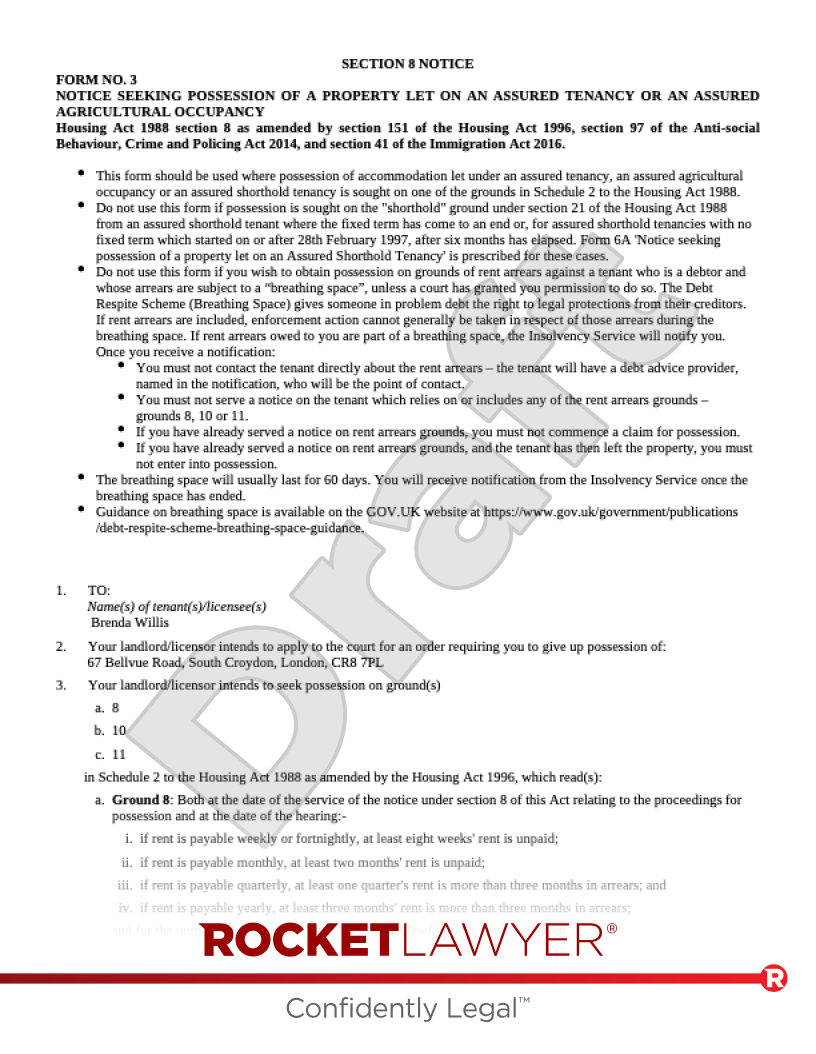
if necessary, the landlord can serve a Section 8 eviction to end the tenancy entirely, but this would affect you as well (bear in mind that stringent requirements apply to when and what eviction notice can be served)
What about guests who overstay their welcome?
If someone initially stayed in your home as a guest (eg a friend or partner staying temporarily), they don’t have the same rights as a tenant, subtenant, or lodger. However, if they refuse to leave after being asked, the situation can become more complex.
When does a guest become a lodger or tenant?
A guest may gain legal rights, for example, if they start paying rent, contribute regularly to utility bills, or have lived in the home for a significant amount of time. At that point, they may be considered a lodger, licensee, or even a tenant, depending on whether they have exclusive use of part of the property.
If they have become a lodger, licensee, or tenant, you’ll usually need to give written notice and, if they don’t leave, get a court order to remove them legally.
How to ask a guest to leave
If they are genuinely just a guest (eg because they haven’t been paying rent and don’t have exclusive use of part of the property) and don't have any legal rights to stay, you have the right to ask them to leave.
If they refuse, they become a trespasser. You can tell them to leave clearly and firmly. If you feel threatened or they are causing a disturbance, you can call the police. However, you should not use force or threaten them to remove them. If you're unsure whether they now have legal rights as an occupier, you should Ask a lawyer before taking further action.
How can I avoid future disputes?
To avoid difficulties with flatmates, housemaster, or roommates in future, remember to:
-
always use written agreements (eg a Lodger agreement or Sublease agreement), even with friends or family
-
clearly set out and agree on notice periods, rent amounts, and house rules (eg using House rules for lodgers)
-
make sure all agreements are legally compliant and reflect the correct legal status (eg lodger vs subtenant)
-
get permission from your landlord before subletting, if required
If you are evicting someone, get your Eviction notice reviewed by a lawyer with our Eviction notice review service. Alternatively, if you would like a lawyer to handle the entire process for you, consider using our Tenant eviction service.
Note that under the Renters’ Rights Act 2025, any eviction of a tenant must be based on a legal ground. This means that the person serving the notice must have a valid statutory reason for seeking possession and may be required to prove it if the tenant challenges the eviction. For more information, read Grounds for eviction and possession.
You can get any legal document reviewed by a lawyer using our Document review service.