What is subletting?
Subletting (also known as ‘subleasing’ or ‘underletting’) is when a tenant rents out (ie ‘sublets’, ‘subleases’, or ‘underlets’) the property they have a lease (ie a tenancy) of to another party.
A common instance of subletting is when a residential tenant rents out their home to a new tenant (ie a ‘subtenant’), creating a ‘subtenancy’. Under the Renters' Rights Act 2025, most tenancies are now assured periodic tenancies (APTs). The original tenant, who is now the subtenant’s landlord under the new subtenancy, is referred to as the ‘sublandlord’.
Subletting does not end the original tenancy, nor does the sublandlord stop being a tenant. A sublet is simply the creation of the new tenancy within (or ‘under’) an existing tenancy.
A property can have multiple sublets created in relation to it. For example, a subtenant could rent out the property they’re renting to a new tenant, creating a sub-subtenancy with a sub-subtenant.
A sublet can be of the whole or part of a rented property. Whether the whole or part of a property is sublet has implications for the type of tenancy the subtenancy is capable of being. For more information, read Residential tenancies.
Renting out property you ‘own’ as a leaseholder is also, technically, subletting. For more information, read Freehold and leasehold property.
When is subletting allowed?
Under an APT, a residential tenant does not have an automatic right to sublet the property they rent. The tenant will generally require their landlord’s (ie ‘head landlord’s’) consent.
The contract should be reviewed for a clause prohibiting subletting (eg a 'covenant against subletting'). If the agreement says the tenant cannot sublet without consent, the landlord can still refuse. If the tenant sublets without permission, they’re breaching their agreement and could face eviction.
How do you sublet a property?
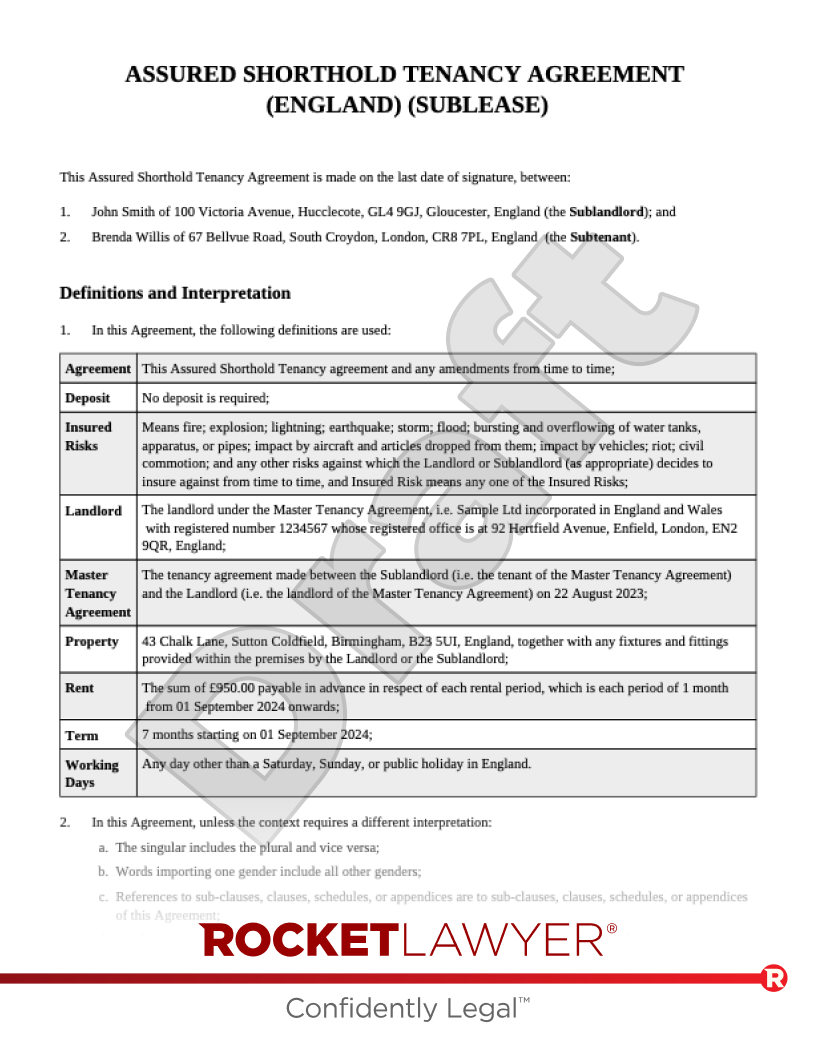
A property is sublet when a tenant creates a new tenancy of it (ie a subtenancy). This is generally done by creating a new tenancy agreement (ie a Sublease agreement).
Because most tenancies are now periodic, you should make sure the subtenancy terms allow you enough time to end it if your own tenancy ends.
A subtenancy can be lawful or unlawful:
-
a lawful subtenancy is created when a tenant sublets with their landlord’s consent (or when consent is not required)
-
an unlawful subtenancy is created when a tenant sublets without their landlord’s consent, when consent is required
An unlawful subtenancy can become lawful (ie be ‘legalised’) if the head landlord acts in a way that affirms it. For example, by being aware of it and continuing to accept rent from the sublandlord without attempting to evict them.
What legal rights and obligations do subtenants and sublandlords have?
Exactly which rights a subtenant and sublandlord have depends on the type of tenancy held. Since most new private tenancies are now APTs, most new subtenancies will also be APTs, which give subtenants strong protections (eg against no-fault evictions). Remember that if the sublandlord still lives somewhere in the property, it’s unlikely their subtenant will have an APT, so the subtenant will generally have fewer rights (eg they’ll be easier to evict).
Generally, the sublandlord’s (ie the sublandlord’s) rights and obligations in relation to their landlord will be unchanged. They’re still subject to the terms of their tenancy agreement, including the requirements to pay rent and not damage the property. This may appear risky for the sublandlord if they’re not actually living in the property themselves. However, they should have corresponding commitments from their subtenant (eg to pay rent and maintain the property). So, if the landlord were to deduct money from the sublandlord’s tenancy deposit at the end of the original tenancy to fix the property or recover rent arrears, but these issues were caused by the subtenant, the sublandlord can, in turn, deduct from the subtenant’s deposit to cover these expenses.
While the original tenancy and subtenancy exist, the head landlord and subtenant generally have no direct relationship (ie they cannot enforce obligations, like rent payment or repair obligations, against each other).
What rights does an unlawful subtenant have?
Even though an unlawful subtenant’s subtenancy was created unlawfully, they will have a normal, legally binding tenancy agreement with their own landlord (ie the sublandlord). This means that they’ll have the usual rights and obligations associated with the type of tenancy they hold. When the original tenancy ends, their situation may be more precarious. Read ‘What happens to a subtenancy if the original tenancy ends?’ below for more information.
When does a sublet end?
A subtenancy can generally be ended in the same way as a normal tenancy. The exact methods available will depend on the type of tenancy it is.
For a subtenancy that’s an APT, this means the sublandlord must generally use a Section 8 eviction notice to evict their subtenant, or the tenancy can be ended in another applicable way (eg if the subtenant and sublandlord agree to end the subtenancy).
For more information, read Evicting a tenant.
What happens to a subtenancy if the original tenancy ends?
Under the Renters' Rights Act 2025, if a superior or mesne (ie original or ‘higher’) tenancy ends with a subtenancy in place, a lawful subtenant will generally not be forced to leave. Instead, they will usually become the direct tenant of the head landlord. However, there are specific situations where the subtenancy might still end, or the head landlord can take action:
-
if the original tenant uses Ground 2ZA - the tenant can issue the subtenant a Section 8 eviction notice on Ground 2ZA if their own superior tenancy is ending within 12 months. They must give the subtenant four months' notice
-
if the original tenant surrenders their tenancy - the subtenancy will generally continue and will legally bind the head landlord rather than the sublandlord. This will not apply in certain situations, for example, if the type of tenancy that the subtenant holds is no longer possible (eg if the sublandlord was a private sector landlord and the head landlord is a public sector landlord)
-
when the head landlord forfeits the sublandlord’s tenancy (ie ends it early in a specific way) - the subtenant can effectively apply to become a direct tenant of the head landlord
If the subtenant becomes a direct tenant of the head landlord, their tenancy can then be ended by the usual means (ie using a Section 8 notice).