What is a divorce or dissolution?
A divorce is the legal process that formally ends a marriage. A dissolution is the legal process that formally ends a civil partnership.
You can't start either process in England and Wales until you've been married or in a civil partnership for at least one year.
There is no minimum length of marriage or civil partnership required to get a divorce or dissolution in Scotland, as this depends on the specific ground for divorce or dissolution.
Both processes legally end your status as married or as civil partners, but they don't automatically settle your financial arrangements or the arrangements for your children. These must be handled separately.
What key issues do I need to resolve?
Ending your legal relationship is often just one part of separating. While the legal process formally ends your relationship, you also need to make important decisions about your children, money, and property.
The main things you need to agree on are:
-
financial arrangements - a divorce or final order doesn't end your financial ties. To make your split legally binding and prevent future claims, you need a separate court order. For more information on dividing money, property, and other assets like pensions, read Divorce financial settlements and orders and Spousal maintenance
-
arrangements for children - If you have children, you need to agree on where they'll live and how much time they'll spend with each parent. The court's main priority is always their welfare. For more detailed guidance, read Child custody in England and Wales, Child maintenance in England and Wales, Child custody in Scotland, and Child maintenance in Scotland
-
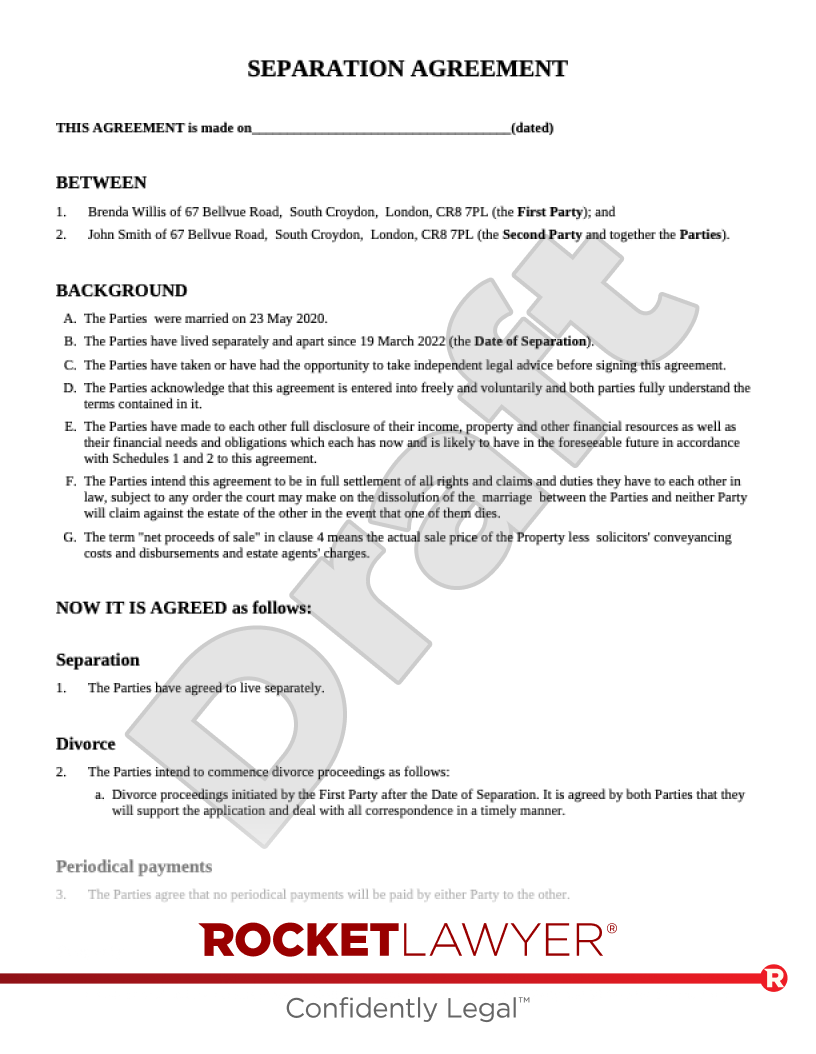
the practical details of separating - even before you're ready to divorce, you can write down your agreements on all these issues (eg in a Separation agreement). For more information, read Separating from your spouse or civil partner
How does the process differ in Great Britain?
The procedure you must follow depends on where you are domiciled (ie where your permanent home is) or where you usually live.
How to get a divorce or dissolution in England and Wales
The no-fault divorce system means you no longer need to blame the other person (eg for adultery or unreasonable behaviour) to get a divorce. Instead, the process involves:
-
making an application - you can do this on your own (a sole application) or with your partner (a joint application)
-
a waiting period - there's a 20-week 'reflection period' after the court issues the application
-
a conditional order - this confirms the court sees no reason why you can't divorce
-
a final order - you can apply for this six weeks and one day after the conditional order is granted, which legally ends the marriage/civil partnership
For a complete breakdown of the steps, read The divorce process.
How to get a divorce or dissolution in Scotland
The divorce and dissolution process in Scotland is different. You must show the court that the marriage has broken down irretrievably.
There are two main procedures you can use:
-
the simplified procedure - this is a quicker, cheaper 'DIY' process. You can generally use this if you don't have any children under 16, you've already agreed on finances, and you're applying based on separation (either one year with consent or two years)
-
the ordinary procedure - you must use this procedure for all other cases. This includes if you're applying based on your partner's 'fault' (like adultery or unreasonable behaviour), or if you have children under 16, or if you still need to agree on financial arrangements
For more information, read The divorce process in Scotland and Grounds for divorce in Scotland.
How much does a divorce cost?
The cost of a divorce or dissolution is split into two main parts: the mandatory court fees and, if you use them, the fees for legal advice (eg from a lawyer).
Divorce costs in England and Wales
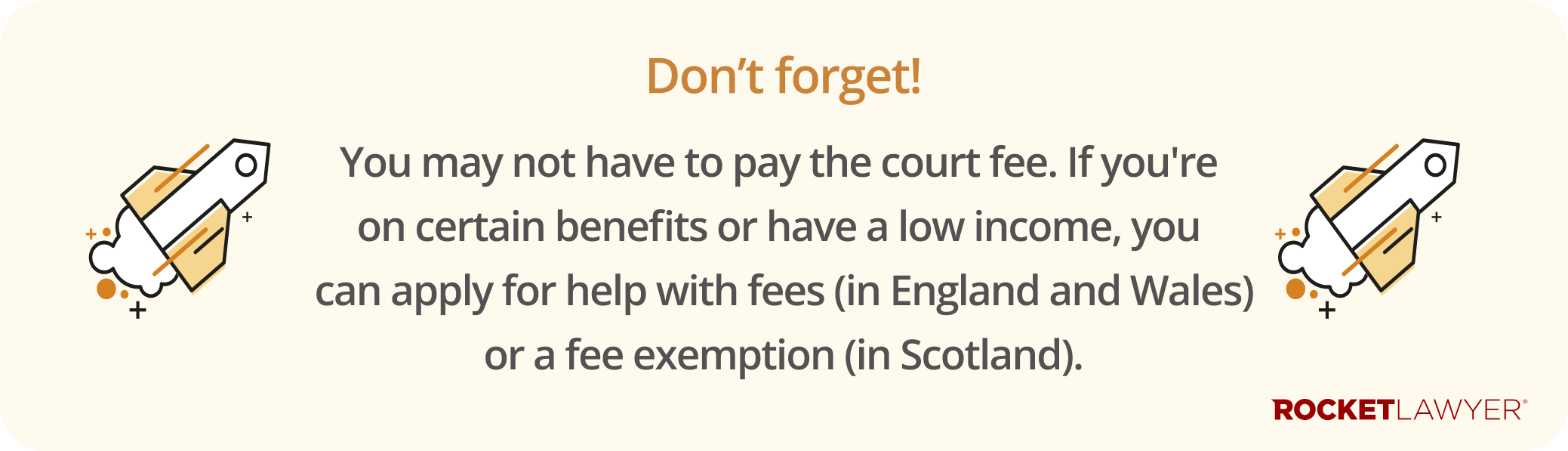
To apply for a divorce or dissolution in England and Wales, there's a fixed court application fee of £612. This fee applies whether you apply on your own (as a sole applicant) or with your partner (as a joint applicant).
Divorce costs in Scotland
The court fees in Scotland depend on which court you use. Most divorces use the local Sheriff Court, but complex cases may use the Court of Session (which has higher fees). The main court application fees are:
-
simplified procedure - £151 in the Sheriff Court and £157 in the Court of Session
-
the ordinary procedure - £185 in the Sheriff Court and £207 in the Court of Session
What about lawyers' fees?
The court fees noted above do not include the cost of legal advice. If you hire a lawyer to manage your case, their fees will be separate. These can range from a few hundred pounds for a simple, agreed-upon divorce to many thousands of pounds if your case is complex or you need to go to court to resolve disagreements about finances or children.
If you're considering separating, you can make a Separation agreement to start formalising your arrangements for children and finances before you divorce. If you have any questions about your specific situation, don't hesitate to Ask a lawyer. We also provide a fixed-price Divorce service to help you through the process in England and Wales.