What are the grounds for divorce in Scotland?
Under the Divorce (Scotland) Act 1976, there are two legal grounds you can use to get a divorce in Scotland:
-
irretrievable breakdown - your relationship has broken down permanently
-
gender recognition certificate - an interim Gender Recognition Certificate has been issued to one of you after the date of your marriage
You only need to use one of these grounds.
What is irretrievable breakdown of marriage?
Irretrievable breakdown is the most common ground for divorce. It means that the relationship has broken down so badly that there's no chance of you and your spouse getting back together.
You can't just tell a court that your marriage has broken down; you must prove this ground. You do this by providing evidence for one of the four facts recognised by Scottish law.
How do you prove irretrievable breakdown?
To prove your marriage has irretrievably broken down, you must use one of the following four facts:
Adultery
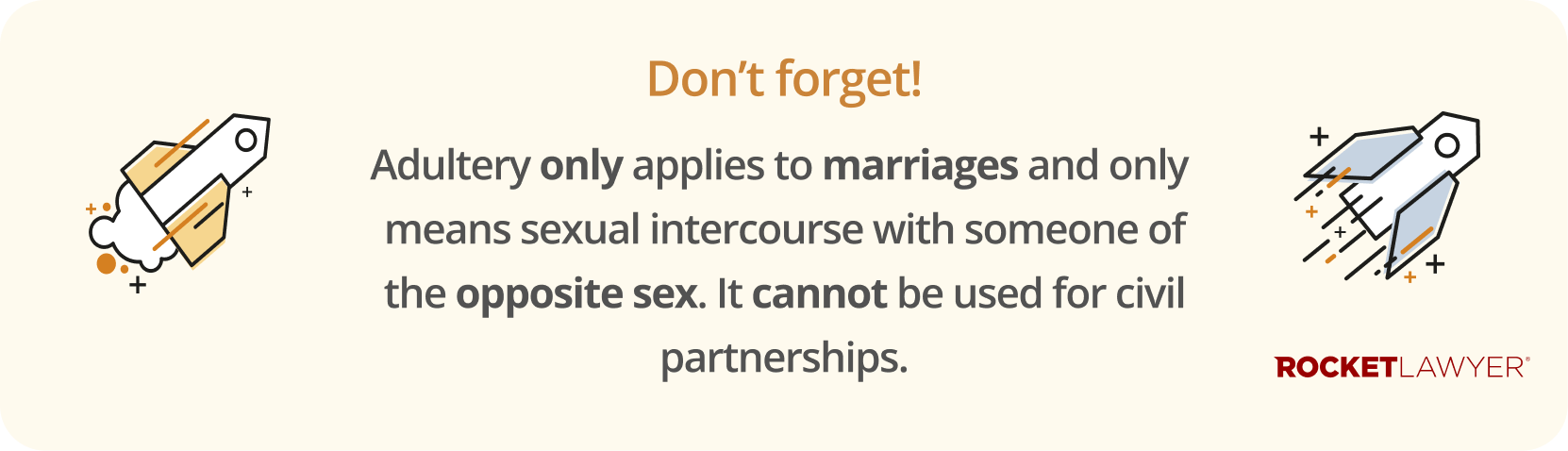
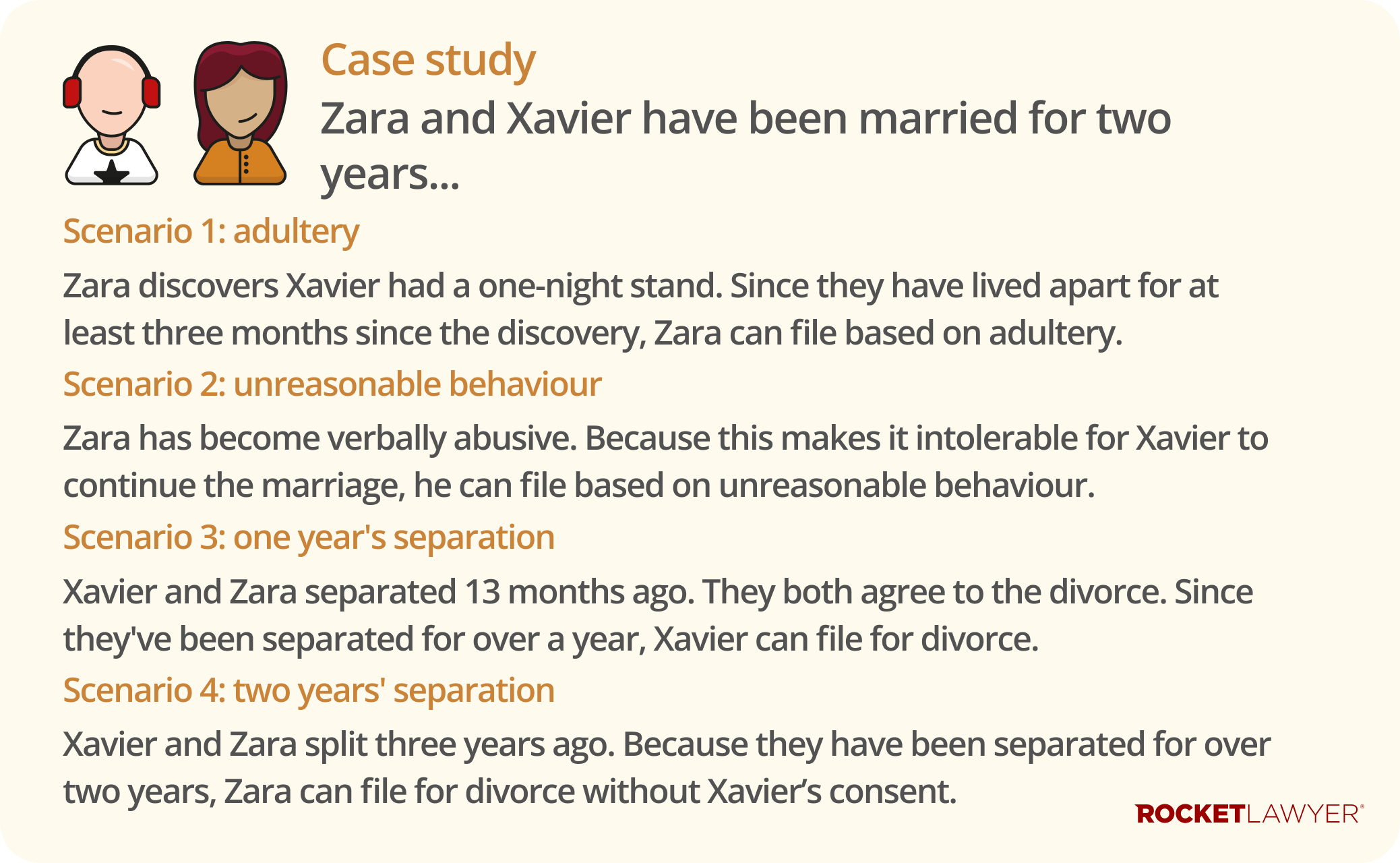
This is when your spouse has had sexual intercourse (not just a kiss or ‘heavy petting’) with someone of the opposite sex who is not you. You can only use the ground of adultery if you are the ‘innocent’ party (eg your spouse slept with someone else, and not if you committed adultery). However, if you both had sexual relationships with other people, either spouse can file for divorce.
There are two very important points here:
-
a sexual relationship with someone of the same sex is not legally considered adultery. It would instead be used as an example of 'unreasonable behaviour'
-
adultery cannot be used to dissolve a civil partnership
You also cannot use adultery as a fact if you lived together as a couple for more than three months after you knew about the adultery. This is because the law considers this to be 'condoning' (ie forgiving) the act.
Unreasonable behaviour
This is the most commonly used ground. It means your spouse has behaved in a way that you cannot reasonably be expected to live with them anymore.
The behaviour can include things like:
-
physical or verbal abuse (including excessive criticism)
-
drunkenness or drug misuse
-
controlling or coercive behaviour (eg dominating you or not letting you leave the house or see friends)
-
financial irresponsibility (eg running up large debts)
-
persistent gambling causing financial hardship
-
having an inappropriate relationship with someone else (including a same-sex affair or an emotional affair)
A court must agree that the behaviour is serious enough to make it unreasonable for you to stay together.
In reality, there is a very low standard when it comes to unreasonable behaviour, but some factual reason must be given, and an incident of ‘unreasonable behaviour’ must have occurred less than six months before filing for divorce
One year's separation (with consent)
You can use this fact if you and your spouse have lived apart for at least one year. Your spouse must agree (ie consent) in writing to the divorce. This is often the basis for a no-fault divorce.
If you get back together for a short time (up to six months in total) during the year, you can still use this ground, but the time you were back together doesn't count towards the one-year period.
Living apart doesn't just mean living at different addresses; you can be separated under one roof (or be ‘living apart together’). This means you both still live in the same home but are no longer living as a couple and lead completely separate lives. For example, you must:
-
sleep in different rooms
-
not cook or eat meals together
-
not do each other's laundry
-
manage your finances separately
Two years' separation (without consent)
You can use this fact if you and your spouse have lived apart for at least two years. If you've been separated for this long, you don't need your spouse's consent to get the divorce. This is used if one person wants the divorce, but the other doesn't agree to it.
What is the Gender Recognition Certificate ground?
This is the second, separate ground for divorce. You can apply for a divorce if either you or your spouse has applied for a Gender Recognition Certificate (GRC) and has been issued with an interim certificate. The interim certificate serves as legal proof for the court, enabling the divorce to be finalised so that a full GRC can then be issued.
This ground exists because, historically, a person could not change their legal gender while remaining married to their spouse.
Does the ground for divorce affect the process?
Yes, it can. If you're using a no-fault reason (such as one year's separation, two years' separation, or the interim GRC ground), you can often use the simplified procedure for divorce. This is a more straightforward, paperwork-based process. However, you can only use this procedure if there are no children under 16 and no financial matters to be sorted out by the court.
However, if you're using adultery or unreasonable behaviour, you must use the ordinary procedure, which is more complex. You must also use it if you have children under 16 or if you and your spouse can't agree on money or property.
For more information, read Four ways to end a marriage or civil partnership in Scotland.
If you're considering separating and want to know more about the initial steps, read our guide on Separating from your spouse or civil partner. For a detailed guide on what to do next, read The divorce process in Scotland. If you have any questions about your separation or which ground applies to you, you can always Ask a lawyer.