
What is administration? And what is an administrator?
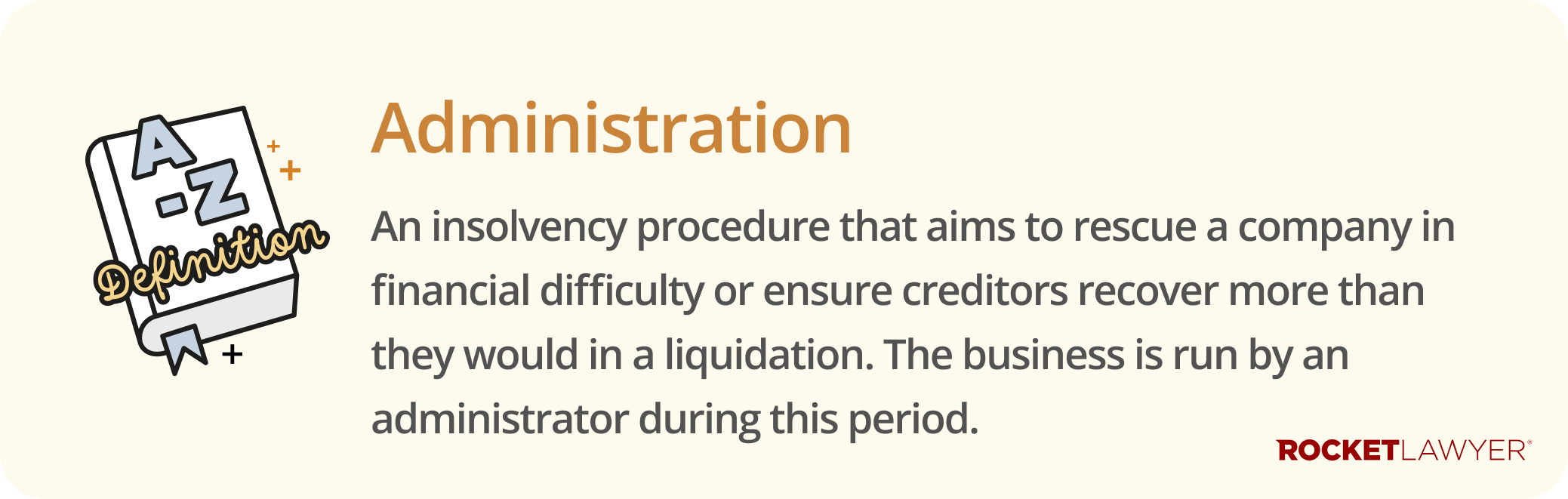
Administration is an insolvency procedure that is available for companies and LLPs (for the avoidance of doubt, references below to companies also apply to LLPs).
Administration is available when a company faces financial difficulties but wishes to carry on trading in an attempt to salvage the business.
While in administration, the company is run by an administrator. The administrator manages the company in an attempt to rescue it from liquidation.
For more information, read Administration.
What rights do I have if my employer is in administration?
This largely depends on your employment status.
An employee’s rights in administration
As an employee working within a company, you have certain employment rights. Employees with more than two years of service have additional employment rights (eg certain dismissal rights).
In situations involving administration, if an employee is employed by an administrator (ie if an administrator is running the company that employs them) for more than 14 days, their employment rights are considered to have been adopted by the administrator. Adopting employment contracts in this situation, however, does require some positive action. For example, the administrator continues the employee’s working contract in writing or (in most circumstances) continues to pay the employee’s wages.
Unfortunately, this means that most redundancies will often be made within the first two to four weeks of an administrator's appointment during an administration process.
If the company is sold on in a pre-pack administration (ie where the whole or part sale of a company or its assets is negotiated with a buyer before an administrator is appointed, the administrator should consider employees for TUPE (ie transferring their employment rights to the new owner). Note that this depends on the length of service of the individual.
If you work for a larger company with more than 20 employees, administrators must consult with the workforce about potential redundancies. In practice, it will make little difference if the money simply isn’t there. For more information, read Redundancy and Redundancy pooling and selection.
A contractor’s rights in administration
Now, if you are a consultant (ie contractor) or subcontractor, having a contract is vital. Without this, you have no right to claim for anything (eg a job or redundancy pay) in any administration situation. However, if you have a contract, then this works in your favour. You have the right to have the amounts in your contract covered by the administrator. However, it should be noted that as a contractor, you are an unsecured creditor and are unlikely to receive more than a very small percentage of what you are owed.
To understand the order of priority of claims, see Company Rescue’s guidance on who gets paid first.
For more information on employment status, read Consultants, workers, and employees.
Claiming payments owed during administration
When a company goes into administration, and you are dismissed, the administrator may not have the funds available to pay you what you're owed directly. However, as an employee, you are considered a preferential creditor for certain payments. This means that you can usually claim money owed to you (such as wages, holiday pay, and redundancy pay).
How much am I entitled to as an employee?
What exactly you will be entitled to if you are dismissed during administration depends on:
-
your employment status
-
how long you worked for the company
-
what your employment contract stated, and
-
your age
The payment amounts are capped and annually reviewed. Currently (as of 2025), it is as follows:
-
employees are typically paid weekly or monthly in arrears. As a result, pay for wages and other money you’re owed (eg overtime, bonuses, and commissions) is capped at £719 per week, for eight weeks
-
holiday pay entitlement is limited to six weeks due in the last 12 months, at £719 per week
-
any notice amount due from the employer (ie payment in lieu of notice) is payable at a limit of £719 per week
Redundancy payments (ie those made when an employee is made redundant) are capped at £719 per week. The total redundancy pay-out received depends on the length of the employee’s continuous service (20 years is the maximum accounted for), the employee’s weekly pay, and the employee’s age. For more information on redundancy payments, read Redundancy.
Any expenses you may have incurred as part of your employment are not covered and will have to be claimed alongside other creditors.
You can find out more about the different types of payments by reading the Department for Business and Trade (DBT)’s guide for employees. For more information on employee rights, see this video from Keith Steven, KSA Director, which provides a detailed explanation of employee rights.
Making an employee claim
If you are owed money (eg because the company becomes insolvent or it cannot or will not pay), you may be able to make a legal claim for what you are owed.
You can only make a claim to the Redundancy Payments Service (PPS) if you are:
-
an employee, and
If you are making a claim for redundancy, unpaid wages, and holiday pay, you can do this as soon as you’ve been made redundant. You must apply for redundancy pay within 6 months of being made redundant.
If you wish to claim for loss of notice pay (ie if your employer is insolvent and you were not paid notice pay), you will be told when you can make a claim. This is typically no more than 12 weeks after you were dismissed. Note that you must first apply for redundancy (even if you are not owed any money).
You can make a claim by contacting the RPS. Your employer’s administrator can help you with this.
To make a claim, you will need to file an RP1 form. You can also make claims online via the government’s portals for:
It typically takes six to eight weeks for your claim to be processed and paid.
Payments owed are paid from the National Insurance Fund, which every worker pays into. Unfortunately, it is often the case that employees are made redundant just before payday. This is because the administrators would rather employees claim on the fund than run down the company’s account so that it wouldn’t be able to pay its other creditors, such as suppliers, banks, and HMRC.
For more information, see the government’s guidance on applying to the RPS.
For more information on administration in general, read Administration. Remember that you can always Ask a lawyer if you have any questions.