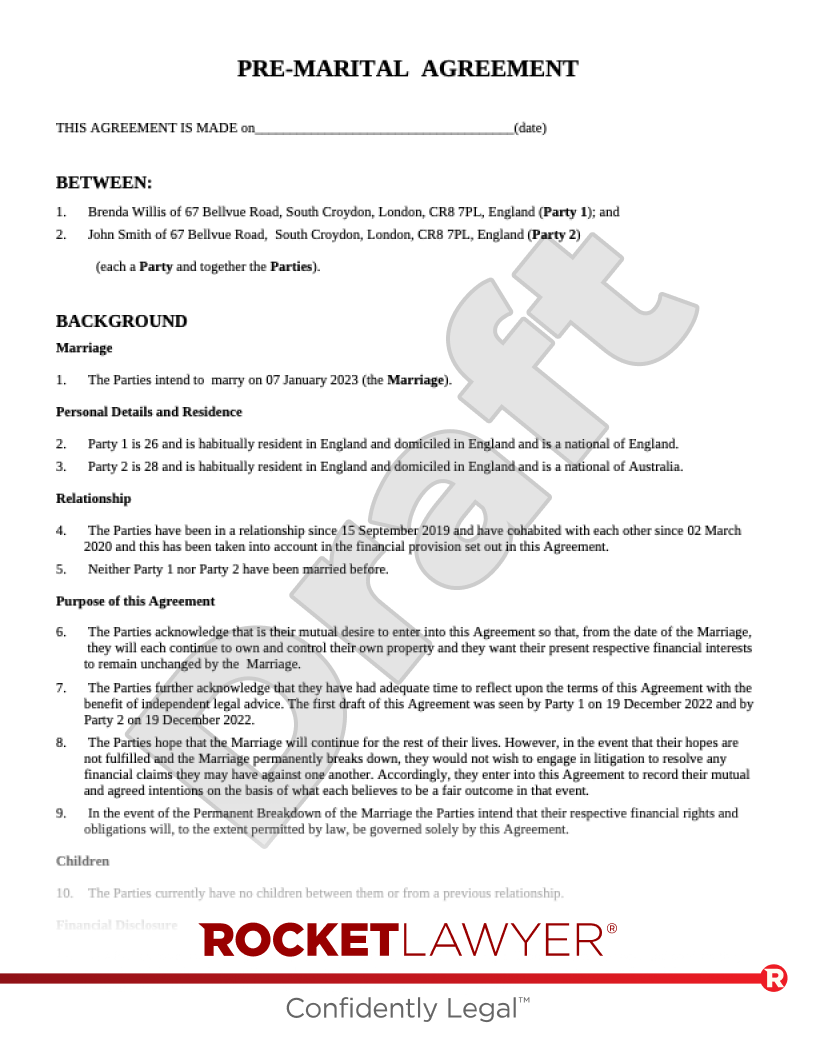
What are prenups?
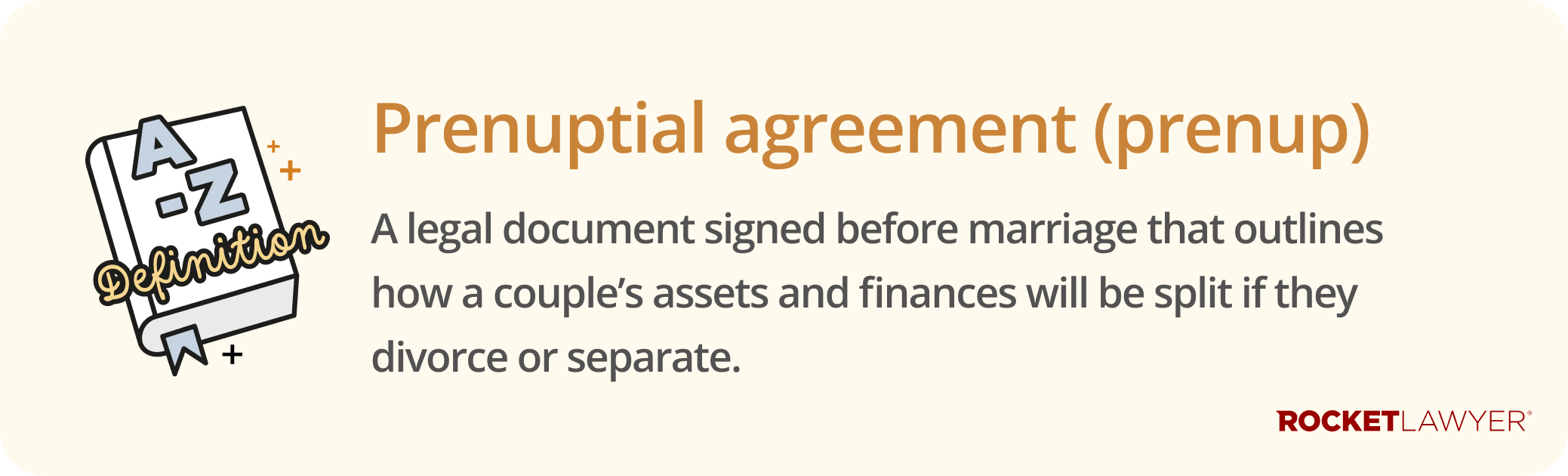
Prenuptial agreements (often simply called 'prenups') are agreements made by couples before they get married. Prenups also exist for couples entering into a civil partnership, although they are officially called Pre-civil partnership agreements. For the purposes of this guide, the terms ‘prenup’, ‘marriage’, and ‘spouse’ also refer to ‘pre-civil partnership agreements’, ‘civil partnership’, and ‘civil partner’.
Why should I make a prenuptial agreement?
When you marry, your assets become 'matrimonial assets' and, unless specifically protected, can be considered for division as part of divorce proceedings. The main purpose of a prenup is to limit potential claims on the assets of one of the parties to the marriage, thereby avoiding costly litigation.
There are several practical benefits to making a prenup:
-
you can avoid uncertainty - a prenup enables you to avoid uncertainty, and prevents surprises in the event of a divorce by setting clear expectations from the start
-
you can protect your assets - you can 'ring-fence' property, inheritances, or family heirlooms so they stay in your family
-
you can evenly distribute debts - you can determine how liability for debts will be shared, protecting you from a partner's poor credit history and debts
For business owners, a prenup is especially significant. It allows you to value your business before the marriage, ensuring that pre-marital equity is protected. Without an agreement, a spouse could potentially claim a beneficial interest in your business; particularly if marital funds were used to support it or if they provided childcare that enabled you to grow your business.
Are prenups legally binding?
The law handles prenups differently depending on where you live in the UK.
How binding are prenups in England and Wales?
In England and Wales, penups are not legally binding. However, since the landmark case of Radmacher v Granatino, the courts will generally take prenups into consideration, provided certain safeguards are met.
In practice, 'taking them into consideration' means that if the agreement is fair, the court will often use it as the starting point for dividing assets. The court effectively treats the agreement as a baseline. Unless there's a compelling reason to ignore it – such as it being unfair to any children or leaving one partner in significant financial need – a judge is likely to hold you to the terms you signed. It shifts the burden of proof; you would have to explain to a judge why a document you both signed freely should not be followed.
How binding are prenups in Scotland?
In Scotland, prenuptial agreements have a stronger legal standing. They're viewed as enforceable contracts between two adults so long as they are fair and reasonable at the time they are entered into.
While a court can still set an agreement aside if it was unfair or unreasonable at the time it was made, they're generally considered legally binding from the moment they're signed.
What can prenups not be used for?
It’s vital to remember that prenups will never be allowed to disrupt the welfare of any children you have now or in the future. A court will always have the final say on child maintenance and custody based on the child's best interests at the time of the split.
Additionally, a prenup cannot be used to coerce someone into 'unconscionable' or extremely one-sided terms. You also cannot include 'lifestyle' or 'infidelity clauses' that dictate personal behaviour or penalise someone for cheating. Courts focus on financial fairness rather than policing the private morality of your relationship.
How can I ensure my prenup is upheld?
For a prenuptial agreement to be effective, it must be prepared carefully. The courts in different jurisdictions look for specific safeguards to ensure that neither party is being treated unfairly.
What safeguards do prenups need to meet in England and Wales?
In England and Wales, the following safeguards need to be met for a prenuptial agreement to be considered (and potentially upheld) by the courts:
-
the prenuptial agreement was made at least 28 days before marriage - this shows the court that the prenup wasn't a last-minute decision made under the stress of wedding planning or emotional pressure
-
each party received legal advice about the prenuptial agreement from the outset (you can use our Independent prenup advice service to meet this requirement) - this ensures everyone fully understands their rights and what they might be giving up
-
each party made full and frank disclosure to the other of their financial wealth - this involves providing a complete and honest list of all property, bank accounts, savings, business interests, debts, pensions, and even vehicles so that no assets are hidden from the other person. Providing incorrect or incomplete information can make the entire agreement invalid
-
neither party was under pressure or duress to sign the agreement against their will - this helps ensure the decision to enter into a prenup is entirely voluntary and not a condition of the wedding going ahead
-
there have been no significant changes rendering the prenuptial agreement inappropriate - this includes the birth of any children, a disability, or the loss of employment, as these events might make the original deal unfair in the eyes of a judge
-
the prenuptial agreement is fair and realistic - this is important as the courts are unlikely to uphold an agreement weighted too heavily in favour of one party, leaving one person with nothing while the other remains wealthy
-
the prenuptial agreement is reviewed and amended during the course of the marriage, particularly when children are born - this reduces the likelihood of the agreement not being enforced due to the length of time elapsed since it was first made, and ensures it stays relevant to the couple’s changing lives
The prenuptial agreement is unlikely to be upheld by the courts if these safeguards are not met.
When is a prenup fair and reasonable in Scotland?
In Scotland, the following requirements need to be met to show that the prenuptial agreement is fair and reasonable under the Family Law (Scotland) Act 1985:
-
each party must have had sufficient time to fully consider and understand the terms of the prenuptial agreement before entering into it - this avoids any suggestion that the contract was rushed or misunderstood
-
each party must have been aware of all information necessary to allow them to fully consider the terms - this means you must be completely transparent about your financial position and what you own
-
each party must have received separate and independent legal advice - in other words, both parties have a professional looking out for their individual interests, rather than one person's lawyer handling everything
-
neither party was under pressure or duress to sign the agreement against their will - this is crucial as any hint of coercion or 'take it or leave it' ultimatums could make the contract void
-
the prenuptial agreement must either be made well in advance of the wedding or, where it was entered into shortly before the wedding, discussions regarding the terms must have been ongoing for a reasonable period prior to the big day to show it was a considered decision
-
the agreement must not contain terms that are 'unconscionable' - this means they are so one-sided or unfair that no reasonable person would have agreed to them at the time
The prenuptial agreement is unlikely to be binding if these criteria for its fairness and reasonableness are not met.
What are habitual residence and domicile, and why are they important for prenups?
Prenuptial agreements should set out where each person is habitually resident and domiciled. These concepts determine which country's laws apply to your marriage and any future separation.
How do I define my habitual residence?
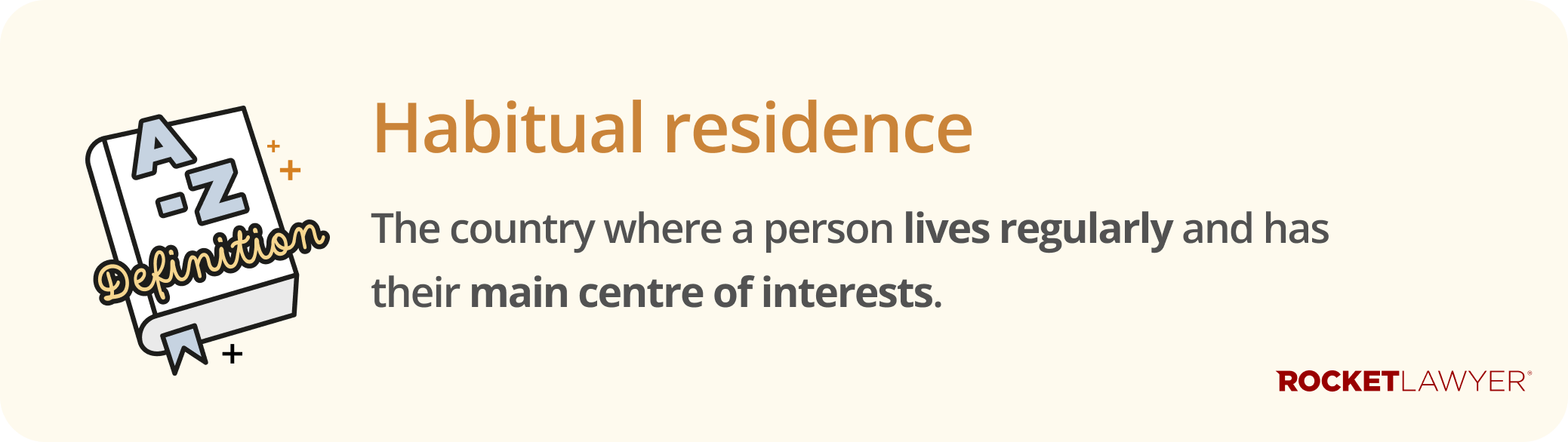
Somebody’s habitual residence is the country where they live regularly and have their main centre of interests. It’s where your daily life actually happens. Examples of a habitual residence include:
-
the country in which you have lived all your life (eg England), even if you go on holiday to another country for a few months
-
a country you move to for a set period of time because of your job
-
the country you move to, even if you have only been there a few days, if you intend to live there for a longer period of time
It’s important to note that you do not lose your habitual residence during a temporary absence, such as working or studying abroad, as long as that absence is consistent with you still 'living' in your home country.
What does domicile mean?
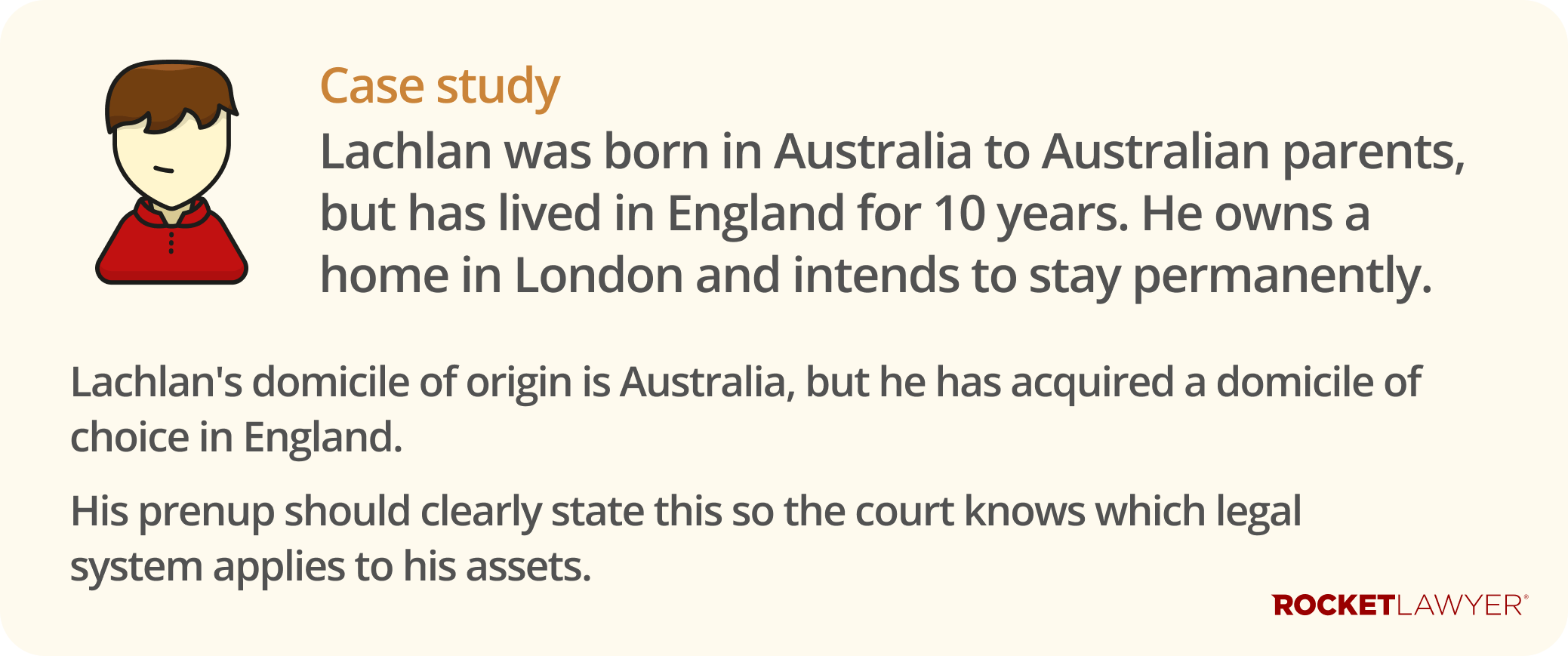
Domicile is harder to define than habitual residence because it focuses on your permanent home and close ties. Your country of domicile is the country in which you have voluntarily chosen to live, with the intention of making it your permanent home.
You can only have one domicile at a time, and it will be one of the following:
-
a domicile of origin - this is the domicile you automatically acquire at birth. It will often be the country in which your father was domiciled at the time of birth. Most people’s domicile of origin will be their country of birth
-
a domicile of choice - this is the country you move to with the clear intention of making it your permanent home (until or unless something changes your mind)
Your domicile of origin is never fully lost, but your domicile of choice can suspend it.
How are habitual residence and domicile established?
When making a prenuptial agreement, you (and your partner) will need to consider several factors to prove your residence and domicile status. These include:
-
nationalities
-
where you normally live, work, study, and spend your free time
-
whether moves abroad are temporary or permanent
-
whether you move your financial affairs, properties, or furniture when you move abroad
-
where your cars are registered and your mail is sent
-
where you’re registered to vote or registered with a GP
-
whether you use UK or foreign phone numbers
-
where your bank accounts, accountants, and tax statuses are based
For more information or for help working out your habitual residence or domicile, Ask a lawyer.
Can we change our prenup after the wedding?
If you've already married or want to update your existing prenup, you can make a Postnuptial agreement (postnup). This works in a similar way but is signed during the marriage. Many couples choose to turn their prenup into a postnuptial agreement shortly after the wedding to show the court they’re still happy with the terms. For more information on postnups, read Postnuptial agreements.
If you’re ready to start, you can make a Prenuptial agreement; alternatively, you can have a bespoke prenup drafted. Remember to always seek independent legal advice before signing your prenup. Do not hesitate to Ask a lawyer if you have any questions or concerns.