What is a late payment?
A payment is considered late the moment your customer misses the deadline you’ve set for payment (typically in an Invoice). Whether your terms are 14 days, 30 days, or something else entirely, an invoice officially becomes overdue the very next day if the full amount hasn't arrived in your account.
You’re free to agree on whatever payment terms suit your business, provided they’re clearly stated in your contracts or terms and conditions. If you haven’t agreed a specific timeframe, a default 30-day limit usually applies. This starts from the date the client receives your invoice or the day you deliver the goods or services (whichever happens later). For more information, read Invoicing.
Late payments are more than just a nuisance; they can seriously threaten your business's stability. It's essential to stay on top of your accounts and act quickly as soon as a payment is overdue.
What are payment reminders?
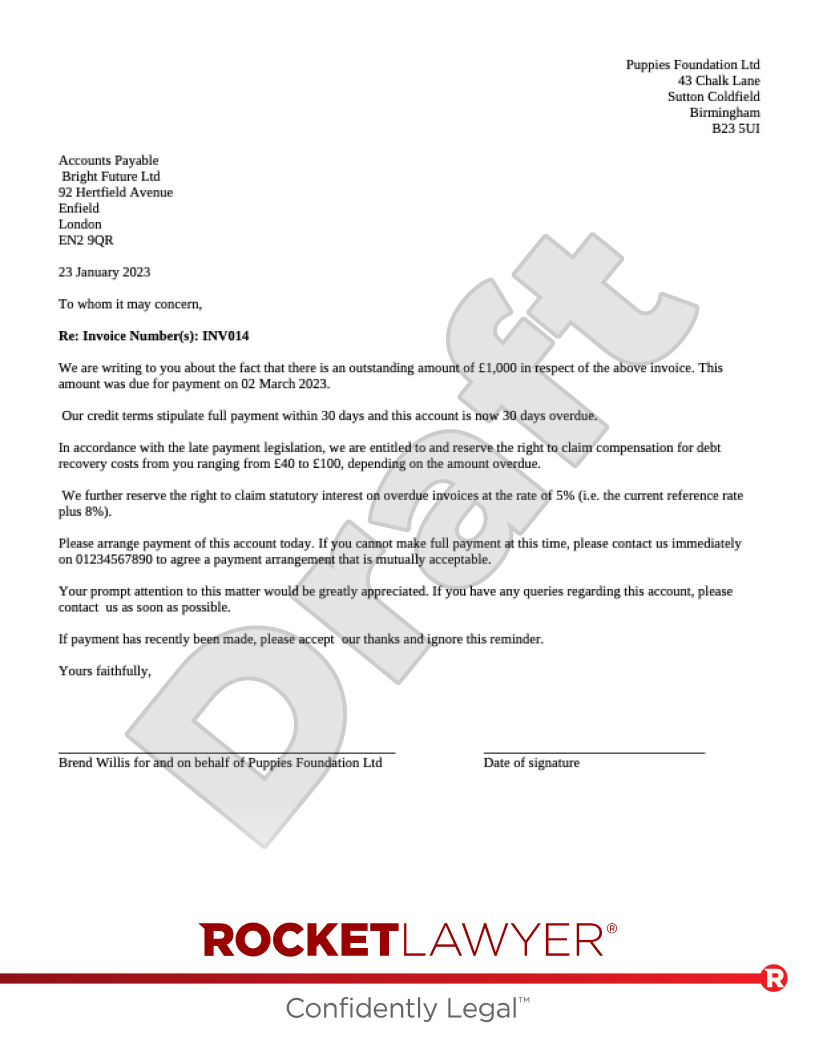
Payment reminders are informal or formal communications sent to a customer to alert them that an invoice is overdue. They act as a nudge to encourage payment before you have to take more serious legal steps. These reminders typically constitute the initial stage of the debt recovery process.
A formal payment reminder provides a clear record of the late payment and the total amount outstanding. It identifies the specific invoices that haven't been paid and highlights the breach of the agreed credit terms.
You'll usually start with a friendly, informal reminder (like an email or phone call) as soon as the payment is late. If this doesn’t work, you’ll move on to a series of more formal letters. Using a consistent process shows your customers that you’re professional and serious about being paid on time.
How do I send a payment reminder?
The best way to send a payment reminder is usually by email or post, so you have a clear record of your correspondence.
You should start the process the day after the invoice becomes overdue. Your first reminder should be polite, assuming the customer has simply forgotten.
As time goes on, your reminders should become firmer.
A typical schedule might look like this:
-
a First debt recovery letter is sent one to seven days after the due date
-
a Second debt recovery letter is sent once the deadline given in your first letter has passed, and you feel it's reasonable to follow up
-
a formal Letter before action is sent if the debt remains unpaid after the deadline set in your second reminder has passed, to formally start legal action (more on this below)
If you’re chasing another business, you can mention that you're entitled to charge statutory interest and debt recovery costs if they don't pay. However, it’s essential to strike a balance between getting paid and maintaining a good relationship with your customer. You might choose to ‘reserve your position’ in your first reminder, which means you let them know you have the right to charge interest without actually adding it to the bill just yet. This keeps the door open for an amicable resolution while showing you know your rights.
To ensure you stay on track throughout this process, you can follow our How to recover debt checklist.
What is statutory interest?
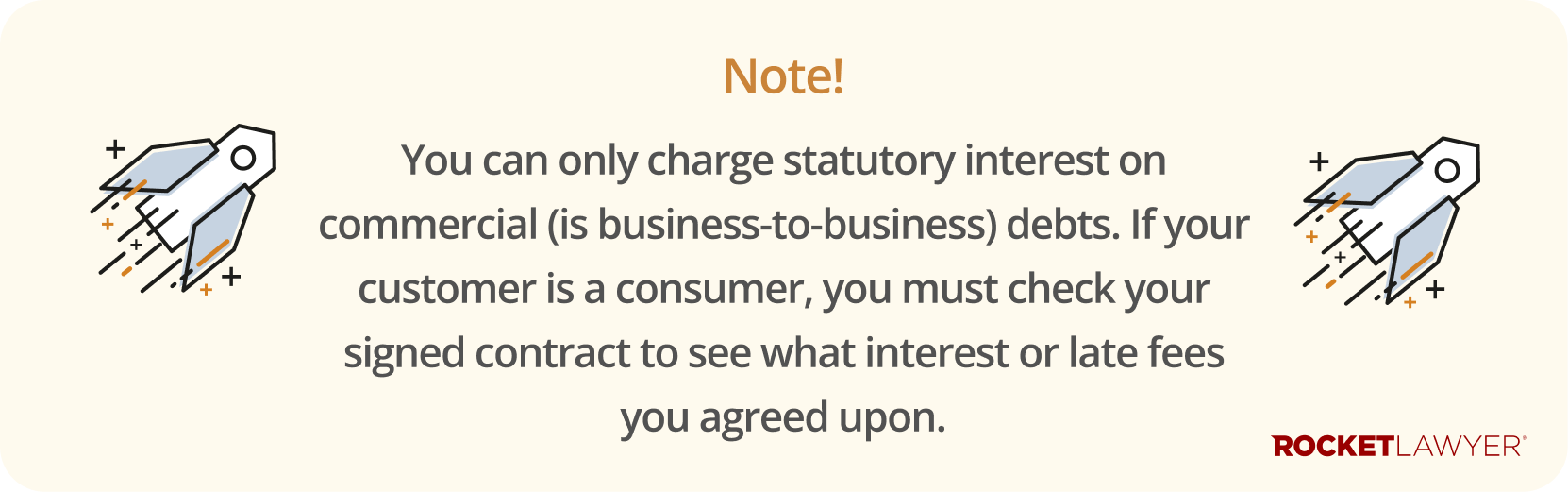
Statutory interest is the interest you're legally allowed to charge another business on late payments. Under the Late Payment of Commercial Debts (Interest) Act 1998, you can charge interest at 8% plus the Bank of England base rate for commercial debts. You can also charge a fixed sum to cover your debt recovery costs. For more information, read Calculating interest on commercial debts.
What happens if a customer offers to pay in instalments?
Sometimes a customer acknowledges the debt but can't afford to pay the full amount at once. If they propose a payment plan, you can choose to accept payments in instalments. This is often better than receiving nothing or spending months in court.
If you agree to a plan, you should make a Letter accepting payments in instalments to formalise the arrangement. This keeps the process professional and ensures both parties understand the new schedule. For more information, read Repayment agreements.
Can I stop providing services if I'm not paid?
If your contract contains an express right to do so, you may be able to suspend your services or stop delivering goods until outstanding invoices are settled. This is often a powerful incentive for a customer to pay, especially if they rely on your business to operate. However, you cannot usually stop work unless your contract specifically allows for it.
Check your terms and conditions or contract for a suspension clause. You must usually provide the customer with formal notice before stopping work. Be careful not to breach your own contract by stopping work without the express legal right to do so, as this could give the customer grounds for a counterclaim against you. If you're unsure whether your contract gives you the right to stop work, you can use our Document review service to have a lawyer check your documents.
What steps must I take before starting court action for an unpaid invoice?
You must try to settle a claim before taking court action. The courts expect you to behave reasonably and may penalise you if you haven't tried to resolve the matter first. Only consider court action if your payment reminders and other efforts haven't worked.
It's essential to give the customer a final chance to pay before starting legal action.
What are the rules in England and Wales?
In England and Wales, the court expects you to set out your claim in writing before starting proceedings. You must make a Letter before action that details the debt and gives the other party a reasonable time to respond—usually 30 days.
You must also warn them that you'll start court action if they don't reply.
For more information, read Issuing a money claim.
What are the rules in Scotland?
In Scotland, the process depends on the value of the debt. The 'simple procedure' is used for most cases worth £5,000 or less. If the debt is worth more than £5,000 or is particularly complex, the 'ordinary cause' procedure is used. For more information, read Small claims court in Scotland.
If a customer has failed to pay an invoice, you can make a First debt recovery letter, a Second debt recovery letter, and/or a Letter before action to formally demand payment. For more complex situations or if you want to avoid court, consider using our Dispute resolution service.
Do not hesitate to Ask a lawyer if you have any questions or need help with your debt recovery process.