What is a B2B e-commerce transaction?
To understand what a B2B e-commerce transaction is, two key questions have to be addressed:
1. What is an e-commerce transaction?
An e-commerce transaction is any trade where you buy or sell goods or services using the internet. For more information, read What is e-commerce?
2. What is B2B?
B2B stands for business-to-business. It refers to a commercial situation where one business sells products or services to another business rather than to a consumer.
Because both parties are businesses, the law assumes they have more equal bargaining power than a business and a consumer. This means different rules apply to these contracts, and you have more freedom to negotiate terms.
A B2B (business-to-business) e-commerce transaction happens when one business sells goods or services to another business via the internet. This could be through a dedicated online portal, a website, or an app.
Unlike business-to-consumer (B2C) sales, B2B e-commerce sales aren't covered by the Consumer Rights Act 2015. Instead, they’re governed by the Electronic Commerce (EC Directive) Regulations 2002 and general contract law. This gives you more flexibility to limit your liability.
For more information on the general rules for all online sales, read Legal requirements for online businesses.
What are the rules for forming B2B online contracts?
When a business customer places an order on your site, you must follow a specific technical process to ensure the contract is legally binding. Under The Electronic Commerce (EC Directive) Regulations 2002 (the Regulations), you must provide certain information before the order is placed and finalised. These include:
Information requirements
If your business is covered by the Regulations, you must be transparent about who you are. You must share specific details with your customers, including your full business name, your geographic address, and your VAT number (if you've got one). Additional requirements apply to private limited companies.
Being clear about your registration details doesn't just keep you compliant; it helps build trust with other businesses. For more information on the details you have to display on your B2B website, read Legal requirements for online businesses.
Pricing requirements
Your pricing shouldn't be a mystery. You must ensure that any prices on your website clearly state whether they include 'hidden' charges, like VAT and delivery costs. Essentially, your prices should be clear and unambiguous. While business customers often expect to see prices excluding VAT, you must make this obvious from the start so there aren't any surprises at checkout.
Codes of conduct
If your business follows any specific codes of conduct (whether they're industry-specific or professional standards), you must let your customers know. You're also required to provide advice on how your customers can consult these codes online. This transparency shows your business customers that you’re committed to high standards of practice.
Explaining the technical steps
You must clearly explain the different technical steps the customer needs to take to complete the order and form a contract. This usually means outlining the process from adding an item to the basket to the final 'buy' button. If you don't follow these steps, the contract might not be enforceable.
Correcting input errors
Your website must provide the technical means for your business customers to identify and correct any input errors before they finalise their purchase. This is often done via an 'order review' page that appears before the final payment or confirmation step.
Sending an acknowledgement
Once the business customer has placed their order, you’re required to acknowledge it without undue delay by electronic means. This is typically handled by an automated email. This acknowledgement doesn't necessarily have to be an 'acceptance' of the order, but it must confirm you’ve received it.
For more information, read Legal requirements for online businesses and Contracts for customers.
How do returns and cancellations work in B2B e-commerce?
B2B sales are exempt from the Consumer Contracts (Information, Cancellation and Additional Charges) Regulations 2013, which grant consumers certain cancellation, return, and refund rights. This means business customers don't have an automatic 14-day 'cooling-off' period or the same statutory rights to return items that an individual consumer would.
Instead, the terms of your contract – typically your Terms and conditions – entirely govern your returns and cancellation policy. This gives you much more control over how you handle returned goods or cancelled services. Because the law doesn't protect business buyers as it does consumers, it's essential that your specific rules are clearly displayed before the sale. For more information on how this differs for consumers, read Doing business with consumers or Ask a lawyer.
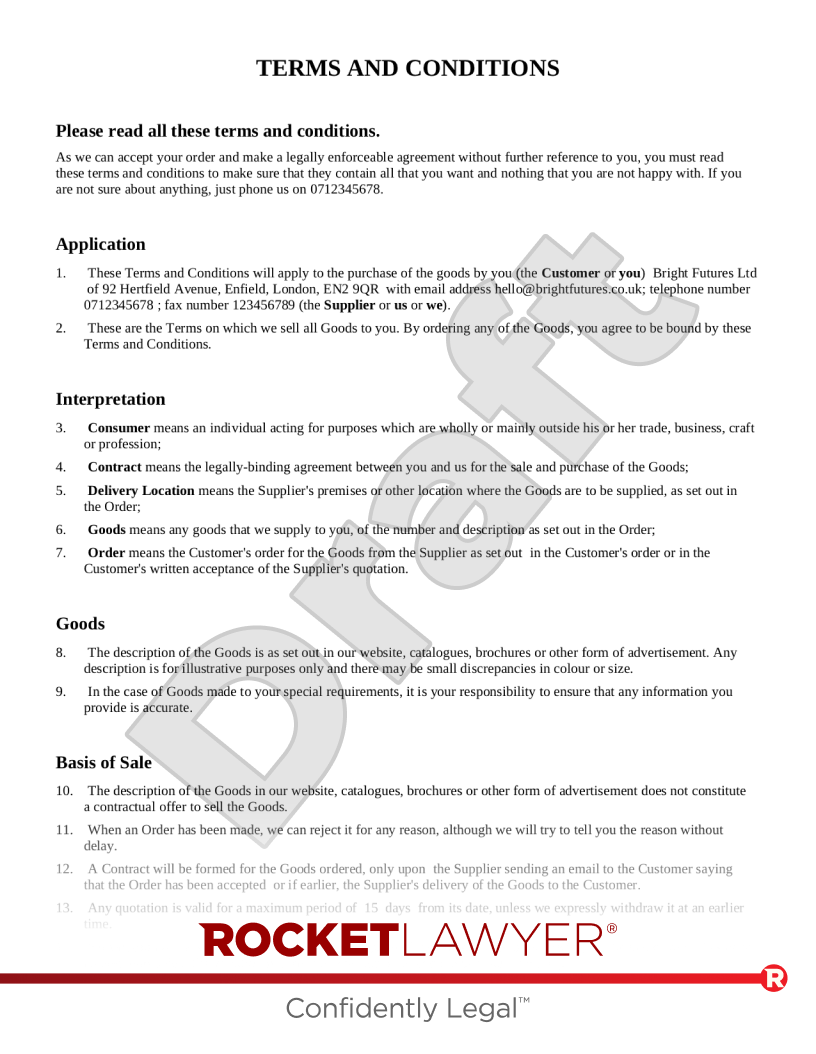
Take care to create and implement appropriate and relevant Terms and conditions for your B2B e-commerce store, to ensure you meet all legal requirements. If you would like tailor-made terms and conditions, use our Bespoke drafting service. If you've got a specific question about B2B, e-commerce, return policies, or contract formation, don't hesitate to Ask a lawyer.