What is a breach of a property covenant?
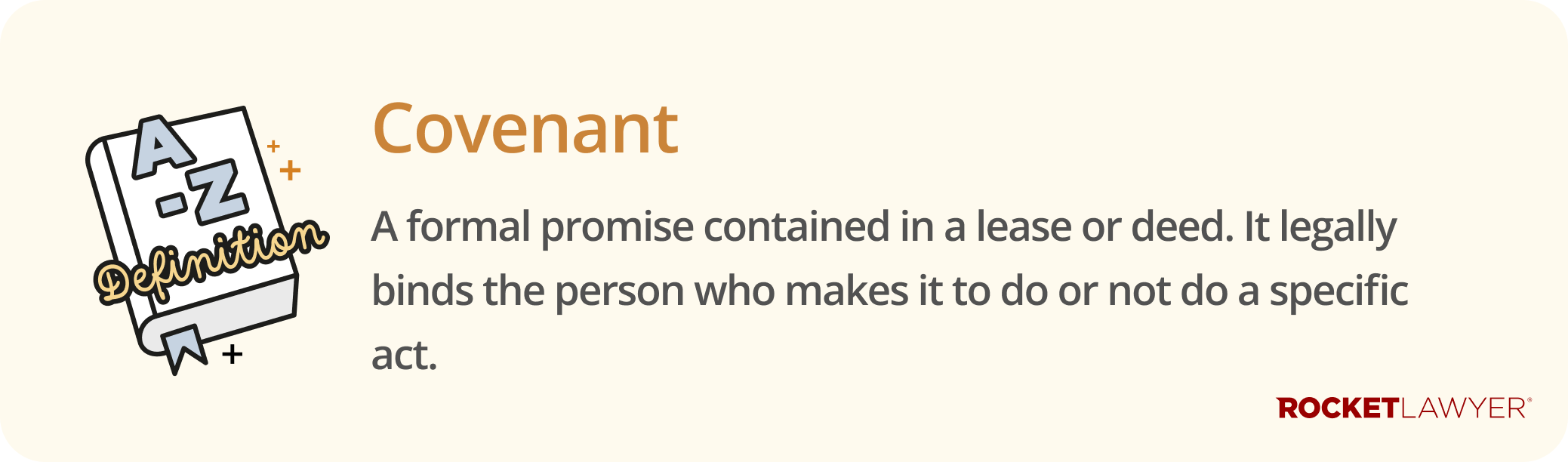
In a property lease, a covenant is a formal promise to do (or not do) something. For example, a Commercial lease will almost always include a covenant for the tenant to pay rent. It may also include covenants to:
-
keep the property in good repair
-
not make alterations without the landlord's permission
-
not sublet the property or assign the lease without the landlord's permission
-
only use the property for a specific purpose (eg as an office)
A breach of covenant occurs when either the tenant or the landlord fails to comply with one of these terms.
For more information, read Restrictive covenants for property.
What are a landlord's main remedies for a breach?
What a landlord can do depends on the type of breach, the terms of the lease, and the specific circumstances. The main remedies a landlord has against a tenant in breach are:
-
forfeiture - ending the lease early to take back the property
-
a claim for damages - suing the tenant for money to compensate for a loss
-
an injunction - asking a court for an order to stop the tenant from doing something
-
a 'standard' debt claim - suing the tenant for the money they owe (eg rent arrears)
-
using self-help options - such as using the Commercial Rent Arrears Recovery (CRAR) process for rent or drawing on a rent deposit
How do I start the forfeiture process?
Before you can forfeit, you must establish your legal right to do so. The steps you must take depend on the type of breach.
For non-payment of rent
If the tenant hasn't paid the rent, the process is more straightforward. You:
-
must check the lease - ensure that the lease contains a 'forfeiture clause' or 'right of re-entry'. Without this clause, you don't have the right to forfeit
-
must wait - the clause will state how long the rent must be overdue before you can forfeit (eg 14 or 21 days)
-
do not need a notice - you do not need to serve a breach of covenants notice on the tenant. Once the rent is overdue for the time specified in the forfeiture clause, your right to forfeit arises automatically
For all other breaches (eg repairs or subletting)
For any other breach, you must follow a more formal procedure. You must:
-
check the lease - you must have a forfeiture clause, as you cannot forfeit the lease without it
-
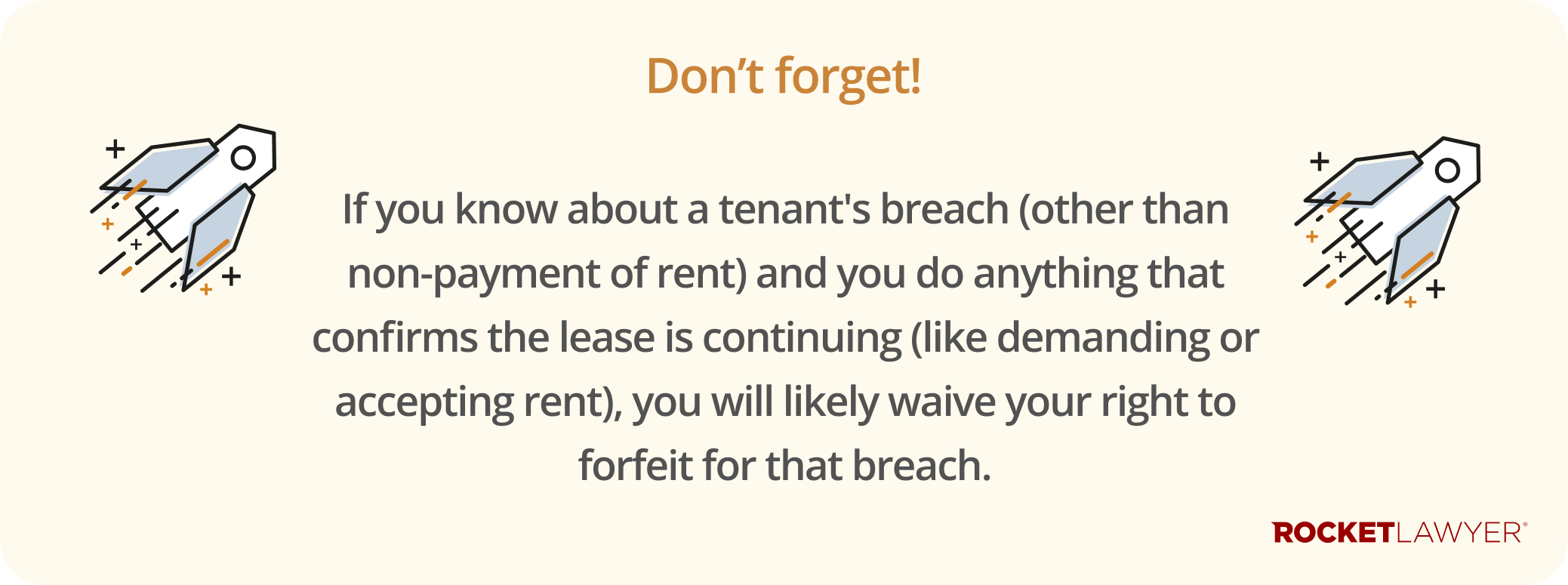
not waive the breach - this is a critical trap. If you know about a breach (eg an unauthorised shop front) and you then do something that recognises the lease is still active (like demanding or accepting rent), you lose your right to forfeit for that specific breach
-
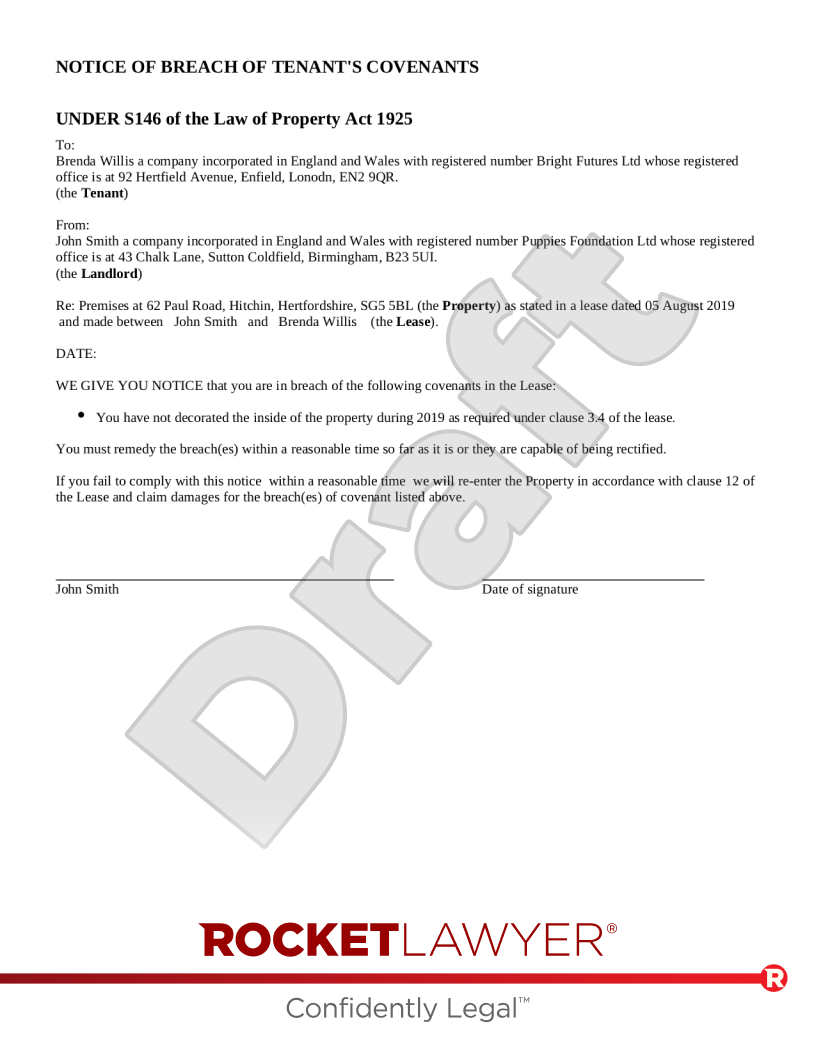
serve a Section 146 notice (from the Law of Property Act 1925) - you must serve this formal notice on the tenant that specifies the breach and gives them a 'reasonable' time to fix it (if it's fixable). What is reasonable depends on the nature of the breach (eg a minor repair might take a few weeks, while a major structural issue could take months)
Special rules for repair breaches
If the breach is a failure to repair, and the lease is for a term of seven years or more (with at least three years remaining on the lease), the Leasehold Property (Repairs) Act 1938 applies. Under this Act, after you serve the Section 146 notice, the tenant can serve a 'counter-notice' within 28 days. If they do, you cannot proceed with forfeiture or a claim for damages without first getting permission from the court.
What are the methods of forfeiture?
Once your right to forfeit has arisen (either by rent arrears or an expired Section 146 notice), you have two methods to actually take back the property.
Peaceable re-entry
This is a 'self-help' method where you physically retake possession of a commercial property without a court order. In practice, this means entering the property and changing the locks. Peaceable re-entry is often facilitated by bailiffs, usually when the property is empty. If you're considering this option, you must be aware of several key rules:
-
it's for commercial properties only - you can only do this if the property is purely commercial. You can't use it if there's any residential element, like a flat above the shop
-
it must be 'peaceable' - this is the most critical rule. If anyone is present and opposes the entry, you (or your bailiffs) must leave immediately. Using or threatening force is a criminal offence
-
you must post a notice - after changing the locks, you must display a clear and visible notice. This should state that you've forfeited the lease by re-entry and provide details for the tenant to arrange collection of their goods
Court proceedings
This is the alternative to peaceable re-entry. It's a safer, more formal method where you start a formal possession claim in the County Court. You ask a judge to grant a possession order, which confirms the lease is terminated and gives you the legal right to the property.
Can a tenant stop the forfeiture?
Yes, even after you have forfeited, the tenant can apply to the court for 'relief from forfeiture'. The court's decision generally depends on the reason for the forfeiture:
-
for rent arrears - a court will almost always grant relief if the tenant pays all the rent arrears and the landlord's costs
-
for other breaches - the court has the discretion to grant relief. It will look at the tenant's conduct, the seriousness of the breach, and whether it has been fixed
What if I don't want to forfeit the lease?
Forfeiture is a very serious step and isn't always the best commercial option. You may want to preserve the lease, especially if you can resolve the breach in another way. Your options depend on the type of breach that occurred.
Alternatives for non-payment of rent
If the tenant has failed to pay the rent, you could consider:
-
discussions with the tenant - to try and resolve the issue
-
using a rent deposit - to cover the missed rent, subject to the terms of the Deposit deed
-
calling in a guarantee - to demand payment from a third-party guarantor, if one is in place
-
a standard debt claim - in the county court to recover the money owed
-
serving a statutory demand - a formal notice that can be used as evidence of insolvency if the tenant doesn't pay or challenge it
-
using the CRAR process - to hire an enforcement agent to seize the tenant's goods to cover the rent owed
Alternatives for other breaches
If the tenant has breached the lease in another way, you could consider:
-
negotiations with the tenant - to find a solution
-
claiming damages - by making a court claim to get compensation for your loss
-
seeking an injunction - a court order to stop the tenant from continuing the breach
Dealing with a breach of covenant can be complicated, especially the rules around waiver and forfeiture. If you're a landlord and your tenant is in breach, you can make a Notice of breach of covenants (ie a Section 146 notice). For specific advice on your situation, don't hesitate to Ask a lawyer.