What is the 48-hour working week?
The Working Time Regulations 1998 set a limit on how many hours a person can work. Generally, workers shouldn't work more than an average of 48 hours a week. This limit is usually calculated over a reference period of 17 weeks. It means that while a member of staff might work 55 hours one week, they're compliant as long as their average over the 17-week block doesn't exceed 48.
This rule applies to most workers, including employees and some freelancers, but it doesn't cover those who are genuinely self-employed.
What counts as working time?
Working time includes any period where a worker is at their employer’s disposal and carrying out their duties. This includes:
-
time spent on 'on-call' duties at the workplace
-
time spent on the phone while on call away from the workplace
-
work-related training
-
travelling as part of the job (but not the normal commute)
-
working lunches
-
time spent working abroad for a UK-based business
-
work done at home at your request
What are opt-out agreements?
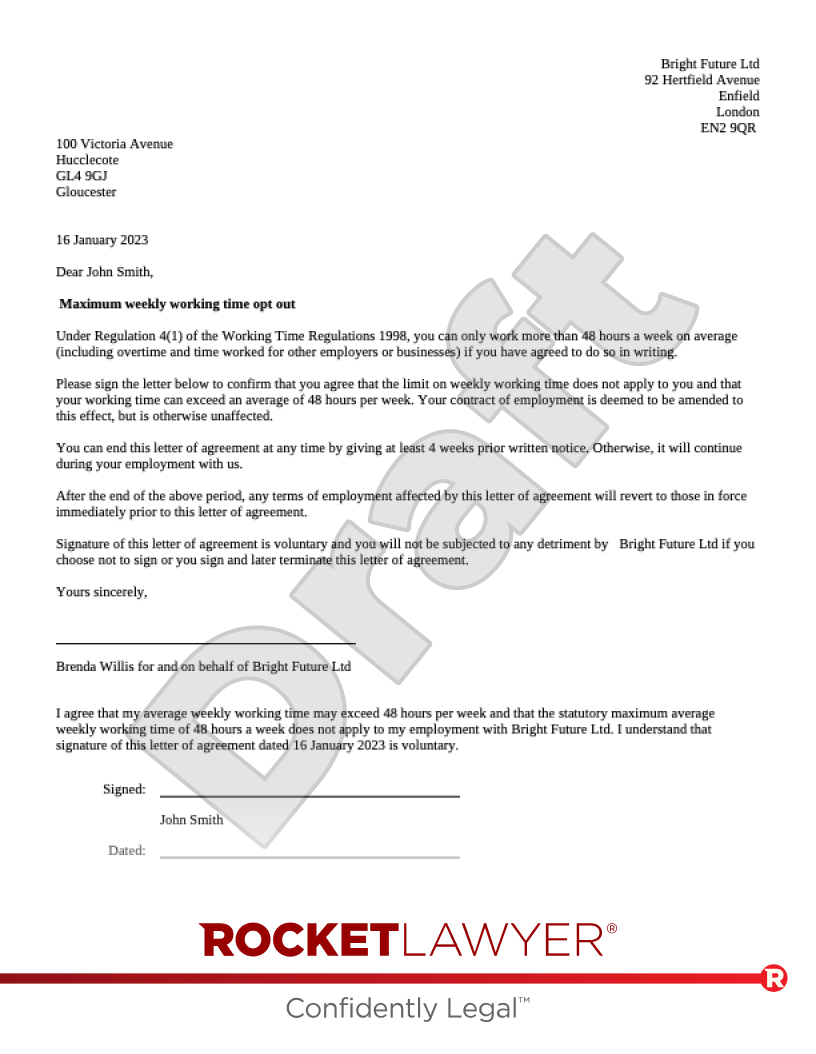
An Opt-out agreement is a written document in which a worker formally agrees to work more than the 48-hour weekly limit. Without this written consent, you're legally prohibited from requiring workers to exceed the average limit.
Note that the 48-hour limit doesn't apply to specific roles like the armed forces or offshore workers. It also does not apply to workers under 18 years old, as those under 18 cannot work more than 8 hours a day or 40 hours per week.
How to opt out of the 48-hour working week
If your staff work over or near the 48-hour limit, you should try to obtain a written agreement to disapply the statutory limit. This process requires clear communication and a strictly voluntary choice from the worker.
Check your employment documents
Before you ask staff to sign anything, you should review any arrangements set out in your existing employment policies and contracts. While the law sets the minimum standards, your own internal arrangements might be more generous to employees. If your contracts already provide better protections or specific ways to manage overtime, you should follow those instead.
Give employees a free choice whether to opt out
An Opt-out agreement will only be valid if the employee freely consents to it. Any attempt to apply pressure to have it signed is unlawful. As a result, it’s best to have a separate opt-out agreement rather than including it in a Job offer letter or Employment contract.
It's illegal to dismiss or disadvantage an existing employee for refusing to opt out, so don't pressure them.
However, you can legally refuse to hire someone new who declines to opt out if the role requires it. You can also decline a worker's request to opt out if you're concerned about the effect on their health, provided you're fair and consistent.
Manage the written agreement
The agreement must be in writing and specifically state that the worker is agreeing to disapply the 48-hour limit. If their hours of work change, you should write the new hours into the agreement.
A worker can withdraw their consent at any time by giving you notice, regardless of whether employment has started. A week's notice of withdrawal is required unless you agree to a different period. However, this notice period cannot be more than three months.What are the legal duties for working time?
Opted-out workers are still protected by limits on daily and weekly working hours and rest breaks, so you must comply with these.
Allowing staff to work excessively long hours might cause other legal problems like breach of health and safety rules or the duty not to injure staff. The opt-out does not remove these duties.
Keeping accurate records
You must keep a written record covering the last two years showing which workers have opted out. You may also keep a record of the working time of staff who have not opted out. However, as of 1 January 2024, keeping a record of all workers’ daily working hours is not compulsory if an employer can demonstrate compliance with the working time rules in another way.
Inspections by the Fair Work Agency
Under the Employment Rights Act 2025, your records may be subject to inspection by the Fair Work Agency (FWA), as one of its functions is to investigate compliance with workplace rights. The FWA has the authority to:
-
inspect records - by proactively entering premises and inspecting working time records to ensure compliance with the 48-hour limit
-
enforce rights by taking action on behalf of workers regarding holiday pay and other statutory entitlements linked to working time
issue penalties and levy fines against employers who fail to maintain accurate records or who breach working time regulations
If you need to formalise these arrangements, you can make a Working time directive opt-out letter to ensure your business stays compliant. Do not hesitate to Ask a lawyer if you have any questions about how these regulations apply to your specific workforce.