What is a grievance?
A grievance is any concern, problem, or complaint an employee raises with their employer. There's a wide range of workplace issues that can lead to grievances, including:
-
health and safety concerns
-
changes to your terms and conditions of employment
-
new working practices
-
feeling you're not being paid correctly
Your employer's Employee handbook or Grievance procedure should set out the specific procedure for raising and dealing with grievances. If your employer doesn't have one, it's best to follow the Acas Code of Practice on disciplinary and grievance procedures (often simply referred to as the ‘Acas Code of Practice’).
What's the difference between a grievance and whistleblowing?
This is a common point of confusion. A grievance is usually a personal complaint about your own employment. For example, you feel you've been unfairly overlooked for a promotion, or you're being bullied by a manager.
Whistleblowing is when you report wider wrongdoing that you believe is in the public interest. This could include reporting that the business is:
-
breaking the law (eg committing fraud)
-
endangering someone's health and safety
-
covering up a serious environmental issue
While the issues can sometimes overlap, they're usually handled by different procedures. For more information, read Whistleblowing.
How does an employee raise a grievance?
Always check your employer’s relevant policies (eg employee handbook or grievance procedure) and follow the steps set out there. You should also follow the Acas Code of Practice, as an employment tribunal will consider whether you've followed it if you end up making a claim.
If your employer doesn't have its own grievance procedure, first think about talking to your employer informally. This is often the quickest and easiest way to solve a problem. If the issue is with your line manager, you can speak to their manager or someone in the HR department.
How to prepare for an informal discussion
Before you set up an informal meeting, you might want to talk to friends, colleagues, or your trade union representative (if you're a member). They may be able to tell you how a similar problem was handled.
After these discussions, you should prepare for your meeting by making a list of:
-
everything you want to say
-
what your employer (or a colleague) has done that you're unhappy about
-
any evidence you have (eg the dates and times of incidents, and any emails or messages that relate to the issue)
-
what you'd like your employer to do to resolve your issue
During the meeting, go through the points you've prepared. Then, give your manager a chance to respond. You should keep a note of the meeting, including who was there and what was agreed.
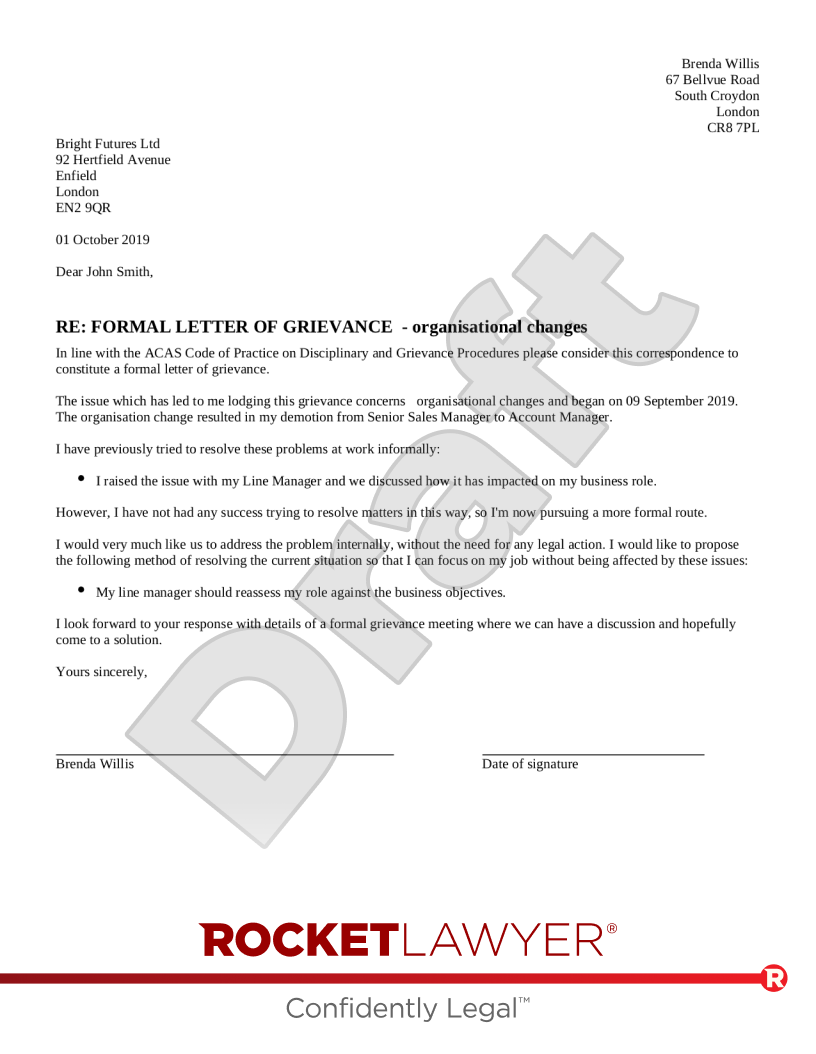
If you're still not happy after this meeting, you can raise a formal grievance using a Grievance letter.
How to raise a formal grievance
If an informal discussion doesn't work or isn't appropriate, you must raise a formal grievance in writing.
Your letter should contain details of the workplace issue you're experiencing, including when it started. It should also set out any steps you've already taken to try and solve the problem, along with your suggestions for how to fix it.
Once you've raised a formal written grievance, it's up to your employer to set up a meeting without unreasonable delay to discuss the problem. If they fail to do so, you might want to think about taking further legal action, such as making a claim to an employment tribunal. It's a good idea to Ask a lawyer about how to proceed in this situation.
What happens at a grievance meeting?
At the meeting, you'll have the chance to explain your complaint and show any evidence you have. You have a legal right to bring someone with you (a 'companion') to this meeting. This can be:
-
a colleague
-
a trade union representative
-
an official employed by a trade union
Your companion can support you, take notes, and speak on your behalf, but they can't answer questions for you. The employer should listen to your points before asking questions. They may not give you a decision in the meeting itself, as they may need time to investigate.
What if I'm not happy with the grievance outcome?
If you're not satisfied with your employer's decision, you have the right to appeal. Your employer must tell you how to do this (and any time limit for appealing) in their written decision.
Your appeal should be in writing and should explain clearly why you disagree with the outcome. Use an Appeal letter for this. Your employer should then hold an appeal meeting, again without unreasonable delay. This meeting should, where possible, be chaired by a different, more senior manager who wasn't involved in the original decision. The appeal decision is usually final.
For more information, read Appealing decisions made by employers.
What happens if the internal appeal fails?
If you've been through the whole grievance and appeal process and you're still not satisfied, your internal options are usually exhausted. Your next steps may involve external resolution.
This often starts with Acas early conciliation, a free service that helps you and your employer try to reach an agreement (which could be set out in a Settlement agreement). If conciliation isn't successful, you may be able to make a claim to an employment tribunal. For detailed information, read Conciliation and Employment tribunals.
Can I be disciplined for raising a grievance?
No. You have a legal right not to be 'subjected to a detriment' (which means being treated badly) or dismissed for raising a grievance in good faith. This protection applies even if your grievance isn't upheld (ie your employer disagrees with you).
However, this protection doesn't apply if you've acted in 'bad faith', for example, by deliberately making a false complaint, lying, or exaggerating. If you feel you're being punished for raising a grievance, you should seek legal advice immediately.
How should an employer deal with a grievance?
As an employer, you should always check your Employee handbook or Grievance procedure and follow any grievance process it sets out. You must also follow the Acas Code of Practice to avoid being penalised by an employment tribunal.
1. Acknowledge the grievance and arrange a meeting
Once you've received a formal written grievance, you must act without unreasonable delay. You should write to the employee to acknowledge you've received their complaint and set a date for a formal meeting. This meeting should be held as soon as possible, ideally within five working days.
You must also remind the employee of their statutory right to be accompanied by a colleague or a trade union representative.
2. Hold the grievance meeting
The purpose of the meeting is to understand the employee's complaint fully. You should:
-
let the employee (and their companion) explain the grievance and how they think it can be solved
-
listen carefully and ask open questions to get all the facts
-
take detailed notes
-
allow the employee's companion to address the meeting and ask questions, but not to answer questions on the employee's behalf
-
decide if you need to adjourn the meeting to carry out further investigations (eg if you need to speak to witnesses)
3. Investigate and decide on the outcome
After the meeting, you must investigate the issues fairly and thoroughly. This might involve reviewing documents, checking CCTV, or interviewing witnesses. Once you've gathered all the facts, you need to consider them and make a decision.
You must then tell the employee your decision in writing without unreasonable delay. This letter should explain what action (if any) you'll take to resolve the grievance. You must also inform the employee of their right to appeal the decision if they're not satisfied.
4. Handle the appeal
If the employee appeals, you must arrange another meeting without unreasonable delay. This appeal meeting should be chaired by a different manager, ideally someone more senior who wasn't involved in the original decision. This ensures impartiality. After the appeal meeting, you must communicate the final decision in writing. This decision is usually final. For more information, read Appeals against disciplinary and grievance outcomes.
5. After the grievance procedure is finished
Your responsibility doesn't end with the appeal decision. You must monitor the situation to ensure the grievance has been resolved and that your new measures are working. It's good practice to hold review meetings with the employee to check that the issues haven't re-emerged and that there are no hard feelings. This is key to rebuilding a positive working relationship.
How can mediation help the grievance process?
You can offer mediation as an alternative before or at any point during the formal grievance process. Its main advantage is that it's less adversarial. Rather than a manager investigating and deciding who is 'right' or 'wrong,' mediation helps both sides talk through the problem with an impartial third party.
This approach is often quicker and can be very effective at repairing broken working relationships. Because the goal is to find a solution that everyone can agree on, it can lead to more flexible outcomes. It's important to remember that mediation is voluntary, and both you and the employee must agree to try it.
How does data protection affect a grievance?
Employees are data subjects under the General Data Protection Regulation (GDPR) and the Data Protection Act 2018. Employees have the right to make a Subject access request to obtain details from their employer of any personal data relating to them that it is processing. This includes any data that the employer intends to process to deal with a grievance, for example, names, gender, age, sexual orientation or religion, especially if the grievance is related to discrimination or harassment. For more information, read Data protection and employees.
If you're an employee who needs to raise a formal complaint, you can make a Grievance letter. If you're an employer, it's essential to have a clear grievance process set out in your Employee handbook or a designated Grievance procedure. Do not hesitate to Ask a lawyer if you have any questions about your specific situation.