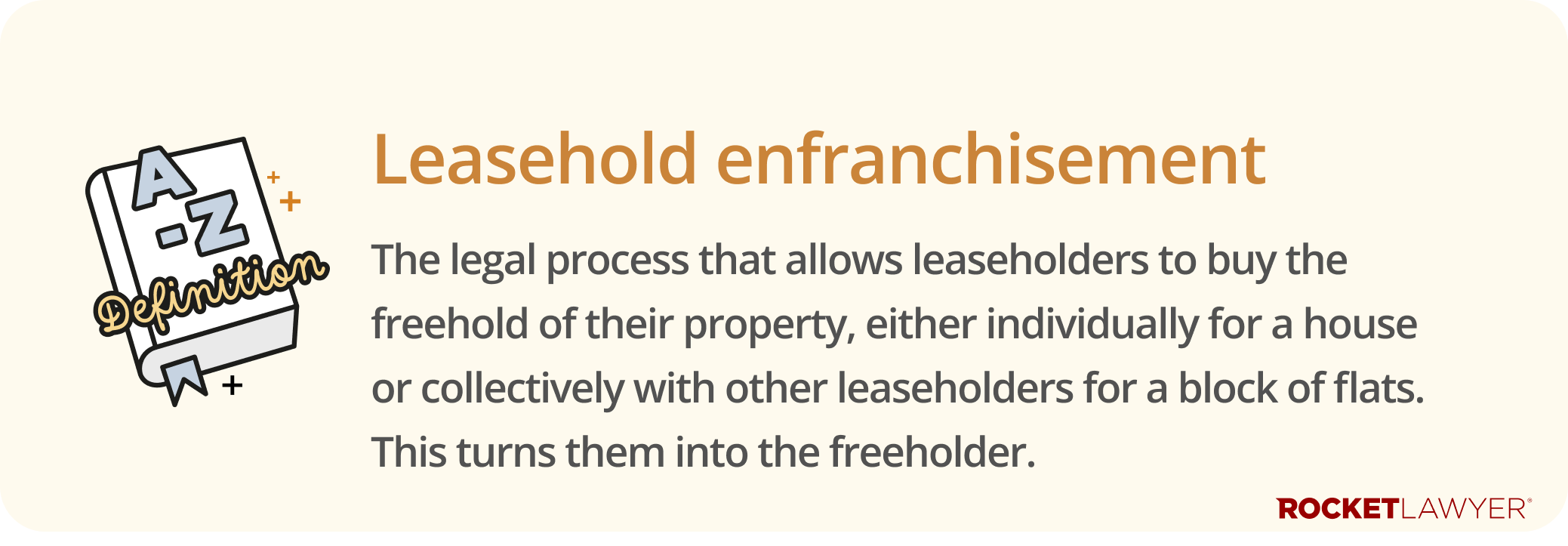
What is leasehold enfranchisement?
Leasehold enfranchisement is the legal right for a leaseholder to buy the freehold of their property. If you own a leasehold house, you can usually do this on your own. If you live in a flat, you'll typically need to team up with other leaseholders in your building to buy the freehold together. This is known as collective enfranchisement.
Once you've bought the freehold, you own the property and the land it stands on. This means you no longer have a landlord, you don't have to pay ground rent, and you have control over the management of your building.
Why should I consider buying my freehold?
The main benefit of buying your freehold is gaining greater control over your property and finances.
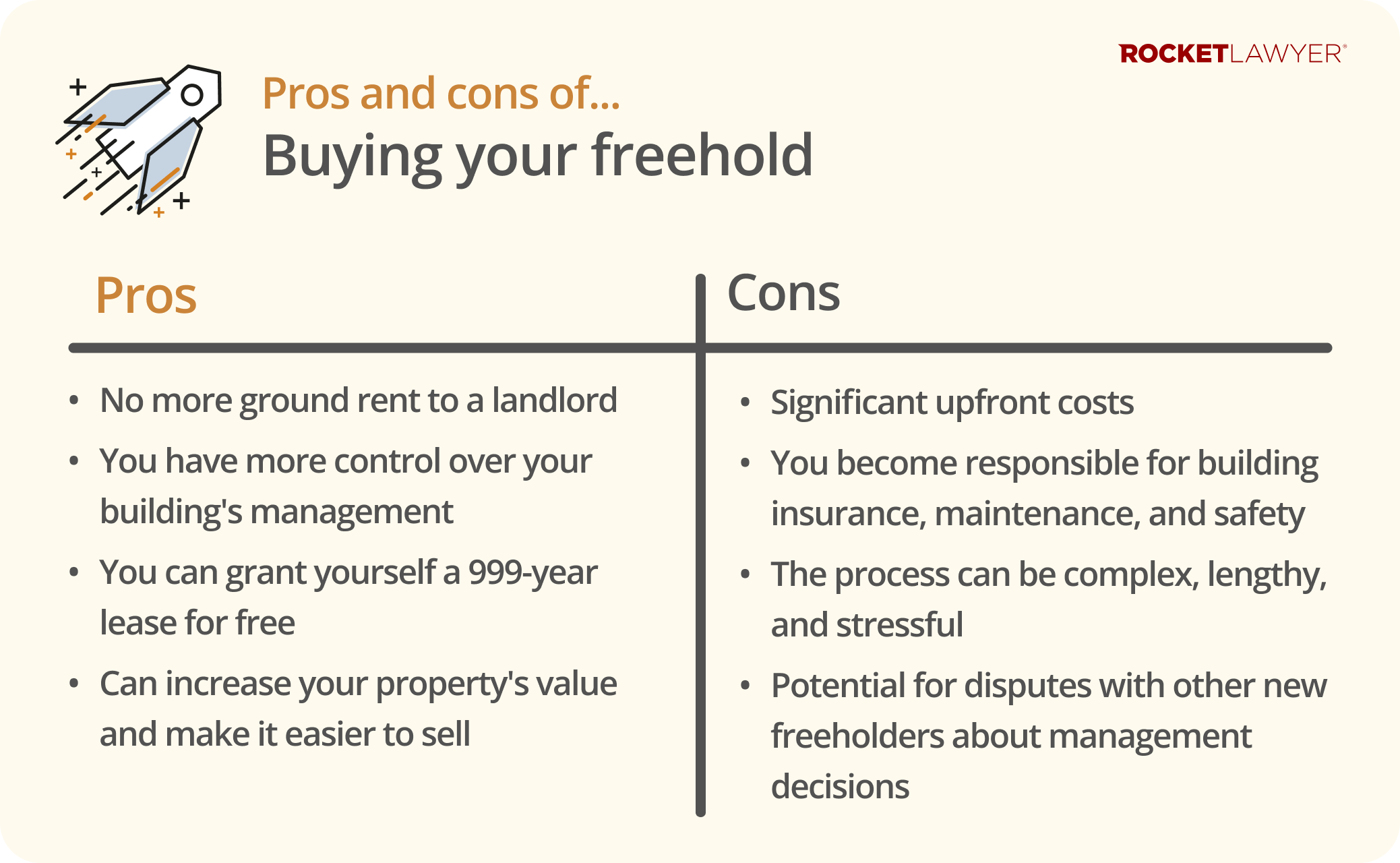
As a freeholder, you and your fellow residents can decide how the building is managed, choose your own insurers, and hire your own contractors for repairs, which can be more cost-effective than the service charges set by a landlord. You'll also stop paying annual ground rent. Furthermore, you can grant yourself a very long lease extension (eg 999 years) at no extra cost, which significantly increases your property's value and makes it easier to sell.
However, buying the freehold is not without its challenges. The process can be expensive and complex, and once you become a freeholder, you take on all the legal and financial responsibilities for the building's insurance, maintenance, and safety (eg fire safety). This can also sometimes lead to disagreements with the other leaseholders who have bought the freehold with you.
How do I buy the freehold?
The process for buying the freehold differs depending on whether you own a house or a flat. In either case, it's a complex legal process, and you should Ask a lawyer for assistance.
Buying the freehold of a flat (collective enfranchisement)
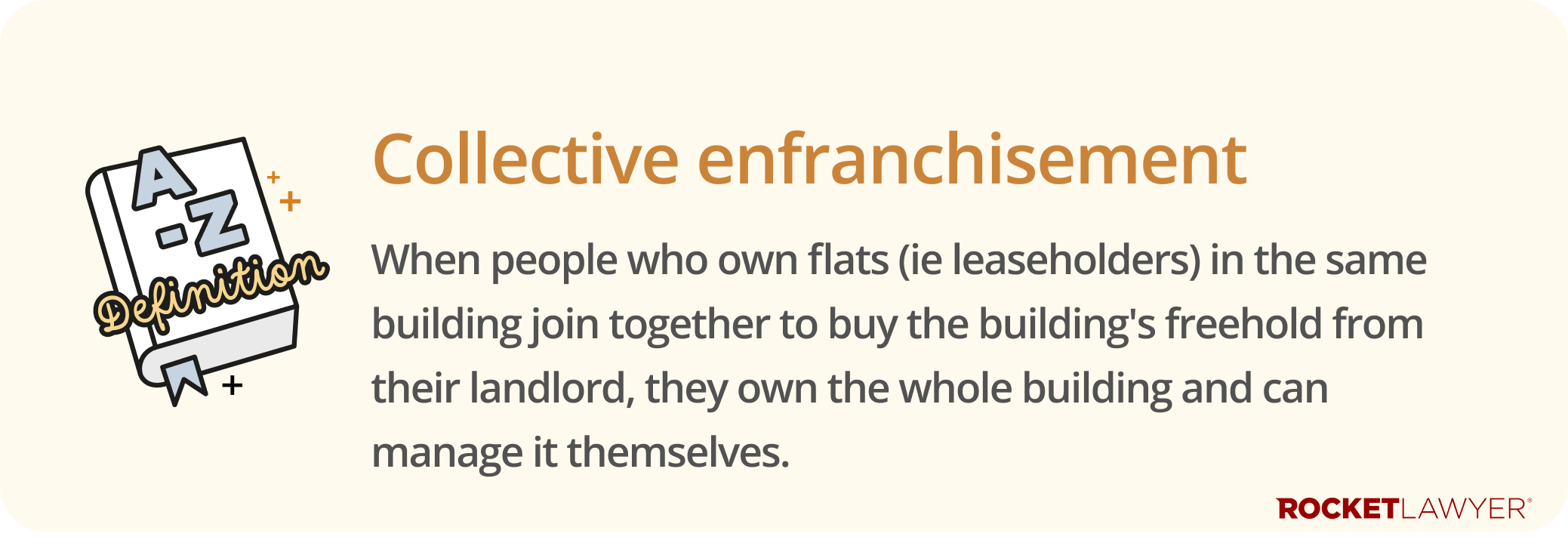
To buy the freehold of a block of flats, you must do it as a group. There are specific eligibility rules for both the building and the leaseholders.
The building must be self-contained, have at least two flats, and no more than 25% of its internal floor area can be for non-residential use (like shops).
At least two-thirds of the flats must be owned by leaseholders with long leases (ie leases originally granted for more than 21 years). Crucially, at least 50% of the total number of flats in the building must be owned by qualifying leaseholders who agree to participate.
The typical process for collective enfranchisement involves:
-
organising the group - this involves creating a formal participation agreement and appointing a 'nominee purchaser' (usually a company you set up) to act on your behalf
-
getting a professional valuation - a surveyor will calculate the price (the 'premium') to offer the freeholder
-
serving an initial notice - your lawyer will serve a formal notice on the freeholder with your offer, officially starting the process
-
receiving the freeholder's counter-notice - the freeholder will respond, either accepting your offer, proposing a different price, or disputing your right to buy
-
negotiating the price and terms - if an agreement can't be reached, you can apply to a tribunal to decide the terms
-
completing the purchase - once the price is agreed, lawyers will handle the final legal work to transfer the freehold to the nominee purchaser
For more detailed guidance on the process, read the guidance provided on collective enfranchisement by the Leasehold Advisory Service (LEASE).
Buying the freehold of a house
If you own a leasehold house, the process is more straightforward as you don't need to act with your neighbours.
To be eligible, your property must legally be considered a house (eg not a flat), your lease must be a long lease, and you must be the leaseholder of the house at the time you apply for enfranchisement.
The typical process for buying the freehold of a house involves:
-
getting a professional valuation - a surveyor will calculate the premium to offer the freeholder
-
serving a formal notice - your lawyer will serve a 'tenant's notice' on the freeholder, which officially starts the process and includes your offer price
-
receiving the freeholder's response - the freeholder has two months to serve a 'landlord's counter-notice', in which they will either accept your price, propose a different price, or dispute your right to buy the freehold
-
negotiating the price - if you and the freeholder can't agree on a price, you can apply to a tribunal to decide the amount
-
completing the purchase - once the price is agreed, lawyers will handle the final legal work to transfer the freehold to your name (this is known as conveyancing)
For more detailed guidance on the process, read LEASE’s guidance on leasehold houses.
What are the latest changes to leasehold law?
The government has been introducing significant changes to give homeowners more rights.
The Leasehold Reform (Ground Rent) Act 2022 ended ground rents for most new long residential leases granted after 30 June 2022. This means new leases cannot include a demand for any ground rent beyond one peppercorn per year (which effectively means no money is payable).
The Leasehold and Freehold Reform Act 2024 is designed to make it cheaper and easier for leaseholders to buy their freehold or extend their lease. Key measures include:
-
increasing the standard lease extension term to 990 years for both houses and flats, with ground rent reduced to a peppercorn
-
removing the requirement for leaseholders to have owned their property for two years before they can start the process of buying the freehold or extending their lease
-
making it cheaper for leaseholders to buy their freehold by changing the way the price is calculated
-
making it easier and cheaper for leaseholders to take over the management of their building
While the 2024 Act is now law, many of its key provisions are being brought into force on different dates. For example, the removal of the two-year ownership rule is now in effect, but a timeline for implementing other changes (such as those affecting the valuation process) has not yet been fully set out.
Given the complexity of leasehold enfranchisement and the ongoing legal changes, it's a good idea to seek professional advice. Do not hesitate to Ask a lawyer if you have any questions.