What is credit control?
Credit control, sometimes called debtor management, is the process of making sure you only offer credit to customers who are able to pay, and that if you do offer credit, you’re paid on time. A good credit control system helps you minimise bad debt and maintain a healthy cash flow in your business.
It involves several key steps, from checking a customer's creditworthiness before doing business with them to setting clear payment terms and having a consistent process for chasing overdue invoices. It's not about being aggressive with customers; it's about being organised and professional to protect your business's finances. An effective credit control policy reduces the risk of financial loss and the time spent chasing money you’re owed.
How can I check a customer’s ability to pay?
Before you offer credit to a new customer, it’s important to assess their ability to pay. This helps you decide whether to do business with them and what credit limit to set. There are several ways to do this.
How do I perform credit checks?
For business customers (eg limited companies), you can run a business credit check using a credit reference agency. This will give you a detailed report on their financial history, including any court judgments against them. For individuals (including sole traders and partners in a partnership), you must have their permission before running a personal credit check. You must also follow data protection rules when handling this information.
Should I ask for trade references?
You can ask new customers to provide trade references from other businesses they've worked with. A trade reference is a recommendation from another supplier that confirms the customer’s payment history. When you contact a referee, ask about:
-
how long they’ve been doing business with the customer
-
the average value of their orders
-
whether they pay their bills on time
Can I review publicly available information?
For business customers, you can find a lot of useful information online for free. For example, you can check a company's details on Companies House, which includes their accounts and information about the company directors. You can also search the Register of Judgments, Orders and Fines in England and Wales (or the equivalent in Scotland) to see if the business has any County Court Judgments (CCJs) or High Court Judgments against it for failing to pay a debt.
What terms and conditions should I have in place?
Your terms and conditions are crucial for preventing payment problems. They set out the rules of your business relationship and clearly define what’s expected from both you and your customer. When it comes to payment, your terms should be clear, fair, and easy to understand. It's also vital that your customer sees and agrees to them before you start work, so everyone knows where they stand.
Your terms and conditions should always include the following:
-
your payment terms - for example, whether payment is due within 14, 30, or 60 days of the invoice date
-
accepted payment methods - such as bank transfer, credit card, or direct debit
-
late payment consequences - you should state that you’ll charge interest on overdue invoices. The law allows you to charge statutory interest, which is 8% plus the Bank of England base rate for business-to-business transactions. You can also set your own interest rate, but it must be a ‘substantial remedy’ and not excessive
-
price and delivery details - specify the price of your goods or services and who is responsible for delivery costs
-
retention of title clause - if you sell goods, this clause means you legally own the goods until you’ve been paid in full. This can help you recover the goods if the customer doesn’t pay
Depending on your circumstances, you may need multiple Terms and conditions in place. For more information on various types of terms and conditions, read Terms and conditions and How to choose the right terms and conditions.
How can good invoicing practices prevent late payments?
Prompt and professional invoicing is key to getting paid on time. If your invoices are late, confusing, or inaccurate, it gives customers a reason to delay payment. Good practice starts with sending your Invoice as soon as the work is done or the goods are delivered.
To make your invoice easy to process, ensure it clearly shows:
-
a unique invoice number for easy reference
-
a clear description of what you're charging for
-
the total amount due
-
your payment terms (eg 'payment due within 30 days')
-
your bank details or accepted payment methods
While these points help ensure clarity, a legally compliant invoice has specific requirements. For a full breakdown, read Invoicing.
To further reduce the chance of a dispute over payment, you can agree on the details of a sale beforehand by making a Purchase order. This creates a clear record of what was agreed, preventing confusion when the invoice arrives.
Why is keeping a paper trail so important?
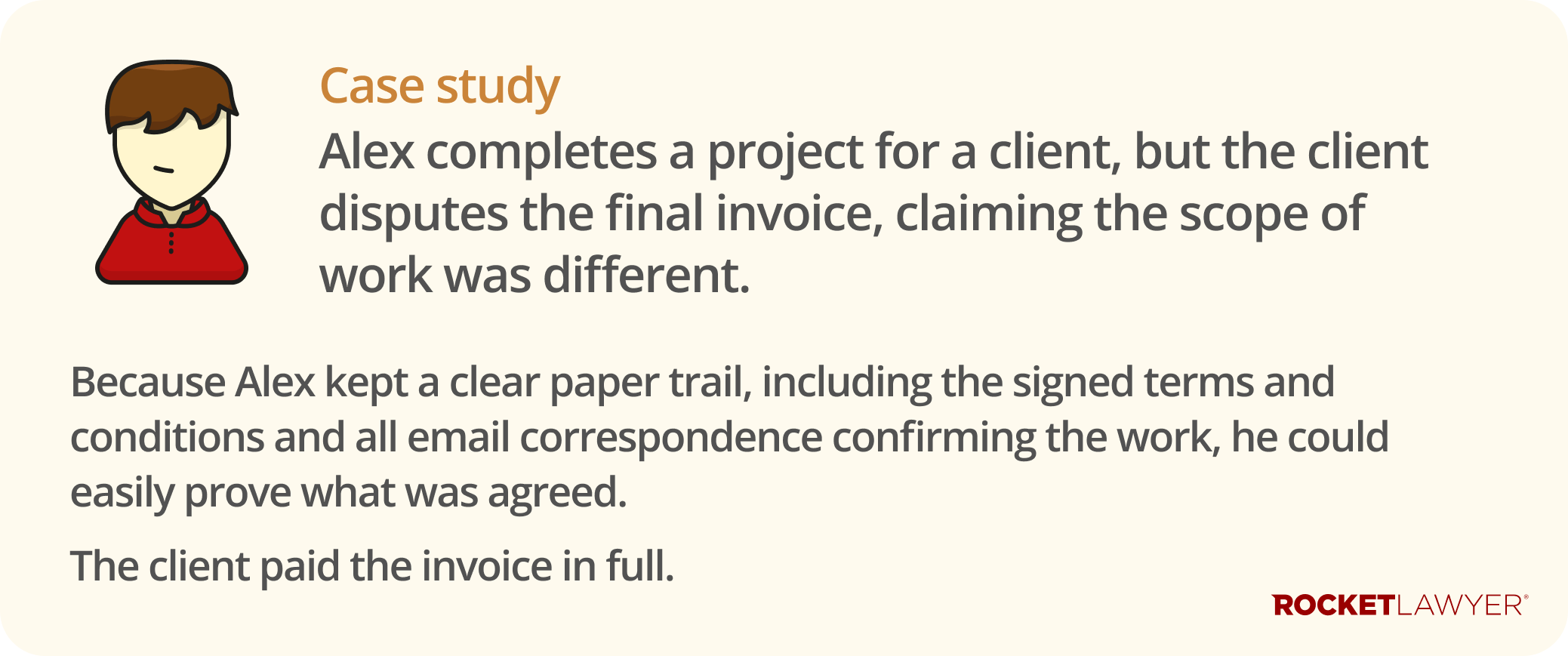
Keeping updated and coordinated records, known as an audit trail, is essential for effective debt collection. A clear trail of credit-related documents not only encourages prompt payment but is also vital for proving a debt exists if a payment is late, disputed, or you need to take legal action (like sending a Letter before action before starting a money claim). This is especially important if you’ve agreed on any special arrangements, such as a repayment agreement, with the customer.
Your records should include copies of:
-
any signed contracts or agreed terms and conditions
-
all purchase orders and invoices
-
delivery notes or proofs of service
-
all correspondence, including emails, letters, and detailed notes of any phone calls (including the date, time, and what was discussed)
Keeping everything organised means you can quickly prove what was agreed, what was delivered, and what steps you've taken to chase payment. This strengthens your position significantly if you need to negotiate, use a dispute resolution service, or go to court.
What is the process for chasing an unpaid invoice?
Even with solid credit control, you may still face late payments. The key is to have a consistent and timely process for chasing them.
-
send a polite reminder - as soon as an invoice is overdue, send a friendly email or make a quick phone call. It could be a simple oversight
-
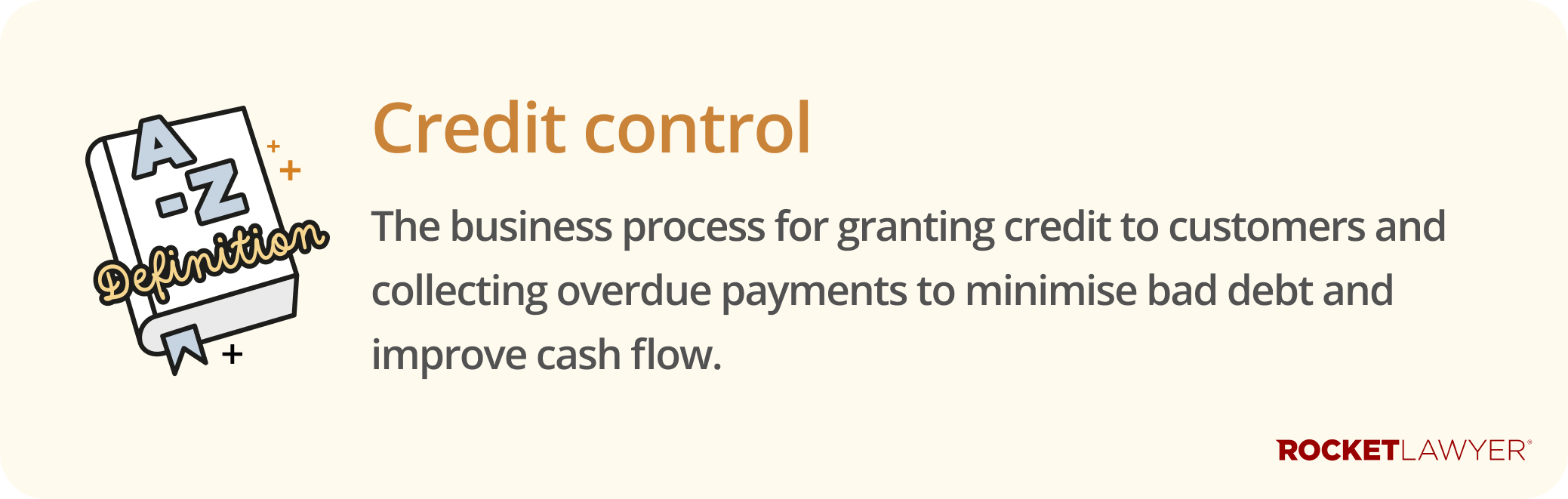
issue formal reminders - if you don't receive payment, send more formal written reminders. Your first letter should be polite, but each follow-up can become firmer. You can use our series of debt recovery letters, from a First reminder letter to a Final demand letter
-
charge late payment interest - if your reminders are ignored, consider adding statutory interest to the debt (you can only do this for commercial debts). Sometimes, the prospect of the debt increasing is enough to prompt payment.
-
send a Letter before action - this is a formal letter that warns the debtor you’ll start legal proceedings if they don’t pay by a certain date. It's a required step before you can take someone to court, and often results in payment
For more information, read Payment reminders.
If a customer refuses to pay or you need to escalate the matter, you can make a Letter before action to formally demand payment before starting legal proceedings. For more complex situations or if you want to avoid court, consider using our Dispute resolution service.
Do not hesitate to Ask a lawyer if you have any questions or need help with your debt recovery process.