What are T&Cs?
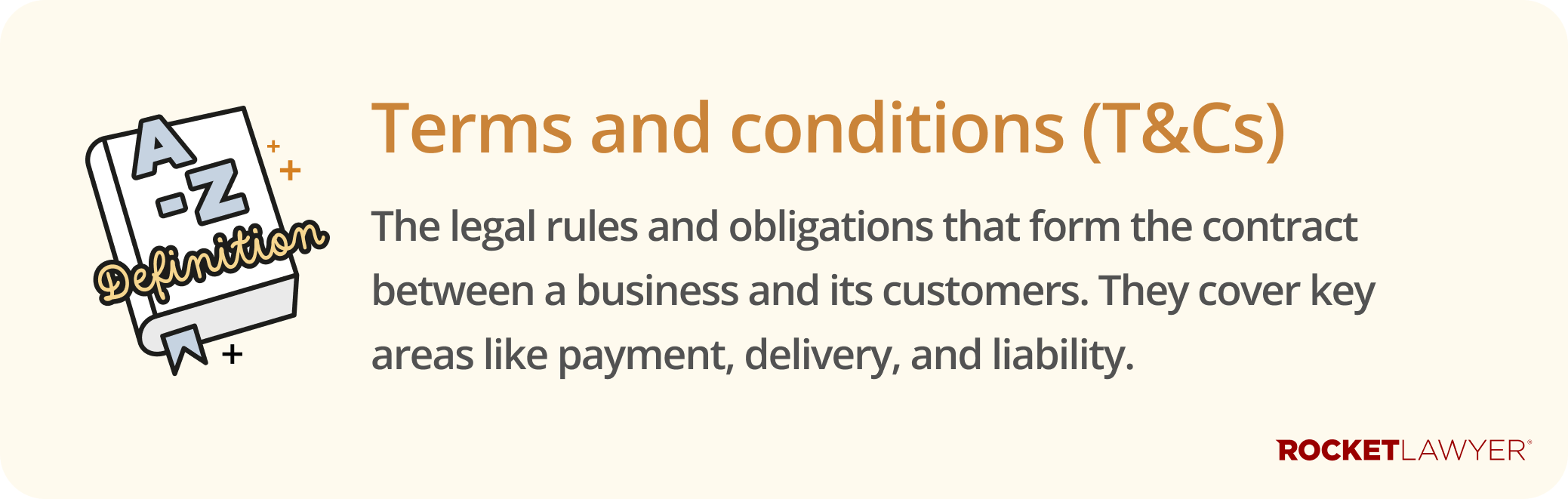
Terms and conditions are the legal rules and obligations that govern the relationship between your business and its customers. They form the basis of your contract with the customer. Well-drafted T&Cs clearly define what you will provide, what the customer’s responsibilities are, and what happens if things go wrong. Having these terms in place helps prevent misunderstandings and provides a legal framework to fall back on if a disagreement arises.
Do I need different T&Cs for different customers?
Yes, it’s crucial to tailor your T&Cs to the type of customer you’re selling to. The law provides different levels of protection for consumers and businesses, so your T&Cs must reflect who your customers are.
Selling to consumers (B2C)
When you sell to individuals for their personal use, consumer protection laws give them significant rights that you can't exclude. For example, consumers have a legal right to expect goods to be of satisfactory quality, fit for purpose, and as described. Your T&Cs must be fair, transparent, and easy to understand.
For more information, read Doing business with consumers
Selling to other businesses (B2B)
When you sell to other businesses, the law generally assumes both parties have equal bargaining power. This gives you more flexibility to agree on commercial terms. For example, in B2B contracts, it's common to include clauses that limit your liability to a greater extent than you could in a consumer contract.
For more information, read E-commerce between businesses.
How does what I sell affect my T&Cs?
The rules for selling goods, services, and digital content are different, and your T&Cs need to cover the specific items you sell.
Selling goods
Goods are physical items. As a rule, all goods you sell must be of satisfactory quality and fit for purpose. When your customer is a consumer, these standards are more stringent, legally guaranteed, and your T&Cs cannot overwrite them.
Selling services
Services are any work you perform for a customer. Legally, you must carry out your work with reasonable care and skill. For consumers, this is a more stringent, guaranteed right that your T&Cs cannot remove or limit.
Selling a mix of goods and services
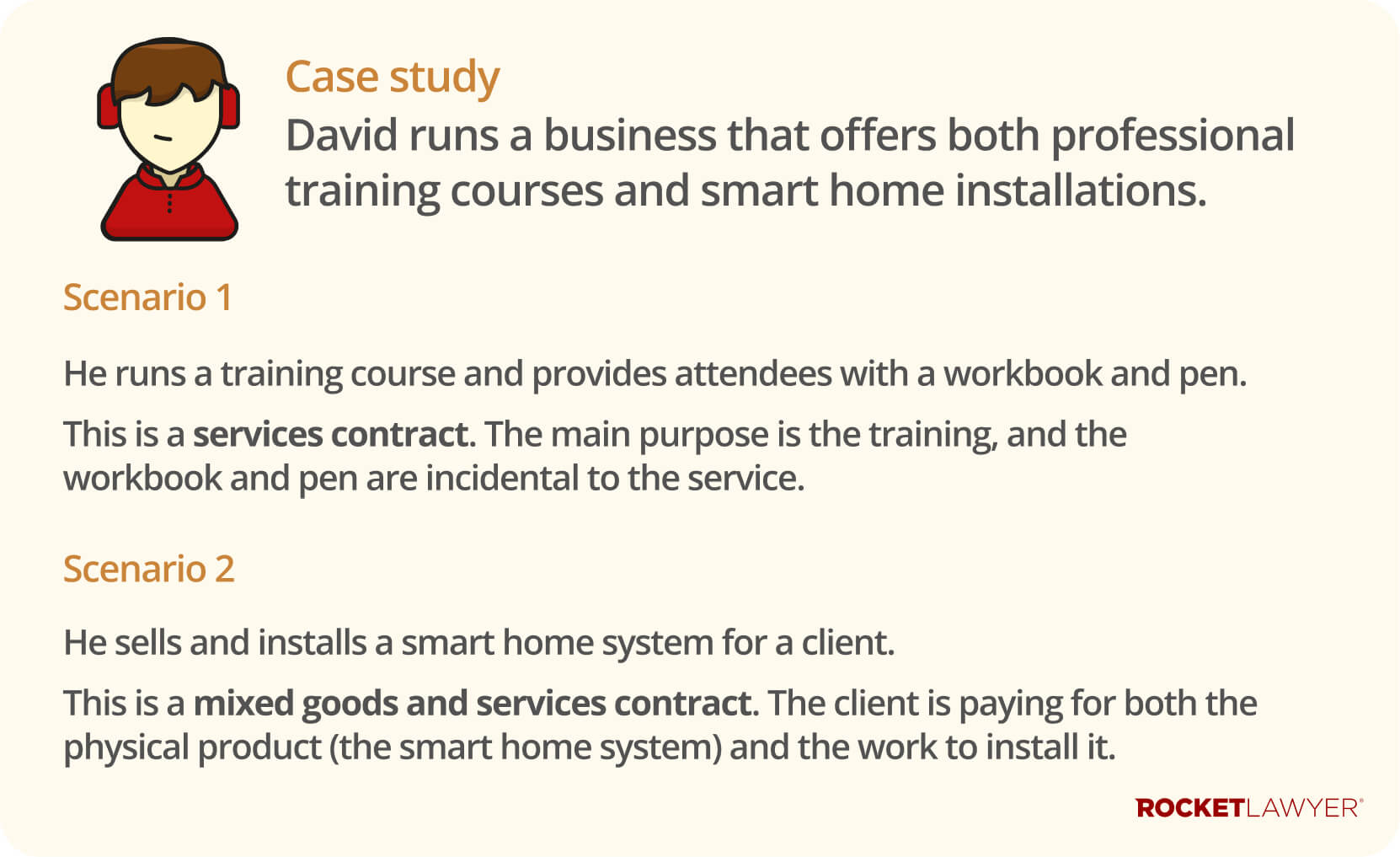
This is when your contract includes both a physical item and the work to provide or install it (eg supplying and fitting a new kitchen). Your T&Cs should cover both the goods and services aspects of the contract.
Selling digital content
Digital content includes things like software, apps, downloads, and e-books. Typically, if you sell digital content in a tangible medium (eg DVDs), it will be a goods contract. However, if you sell digital content to consumers through downloads or streaming, special rules apply. For more information, read Consumer rights when purchasing digital content.
Sometimes it's hard to tell if you're supplying services, goods, or a mix of both. The key is to think about the main purpose of the contract. For example, if you run a training course and hand out pens and paper, this is a services contract because the main purpose is the training. However, if you supply and fit a washing machine, this is a mixed contract for goods and services, as the customer is paying for both the item and the installation work. If you need help determining what you are selling, do not hesitate to Ask a lawyer.
How does where I sell affect my T&Cs?
When selling to consumers, the law has different requirements depending on where the sale takes place. Under the Consumer Contracts (Information, Cancellation and Additional Charges) Regulations 2013 (the CCR), you need to work out if your sale is on-premises, off-premises, or at a distance, as different rules apply to each.
On-premises sales
Under the CCR, an on-premises sale is a sale that is neither an off-premises nor a distance contract. In practice, this means sales made on your business premises. This can be a permanent location, like a shop or office, or a movable location where you usually do business, like a market stall or pop-up shop.
For everyday, low-value items sold on-premises (eg milk or toothpaste), you don’t need T&Cs. For higher-value items (eg antiques or furniture), you should provide T&Cs (eg on the back of the customer's Invoice, order form, or Purchase order).
Off-premises sales
An off-premises sale is a contract made face-to-face with a customer, but away from your business premises. The classic example is doorstep selling. Specifically, a contract is considered off-premises if it's:
-
made in person with the customer in a location that isn't your business premises (eg in the customer's home)
-
made following an offer from the customer while away from your business premises
-
made at your premises or online/by phone immediately after you met the customer in person somewhere else
-
made during a trip you organised to promote and sell your products
The key is where the contract is negotiated and made, not where the service is performed. However, the rules can be tricky. For example, if a business visits a customer’s home and later sends a quote for the customer to decide upon, this won’t normally be an off-premises contract because the agreement isn't made in person at that time.
If you are making off-premises sales, use our Bespoke drafting service to make appropriate terms and conditions.
Distance sales
A distance sale is a contract made without any face-to-face contact between you and the customer. This includes sales made online, by mail order, or over the phone. When selling online, the best way to make your T&Cs legally binding is to use an unticked checkbox that a customer must tick to confirm they agree to your terms before completing their purchase.
 Our Terms and conditions templates are suitable for distance sales made via the internet. If you sell to consumers using other distance methods (eg over the phone), use our Bespoke drafting service to create appropriate T&Cs.
Do I need to offer a 14-day cancellation period?
Under the CRR, for most business-to-consumer (B2C) contracts made at a distance or off-premises, you must give the consumer a 14-day 'cooling-off' period. During this time, they can cancel the contract for any reason without penalty. Your T&Cs must clearly explain this statutory cancellation right.
This cooling-off period does not apply to business-to-business (B2B) contracts.
For more information, including on the types of B2C distance or off-premises contracts where a cooling-off period doesn’t apply, read Consumer rights.
If you are unsure whether your distance or off-premises contract needs to include statutory cancellation rights, Ask a lawyer.
Which template T&Cs should I use?
Use the table below to find the right document for your business needs:
If you are selling... |
Use this document |
| Services to other businesses (not online) |
Terms and conditions for supply of services to business customers |
| Goods online to other businesses |
Terms and conditions for the sale of goods to business customers |
| Services to consumers (not online) |
|
| Goods to consumers (not online) |
|
| Goods online to consumers |
Terms and conditions for sale of goods to consumers via a website |
| Services online to consumers |
Terms and conditions for supply of services to consumers via a website |
| A software product that uses AI |
|
| Setting out general terms for the use of your website |
If you have identified which terms and conditions are right for your business, you can make the appropriate T&Cs for your situation. If your situation is not covered, or if you have any questions, do not hesitate to Ask a lawyer.