What is a statutory director?
Statutory directors are essentially company directors. The Companies Act 2006 defines a company director as anybody who occupies the position of a director. This definition is broad and can include people who have not been formally appointed as directors.
People in the position of director have legal powers to act on behalf of a company and owe specific duties to the company. Directors collectively act and make decisions on behalf of the company as the board of directors. Saying someone 'sits on the board of directors', ‘sits on the board’, or 'has been appointed to the board' just means that they are a director.
What are the main types of formally appointed directors?
Statutory directors can have different roles and often fall into more than one category. For instance, a person could be classified as both a de jure director and a non-executive director.
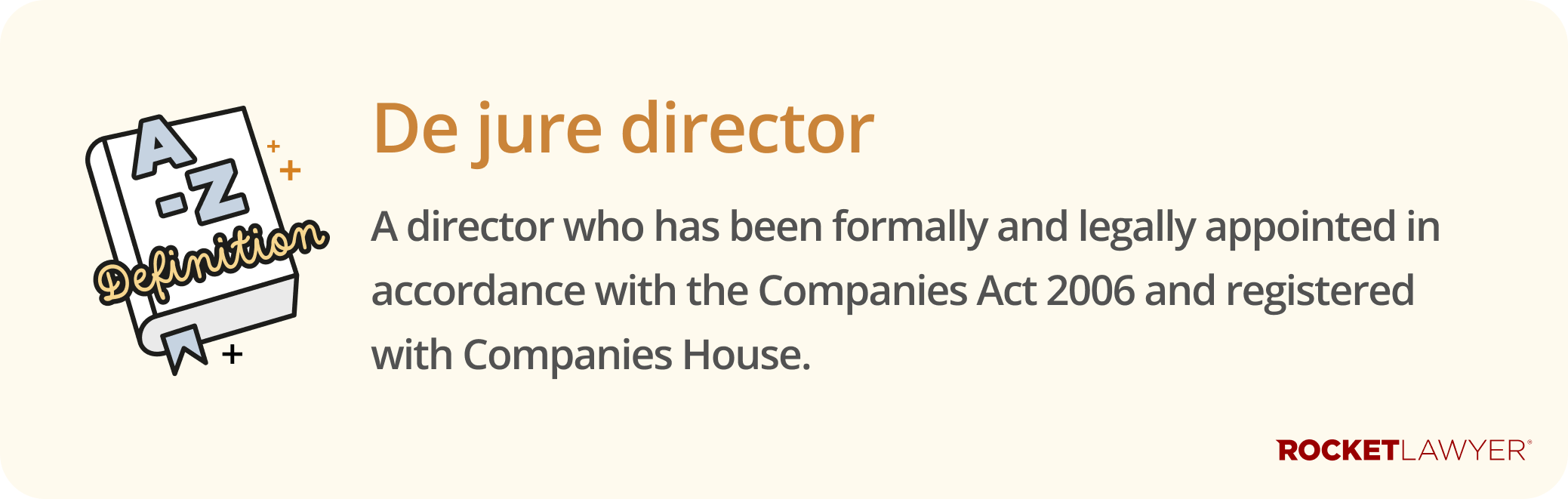
De jure directors
These are statutory directors who have been formally appointed to act as directors in accordance with the Companies Act 2006 and the company’s Articles of association.
They are the directors officially registered with Companies House. They represent the 'true' legal status of a director and have the full range of powers and responsibilities granted under company law.
All other formally appointed director types (as set out in this section) are fundamentally de jure directors who hold a specific role or designation within the company.
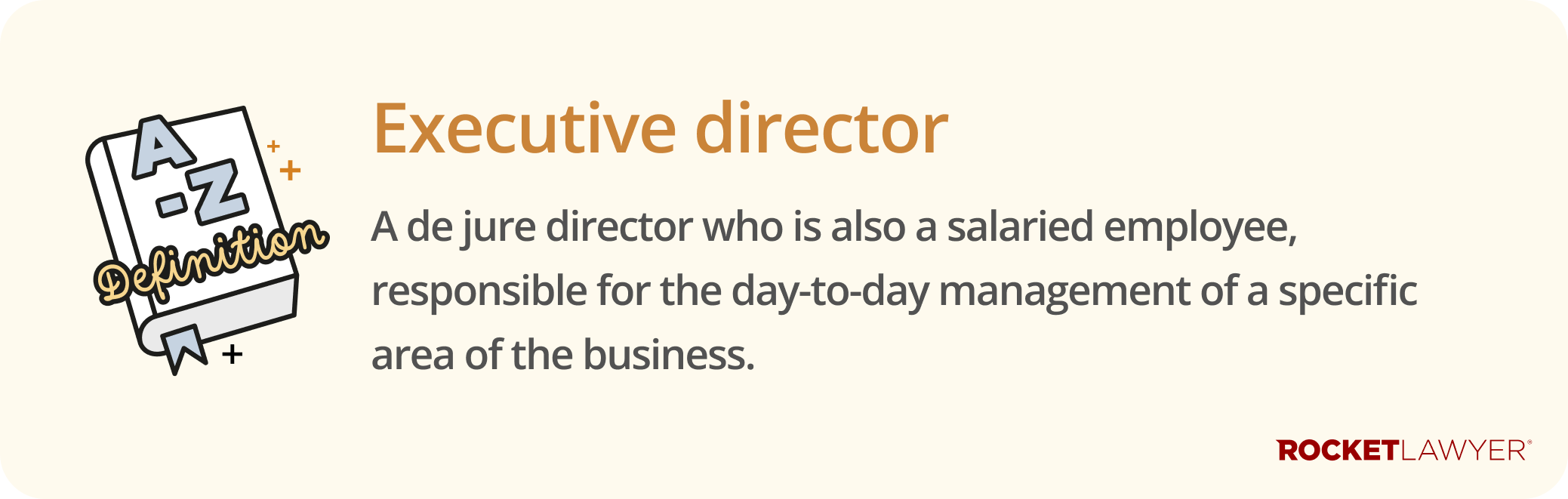
Executive directors
Executive directors are both employees and statutory directors. They generally hold a specific, salaried role and have day-to-day responsibility for running the business. They are usually in charge of one area, like finance, operations, or growth. Executive directors report to the board and are often involved with strategic planning and implementing the board’s decisions.
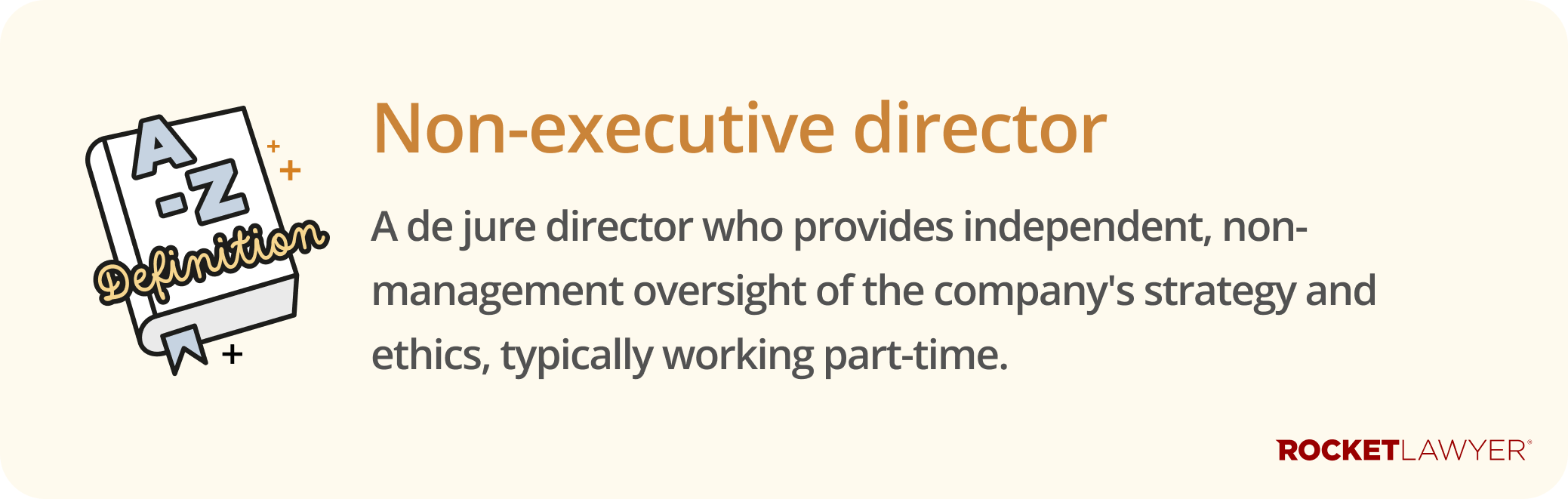
Non-executive directors
Non-executive directors (or ‘NEDs’) do not run the business day-to-day and normally only work part-time. They generally attend board meetings and provide independent oversight of the company’s strategy, ethics, and integrity. Their duties generally include acting in the interest of company stakeholders and monitoring the executive directors (eg by analysing their performance and determining how much they should be paid).
Managing directors
A managing director is someone appointed to lead the implementation of the board’s strategy. Their legal rights and duties are the same as other directors.
Nominee directors
A nominee director (or ‘appointed representative’) is someone appointed to the board to represent a particular shareholder or other party (eg an investor). Regardless of their designation, their legal rights and duties are identical to those of other formally appointed directors.
Alternate directors
A director may appoint an alternate director to act on their behalf in the event of temporary absence. An alternate director can only be appointed if this is allowed by the company’s rules (ie the articles of association).
What are directors who aren't formally appointed?
Some people who haven't been formally appointed as directors still hold legal standing and responsibilities because of the actions they take or the influence they exert over the company. It's crucial for these individuals to understand their legal obligations, as they can be held accountable as if they were official directors.
Shadow directors
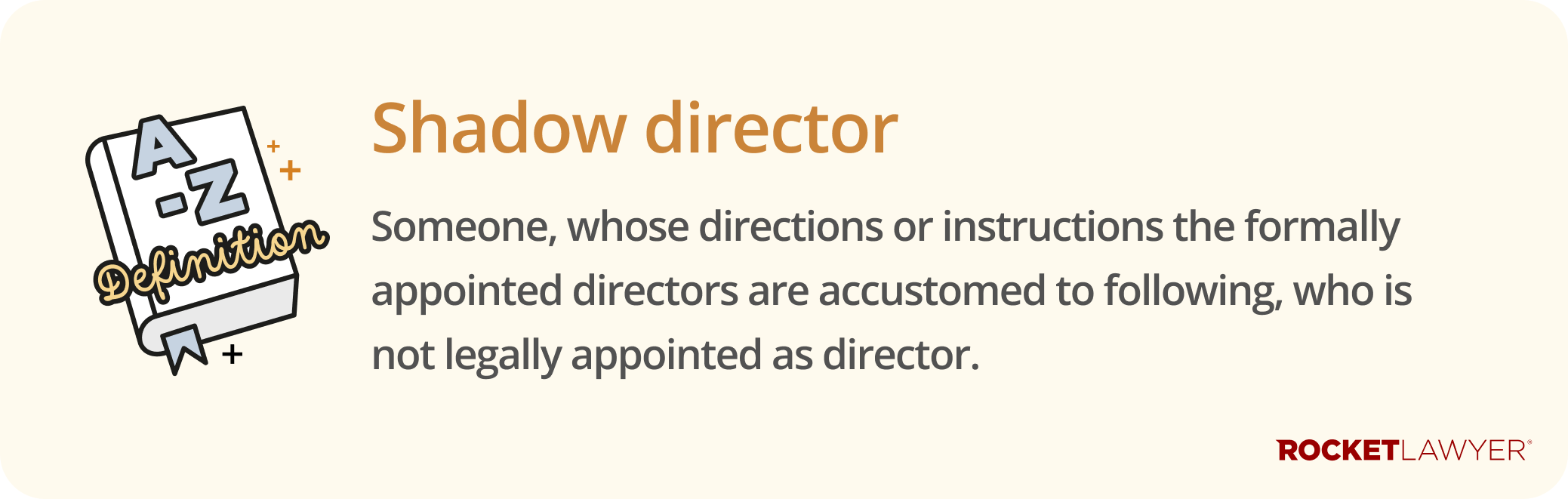
A person who is not appointed as a director but whose directions are customarily followed by the board and other directors may be a shadow director. Critically, merely giving advice in a professional capacity (eg as a lawyer or accountant) doesn't make someone a shadow director.
Although shadow directors are covered by slightly different laws than formally appointed directors, they do owe some of the same duties, in recognition of the influence they have over the company’s activities.
De facto directors
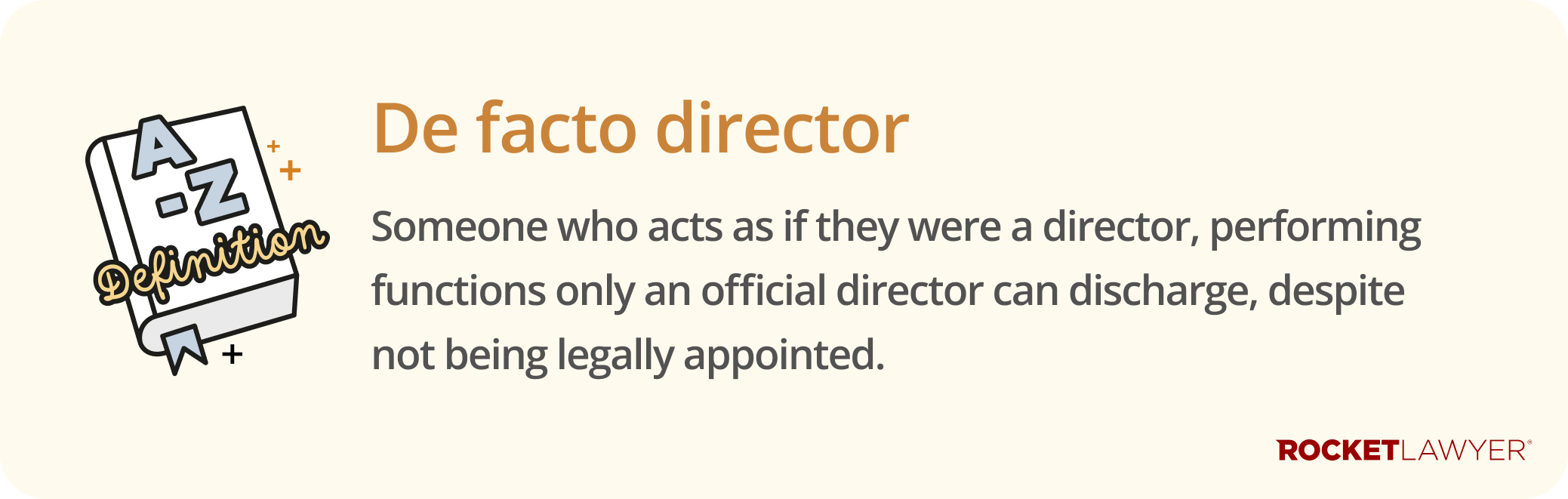
De facto directors are directors who haven’t been properly or legally appointed as directors but who do, in fact, act as directors. To be considered a de facto director, they must be doing things that only official directors are normally allowed to do (eg making decisions and signing contracts on behalf of the company). Whether someone is a de facto director depends on what they do and how.
However, they generally need to be seen to be acting in a senior, decision-making role rather than just being a member of the management team. Because they assume the full responsibility of the position, de facto directors owe the company the same general duties as de jure directors.
Someone who is a de facto director may also be a shadow director.
Directors who are not statutory directors
Sometimes, departmental heads are called directors (eg a ‘Director of Communications’ or ‘Director of Sales’) even though their role is not technically a company director role. Confusingly, if these individuals haven’t been separately appointed to the board (ie appointed as a company director), they do not have the legal rights and duties of a company director. The company and the individual should carefully ensure that other parties (eg businesses that the person interacts with) are not misled about the status of the person with the title.
What is the process for identifying a statutory director?
Normally, statutory directors are formally appointed through a set legal process involving the company's shareholders and are listed on the Companies Register at Companies House.
However, the Companies Register isn't the final proof of status. A person who isn't listed can still be a director, and vice versa. This is particularly true for alternate, shadow, and de facto directors, who won't be listed on the Register and may not have been appointed formally. To determine who holds these roles, it's necessary to look at the company’s specific circumstances and the actions the individual takes.
If you’re ready to formalise a director's appointment, you can make a Shareholders' resolution, a Non-executive director letter of appointment, or a Senior employment contract. For a full director's service agreement, you can use our Bespoke drafting service. Do not hesitate to Ask a lawyer if you have any questions about the different types of directors.