What are company directors?
A company director is someone appointed to manage the day-to-day business and strategic affairs of a company. Directors are often referred to collectively as the ‘board of directors’ or simply the ‘board’.
Company directors have to be formally appointed, and must be listed on Companies House register. The relationship between the directors and the company is governed primarily by the Companies Act 2006 and the company's own Articles of association. The articles are the company's foundational document that sets out how the company is run and the rules directors must follow.
To learn more about directors, including who can act as one, and how they interact with other company roles, read Company roles and appointments.
Why do companies have directors?
Companies have directors because a company is a separate legal entity that cannot act by itself. Directors are appointed to act as the company's management team and legal representatives. Their primary job is to run the business, make high-level strategic decisions, and ensure the company complies with all laws. The directors are accountable to the company’s owners (ie shareholders) for their management and for promoting the company's success.
How do directors perform their roles?
The board of directors is responsible for managing the company. They carry out strategic planning, make operational decisions, and ensure the company meets all statutory obligations.
Directors don't usually act alone; they have collective rights and responsibilities, which they exercise together at board meetings. Even if the board delegates specific powers or tasks to an individual director or a committee (for example, delegating the day-to-day running to the CEO), the directors as a whole remain legally responsible for the company's records, accounts, and performance.
For more information on the duties and responsibilities of directors, read Directors' duties.
What decisions do directors make?
Directors are responsible for making high-level, strategic decisions that govern the company's direction and operations. They have the authority to act on behalf of the company, subject to limitations set by law and the company's own rules.
Directors make decisions on critical business activities, including:
-
borrowing money and securing finance
-
entering into contracts for goods, services, or premises
-
employing, appointing, or dismissing senior staff
The decision-making process
In practice, directors generally make decisions collectively as the board. This is usually done by voting at formal board meetings or by passing written resolutions.
The process the directors must follow is set out in the company’s articles. Although these rules can vary, the model articles (ie the standard rules under the Companies Act 2006) often require:
-
notice must be given to all directors when a board meeting is called
-
a quorum (the minimum number of directors needed to make a decision valid) must be met, which is usually two, unless the company only has one director
-
decisions at meetings are typically passed by a simple majority (over 50%) vote
When making decisions, directors must take into account the statutory duties that they owe to the company. Once a decision has been passed by the board, it's recorded formally in the Board minutes. For more information, read Board meetings and board minutes.
What is the difference between an executive and a non-executive director?
The terms executive and non-executive refer to the level of involvement a director has in the day-to-day running of the company. Legally, all directors owe the exact same statutory duties to the company. However, their responsibilities and roles in practice are distinctly different.
What’s an executive director?
An executive director is usually a statutory director and an employee of the company, and is deeply involved in the daily management and operation. They hold an executive role within the company, such as Chief Executive Officer (CEO), Chief Financial Officer (CFO), or Operations Director. Their roles are focused on implementing the strategy set by the full board.
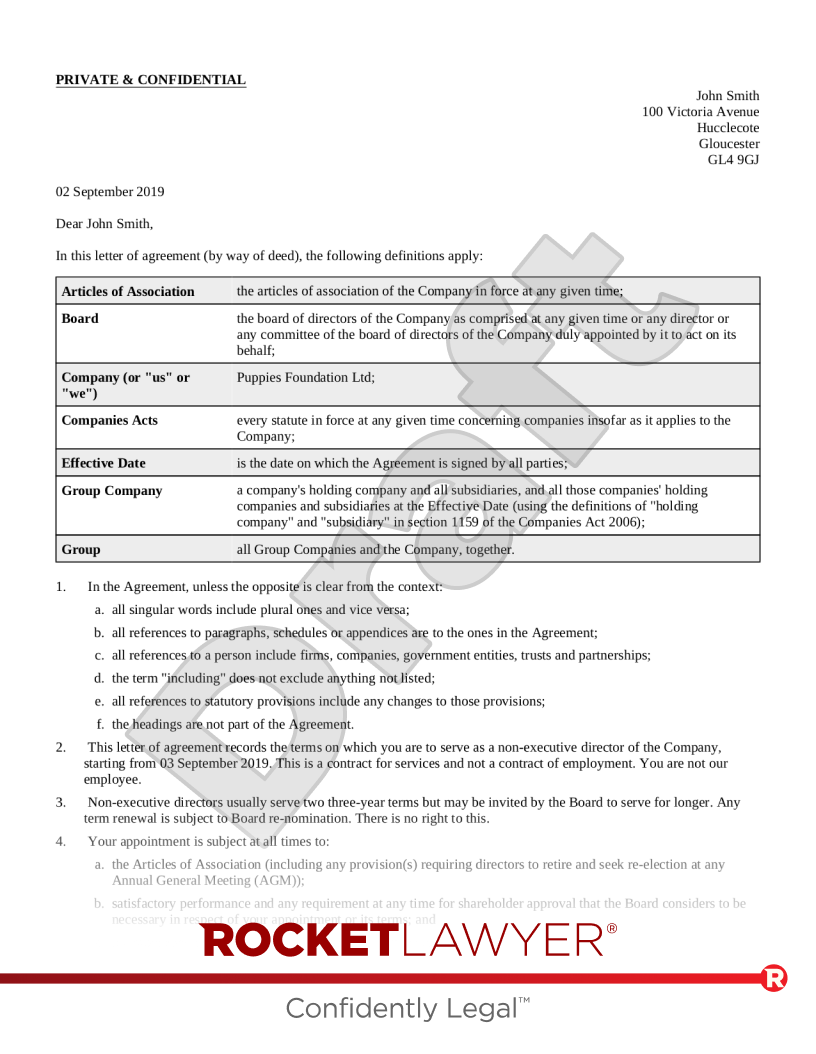
They typically have one contract with the company (ie a director’s service agreement or a Senior employment contract) that covers both aspects of their role. An executive director’s rights, duties, and status as a director remain distinct from those arising from their employment. If problems arise, both aspects of the job must be considered separately.
What is a non-executive director?
A non-executive director (NED) isn't typically involved in the company's daily management. Their primary role is to provide an independent perspective, specialist advice, and constructive challenge to the executive directors. They help scrutinise the performance of the management and contribute to the development of the company’s strategy. They don't usually have a service contract for day-to-day employment, but often have a Letter of appointment.
Read Different types of company directors, for more information on the various types of directors.
If you need to formalise a director's relationship with your company, you can make a Non-executive director letter of appointment or a Senior employment contract. For a director's service agreement, you can use our Bespoke drafting service. Do not hesitate to Ask a lawyer if you have any questions or concerns.