What is copyright infringement?
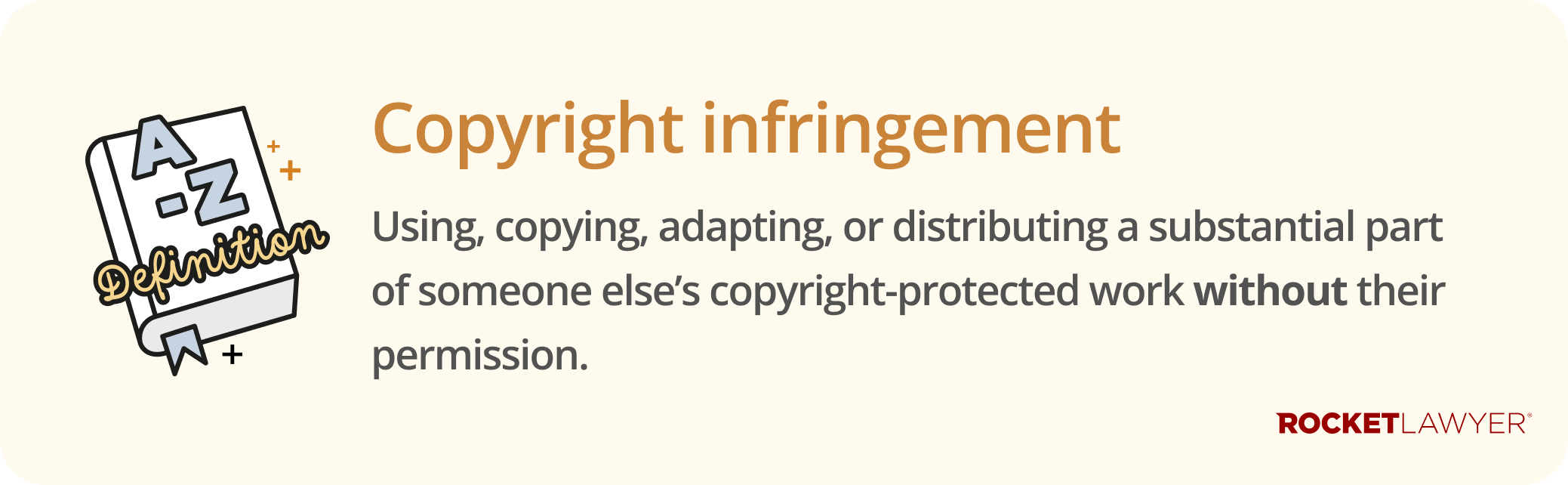
Copyright infringement is when you use all or a 'substantial part' of someone else's work without their permission, in a way that is reserved for the copyright owner. This includes acts like:
-
copying the work
-
renting, lending, or sharing copies with the public
-
performing or showing the work in public
-
adapting the work (eg turning a book into a film)
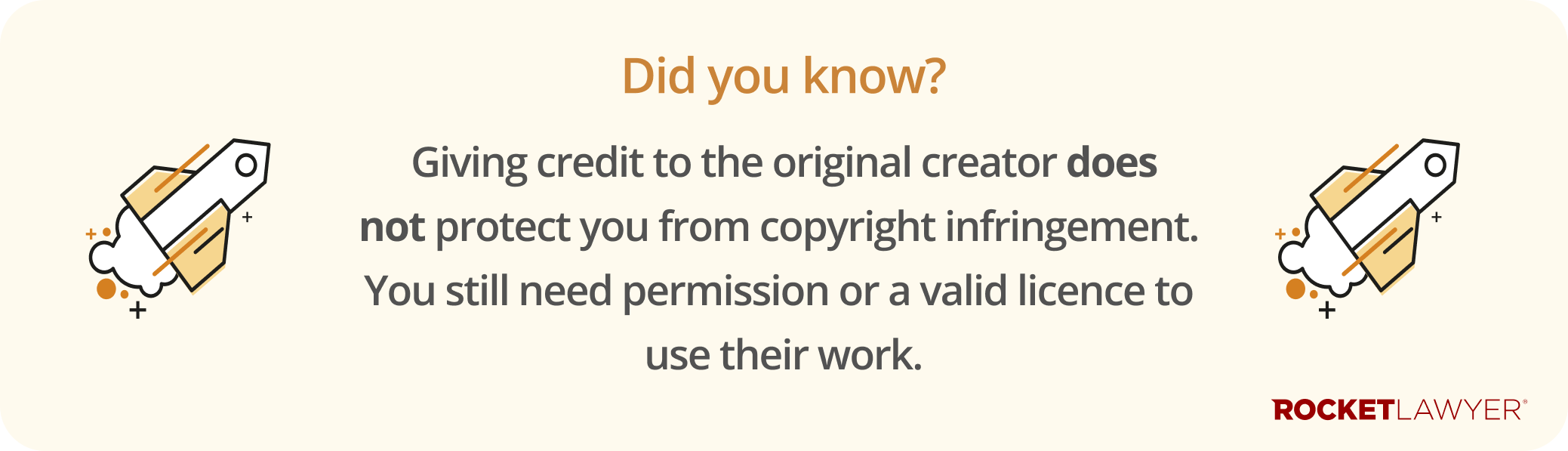
It's important to remember that infringement can happen even if you do it accidentally, don't make any money from it, or credit the original creator. For a detailed explanation of what copyright is, read Copyright. To understand the potential consequences of infringement, read What happens if you break copyright law.
How can I legally use other people's work?
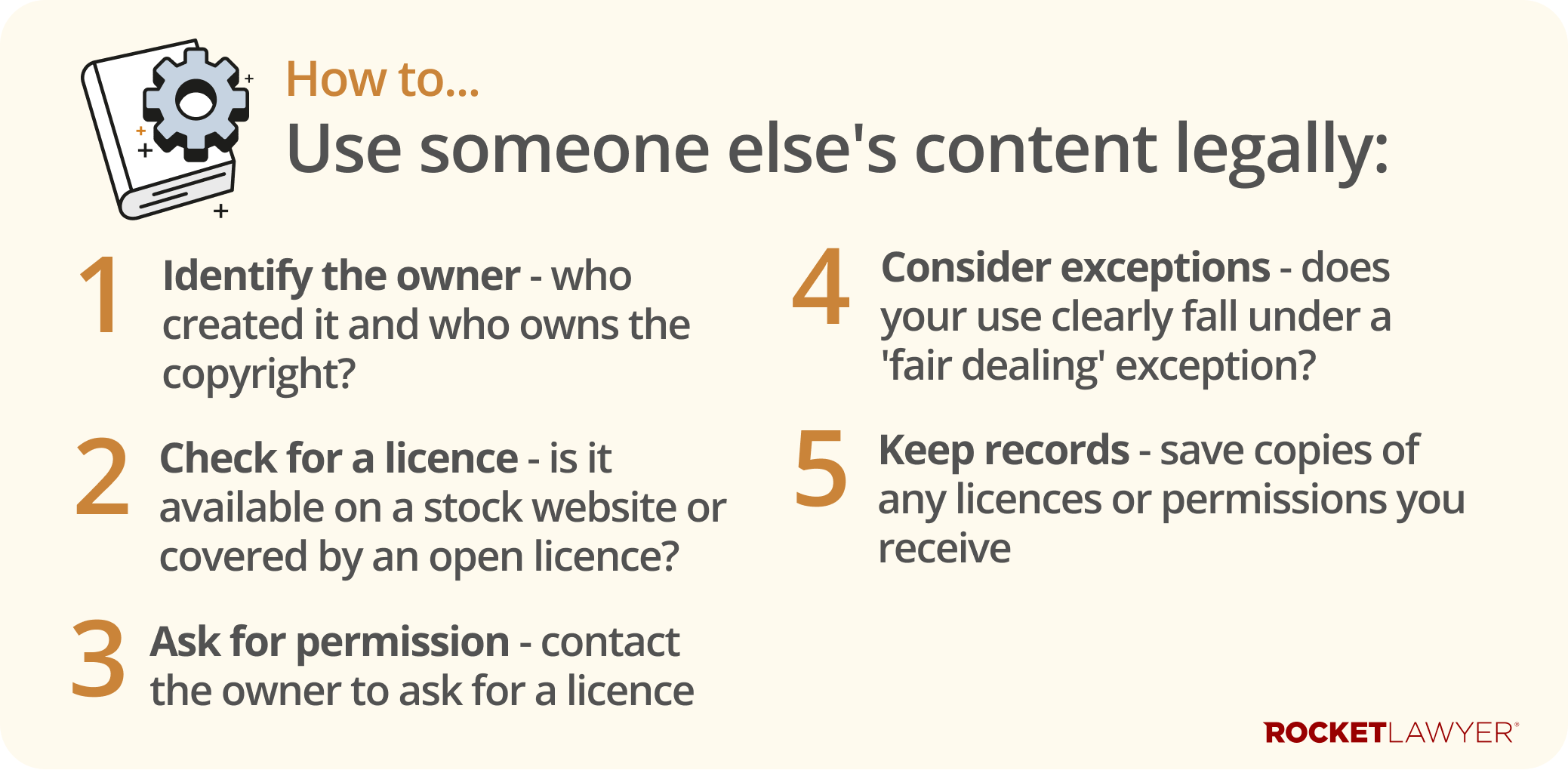
To avoid infringement, you must ensure you have the right to use any content you didn't create yourself. There are three main ways to do this.
Get permission from the owner
The safest route is to get permission before you use a copyrighted work. This is often done by obtaining a licence, which is a formal permission that sets out how you can use the work. You can get a licence in several ways:
-
from the copyright owner directly - you can contact the creator or owner and negotiate a licence to use their work. This may require paying a fee
-
from a collective management organisation (CMO) - these organisations manage licences for large collections of work on behalf of the owners (eg PPL PRS handles licensing for most commercial music in the UK, while the Copyright Licensing Agency (CLA) manages licences for copying and reusing extracts from print and digital publications). For more information, see the government’s guidance on CMOs
-
from a stock content website - when you pay for a subscription to a stock photo, video, or music website, you are buying a licence to use their content under specific terms
Use copyright-free material
Some works can be used without needing to ask for permission. These include:
-
public domain works - when copyright expires (typically 70 years after the creator's death), the work enters the public domain. This means anyone can use it for any purpose
-
Creative Commons (CC) and similar open licences - some creators release their work under licences that allow others to use it for free. However, you must check and follow the conditions of the specific licence. These conditions might include crediting the creator or not using the work for commercial purposes
-
works under a specific open licence - always check a website’s terms. Some content is available for reuse under certain conditions. A good example is material covered by the Open Government Licence, which allows you to use content from government websites
Understand the limits of fair dealing
The Copyright, Designs and Patents Act 1988 contains some limited exceptions that allow you to use a portion of someone's work without permission for specific purposes, such as non-commercial research, criticism, review, or parody. This is known as fair dealing.
However, these exceptions are narrow and have strict requirements. Relying on fair dealing can be risky, as its interpretation is complex. For more information, read Exceptions to copyright.
What are the most common copyright mistakes?
It's easy to infringe copyright without realising it. To help you stay on the right side of the law, here are five of the most common pitfalls:
-
using an image from an online search - saving an image from a search engine and using it on your own website, blog, or social media is one of the most frequent causes of infringement, as most online images are protected by copyright
-
playing music in a commercial space without a licence - playing live or recorded music in a public business setting (like a shop, office, or pub) requires TheMusicLicence from PPL PRS
-
assuming credit is enough - adding a credit or a link back to the original creator is good practice, but it is not a legal substitute for getting permission. You still need a licence or have to rely on a fair dealing exception
-
reposting social media content incorrectly - downloading a video or image from another person's social media account and re-uploading it to your own is usually infringement. You should always use the platform's official 'share' or 'retweet' functions
-
using clips of music or films in marketing - incorporating even short clips of popular songs, films, or TV shows into your own marketing content without a specific licence is a clear infringement
How do copyright rules apply to social media and memes?
The rules around social media content can feel like a grey area, but the basic principles of copyright still apply.
Using memes in your business
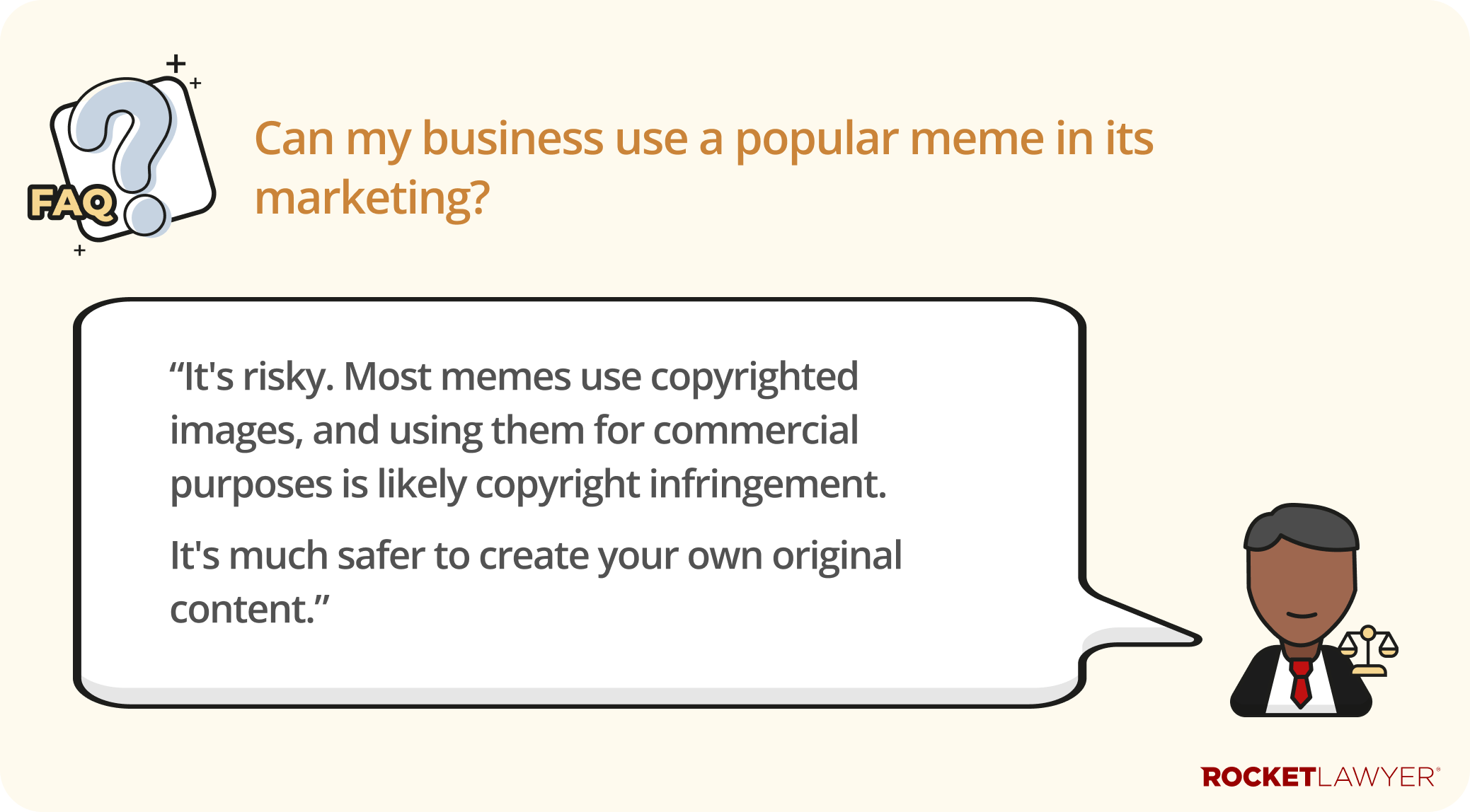
Using popular internet memes for your business (eg in your marketing efforts) presents a significant copyright risk. The problem is that most memes are built on copyrighted material, like a still image from a film, a news photograph, or a picture of a celebrity. Using that image without permission is infringement.
While the law has a fair dealing exception for parody or pastiche, relying on this is dangerous for a business. The defence is legally complex, largely untested in UK courts, and less likely to succeed when the meme is used for commercial gain. The safest approach is to create your own original meme content using images you have taken yourself or have explicitly licensed for commercial use.
Reposting content on social media
When someone uploads content to a platform, they still own the copyright, but they grant the platform a broad licence to use it. This licence doesn't automatically extend to other users.
To stay safe, follow these rules:
-
use the platform's sharing tools - using the built-in 'share', 'retweet', or 'repost' functions is usually acceptable, as you're linking back to the original post rather than creating a new copy
-
don't download and re-upload - saving someone else's video or image and then uploading it to your own profile is almost always copyright infringement
-
always give credit - while not a legal defence, it's good practice to always credit the original creator by tagging them or including their name
To protect your own work, consider adding a watermark or your logo to images and videos before you post them, so your brand stays associated with the content wherever it's shared.
If you need to gain full ownership of the copyright in a work that has been created for you by a freelancer or contractor, you can make an Assignment of intellectual property to have the rights formally transferred to you. For specific questions about your situation, do not hesitate to Ask a lawyer.