What is copyright?
Copyright is a legal right that automatically protects the owner of an original creative work. It is designed to stop other people from using your work without your permission. Copyright is a type of intellectual property (IP) that applies to a wide range of creations, from literature and music to software and architectural designs. The main law governing copyright in the UK is the Copyright, Designs and Patents Act 1988.
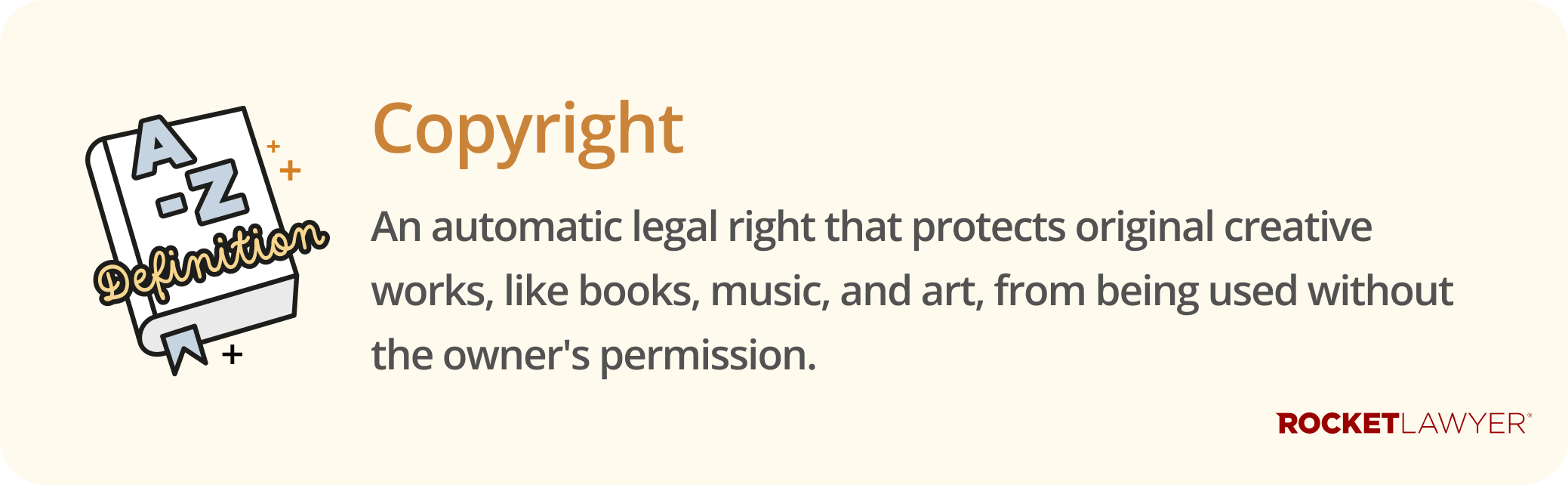
Unlike some other intellectual property rights, you don't need to apply or register for copyright in the UK – it's an automatic right you get as soon as you create something original and 'fix' it in a material form (eg by writing it down or saving it as a file).
What rights does a copyright owner have?
Copyright gives the owner a bundle of exclusive rights over their creation. These are primarily economic rights, which allow the owner to control how their work is used and to make commercial gains from it. If someone performs any of these acts without the copyright owner's permission, they may be infringing the copyright.
These exclusive rights include the right to:
-
copy the work
-
issue copies of the work to the public (ie distribute it)
-
rent or lend the work to the public
-
perform, show, or play the work in public
-
communicate the work to the public (eg broadcast it)
-
adapt the work (eg by making a translation or turning a book into a film)
Alongside these economic rights, a creator always has moral rights. These are separate from the financial aspect and protect the creator's personal and reputational connection to their work, such as the right to be credited as the author. For more information, read Moral rights for copyright.
What does copyright protect?
Copyright doesn't protect ideas themselves, but rather the expression of those ideas. For example, you can't copyright the idea of a detective story, but you can copyright the specific book you write about a detective.
For a work to be protected by copyright, it must be:
-
original - it must be the result of the creator's own skill, labour, and judgment, and not copied from another work
-
fixed - it must be recorded in a permanent or tangible form (eg written down, recorded on video, or saved as a digital file)
What works are protected by copyright?
The following types of work are protected by copyright:
-
literary, dramatic, musical, or artistic works - this includes books, poems, plays, song lyrics, music, photographs, paintings, sculptures, and illustrations
-
sound recordings and films - including movies, television shows, and music recordings
-
broadcasts - such as television and radio programmes
-
typographical arrangements of published editions - this refers to the layout or 'look and feel' of a published work, like a magazine or book
-
original non-literary written work - including software, web content, and databases
What isn’t protected by copyright?
Some things cannot be protected by copyright. As mentioned, ideas, facts, and concepts aren’t protected. For instance, a historical fact or a scientific theory isn't covered. Similarly, names, titles, and short phrases usually aren't original enough to qualify for copyright protection, although they may be protected as a trade mark.
Certain uses of copyrighted material are also allowed without the owner's permission. These are known as exceptions to copyright and cover things like non-commercial research, private study, criticism, and news reporting. For more information, read Exceptions to copyright.
Who owns copyright?
As a general rule, the first owner of copyright is the creator (or ‘author’) of the work. For example, the photographer who takes a picture or the writer who writes a book is the first owner of the copyright in their work. However, there are important exceptions to this rule.
What about work created by employees?
If a work is made by an employee during their employment, their employer is the first owner of any copyright in the work. This is the case unless there's an agreement that says otherwise (eg in their Employment contract).
What about work created by freelancers?
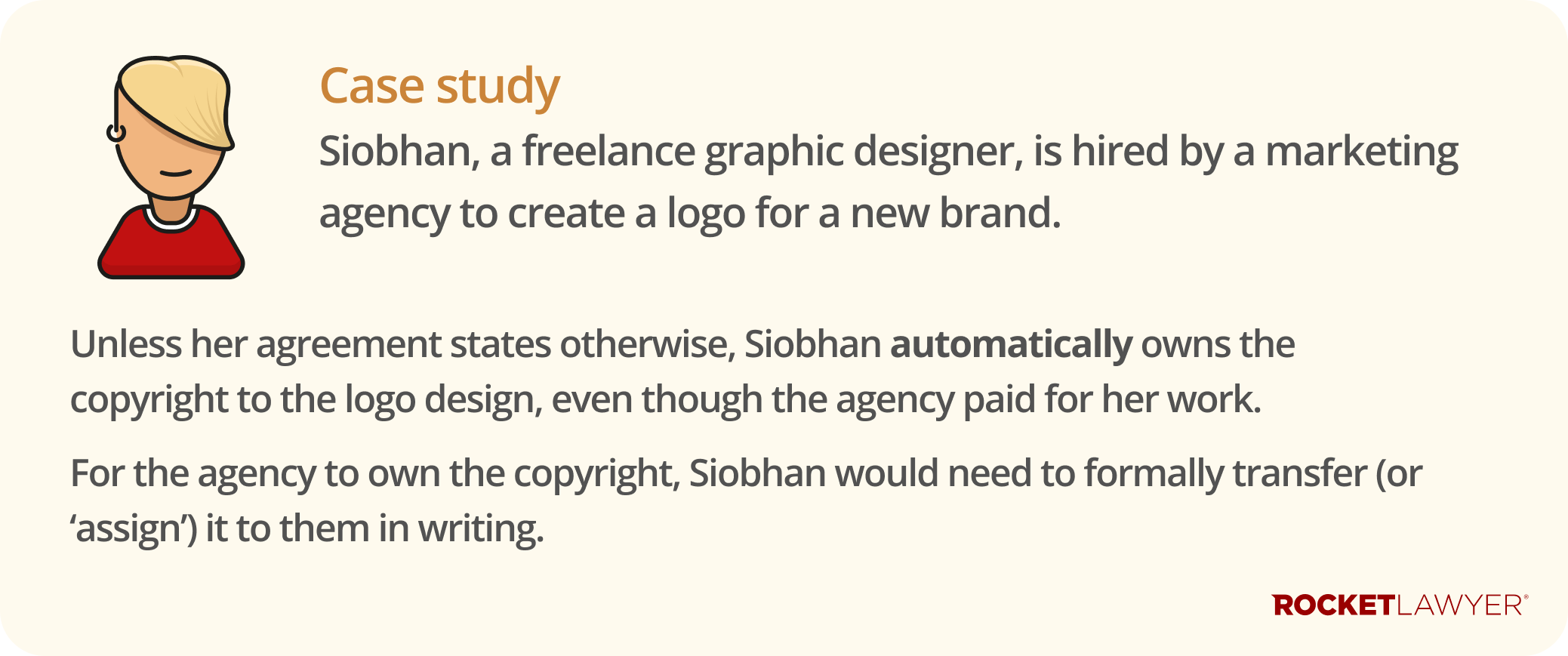
For freelance or commissioned work (eg a photographer taking wedding photos), the freelancer or contractor usually owns the copyright, not the client who paid for it. This is true unless a contract is in place to transfer ownership to the client.
Can copyright be transferred?
Copyright is a form of property that can be transferred to others. During a copyright owner's lifetime, they can transfer their copyright by selling it or giving it away. This is legally known as an assignment. It's also possible to license a work. This isn’t a full transfer of ownership, but instead gives someone else permission to use the work in specific ways, often in return for payments (known as royalties).
If the owner left a Will, the copyright is inherited by the beneficiaries named in it. If there is no Will, the copyright will be passed on according to the rules of intestacy.
How long does copyright last?
The duration of copyright protection depends on the type of work.
-
literary, dramatic, musical, and artistic works - copyright lasts for the lifetime of the creator plus 70 years from the end of the year in which they die
-
sound recordings - 70 years from the end of the year it was first published or released
-
films - 70 years from the end of the year of the death of the last of the main creators (eg the director, screenwriter, or composer)
-
broadcasts - 50 years from the end of the year the broadcast was made
-
typographical arrangements - 25 years from the end of the year the edition was first published
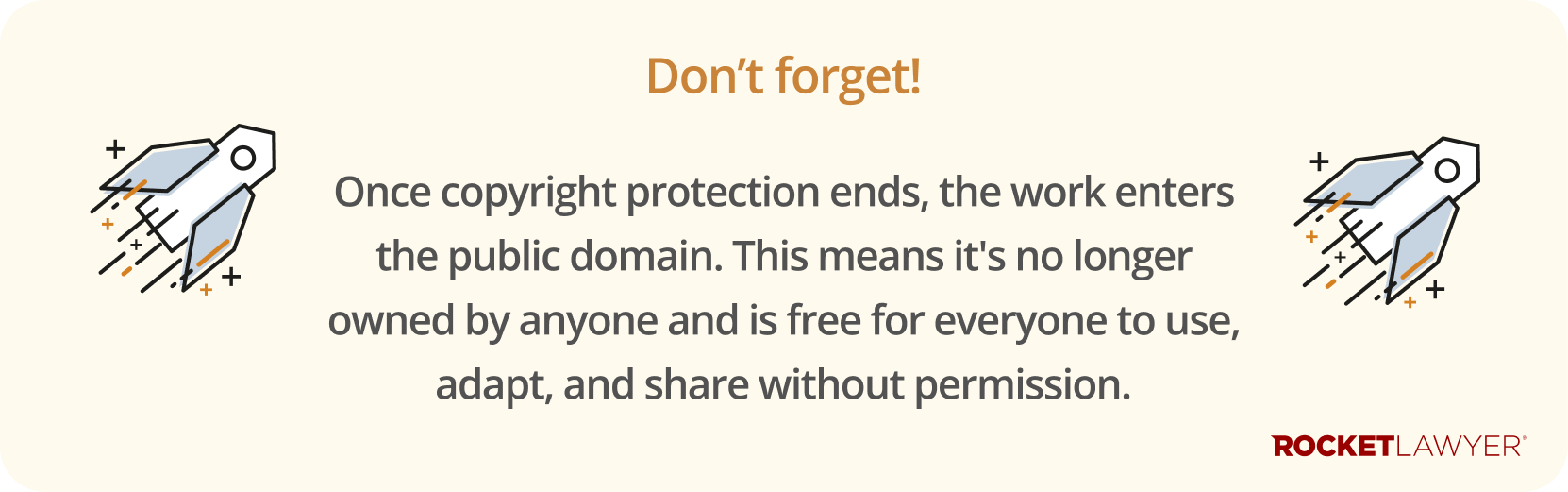
Once copyright expires, the work enters the public domain, which means anyone can use it freely without permission.
How can I protect my copyright?
Since copyright is automatic, you don't need to register it to get protection. However, if you need to take legal action against someone for infringing your copyright, you'll have to prove that you are the owner and that your work is original.
While there isn't an official government registration system in the UK, you can take steps to create evidence of your ownership. It’s a good idea to keep records of your creative process, which could include dated drafts, sketches, or digital files with metadata. Some people also post a copy to themselves by special delivery (so it’s officially dated) and leave it unopened, or deposit a copy with a solicitor or a bank.
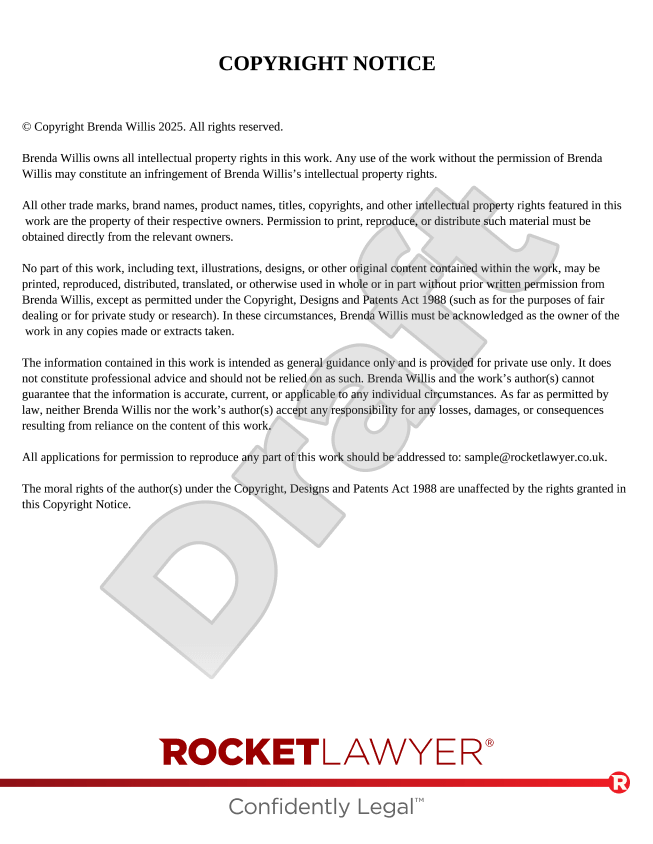
It's also good practice to mark your work to show that you own the copyright. You can do this by using the international copyright symbol (©), followed by your name and the year of creation (eg ‘© Rocket Lawyer 2025’). Using the copyright symbol acts as a clear warning that the work is protected and makes it easy for people to identify you as the owner if they want to license it. You can easily make a Copyright notice for your website or creative works.
What should I do if someone copies my work?
If you find that someone is using your work without your permission, you are experiencing copyright infringement.
The first step is often to send them a formal Cease and desist letter. This letter identifies your copyrighted work, explains how they are infringing on it, and asks them to stop immediately. This is often enough to resolve the issue without needing to take further action. If they ignore your letter or refuse to stop, you may need to consider legal action. For more information, read Remedies for intellectual property right infringement.
If you are using someone else's creative work, it's important to make sure you have the right permissions to avoid infringing their copyright. For more information, read How to avoid copyright infringement.
If you need to put others on notice that your work is protected, you can make a Copyright notice. Do not hesitate to Ask a lawyer if you have any questions or concerns about protecting your work.