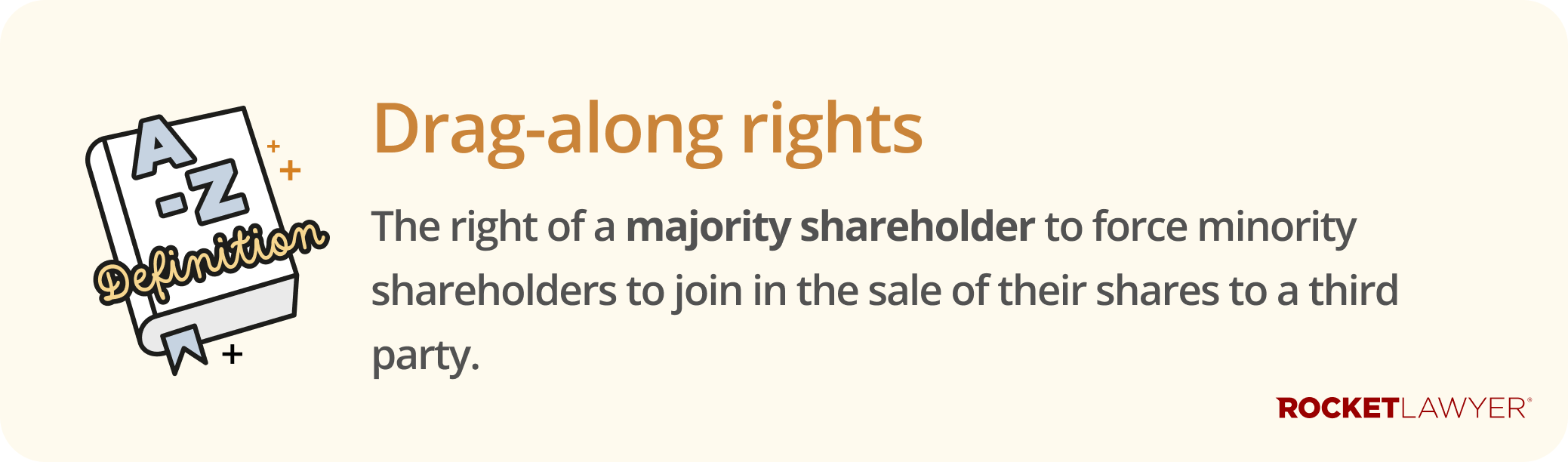
What are drag-along rights?
Drag-along rights, sometimes called ‘come-along rights’ or ‘bring-along rights’, allow a majority shareholder to force minority shareholders to sell their shares during a company sale. They ensure that if a buyer wants to purchase 100% of a company, a small number of shareholders can't block a deal that the majority has already approved. This makes the company a more attractive investment for potential buyers, as it provides a clear path to full ownership.
Why are drag-along rights used?
The main purpose of drag-along rights is to provide an easy exit route for a majority shareholder and make the company more attractive to potential buyers. Most buyers will want 100% control of a business and won't agree to a sale if minority shareholders can remain. Drag-along rights prevent majority shareholders from being 'locked in' by uncooperative minority shareholders who might block a beneficial sale. While they favour the majority, they also protect minority shareholders by ensuring they receive the same price and terms as everyone else.
How are drag-along rights triggered?
Drag-along rights are typically triggered during a sale transaction, such as a merger or acquisition. For the rights to be used, a certain percentage of shareholders must agree to the sale. This threshold is negotiable but is usually between 51% and 75%. The company’s Shareholders' agreement or Articles of association should specify the exact conditions, which almost always require that the sale is to an independent buyer and that all shareholders are offered the same deal.
If these conditions are met, the majority shareholder can issue a drag-along notice to the minority shareholders, which legally requires them to sell their shares under the agreed terms.
What are tag-along rights?
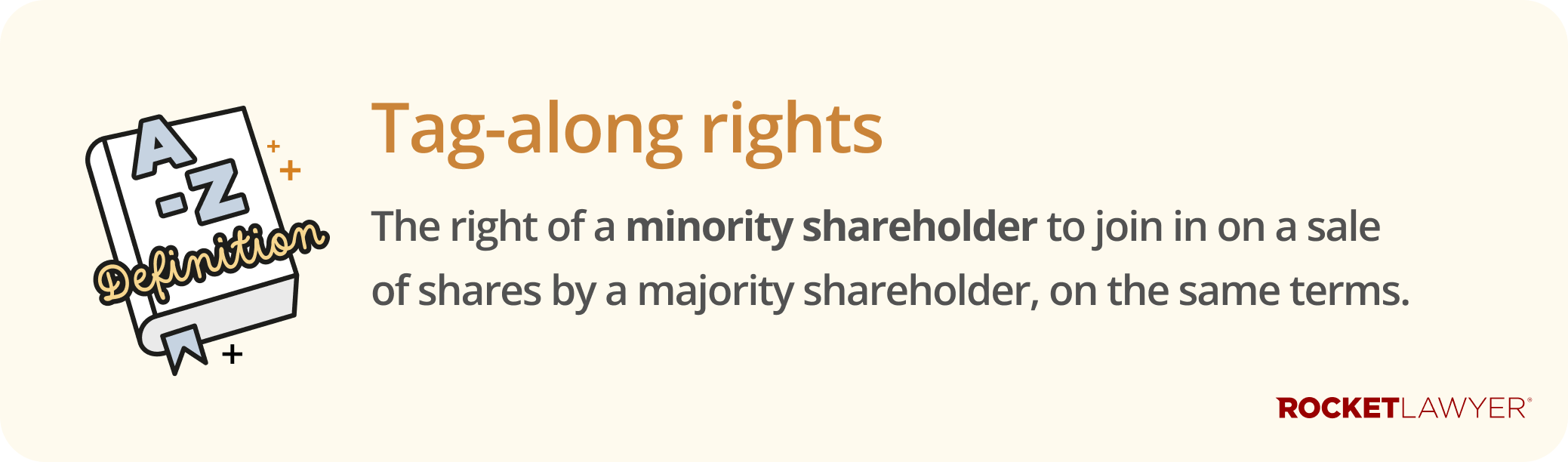
Tag-along rights (or ‘co-sale rights’) protect minority shareholders. They give minority shareholders the right to join in on a sale of shares by a majority shareholder. This means if a majority shareholder finds a buyer for their shares, the minority shareholders can 'tag along' and sell their shares on the same terms and at the same price. This prevents a situation where the majority shareholder sells their stake, leaving the minority shareholders in a company with a new, unknown majority owner.
Why are tag-along rights used?
Tag-along rights are designed to protect the value of minority shareholdings. A majority shareholder's shares are often more valuable because they come with control of the company. Tag-along rights ensure that minority shareholders get to share in the 'control premium' (ie the higher price a buyer is willing to pay for shares that give them a controlling interest in the company) paid to the majority shareholder and aren't forced to accept a lower price for their shares later on. It provides them with a clear exit opportunity on fair terms.
How are tag-along rights triggered?
These rights are triggered when a majority shareholder (or a group of shareholders) agrees to sell their shares to a third party. The selling shareholder must then notify the minority shareholders of the offer. The minority shareholders then have a specified period to decide if they want to exercise their tag-along rights and sell their shares as part of the deal. If they choose to do so, the buyer must purchase their shares on the same terms, or the sale cannot go ahead.
Can you have both drag-along and tag-along rights?
It's very common for shareholders' agreements to include both drag-along and tag-along rights. They work together to create a balance between the interests of the majority and minority shareholders. The drag-along right protects the majority’s ability to sell the whole company, while the tag-along right protects the minority from being left behind in that sale or from being stuck with a new owner. Including both is often seen as a fair way to manage a future company sale.
What should you consider when negotiating these rights?
When you’re negotiating drag-along and tag-along rights to include in a company’s shareholders' agreement or articles, there are a few key things to think about to ensure the terms are fair for everyone:
-
the threshold for triggering the rights - what percentage of shareholders needs to agree to a sale for drag-along rights to be activated? And what percentage of shares being sold will trigger tag-along rights?
-
the price - should there be a minimum price per share before the rights can be used? This can protect minority shareholders from being forced to sell at a low price
-
the terms of the sale - what warranties and indemnities will the selling shareholders have to give? Minority shareholders will often want to limit their liability
-
the process - how will the rights be exercised? The notice periods and procedures should be clearly set out to avoid any confusion or disputes
It's important to get legal advice when you're negotiating these rights to make sure they're drafted in a way that protects your interests.
For more information, read Private limited companies. If you need to formalise the rights of shareholders in your company, you can make a Shareholders' agreement. If you're considering buying or selling a business, use our Business sales or purchase service for assistance with the transaction. Do not hesitate to Ask a lawyer if you have any questions.