What is a board meeting?
A board meeting is a formal meeting of a company's board of directors, held to discuss the business and affairs of the company. It's where the directors perform their duties, review performance, set strategy, and make key decisions on behalf of the company and its shareholders.
The company's Articles of association often set out the rules for how these meetings should be run, including how often they should happen and how much notice must be given to directors. The decisions made at these meetings are legally binding on the company.
What are board meeting minutes?
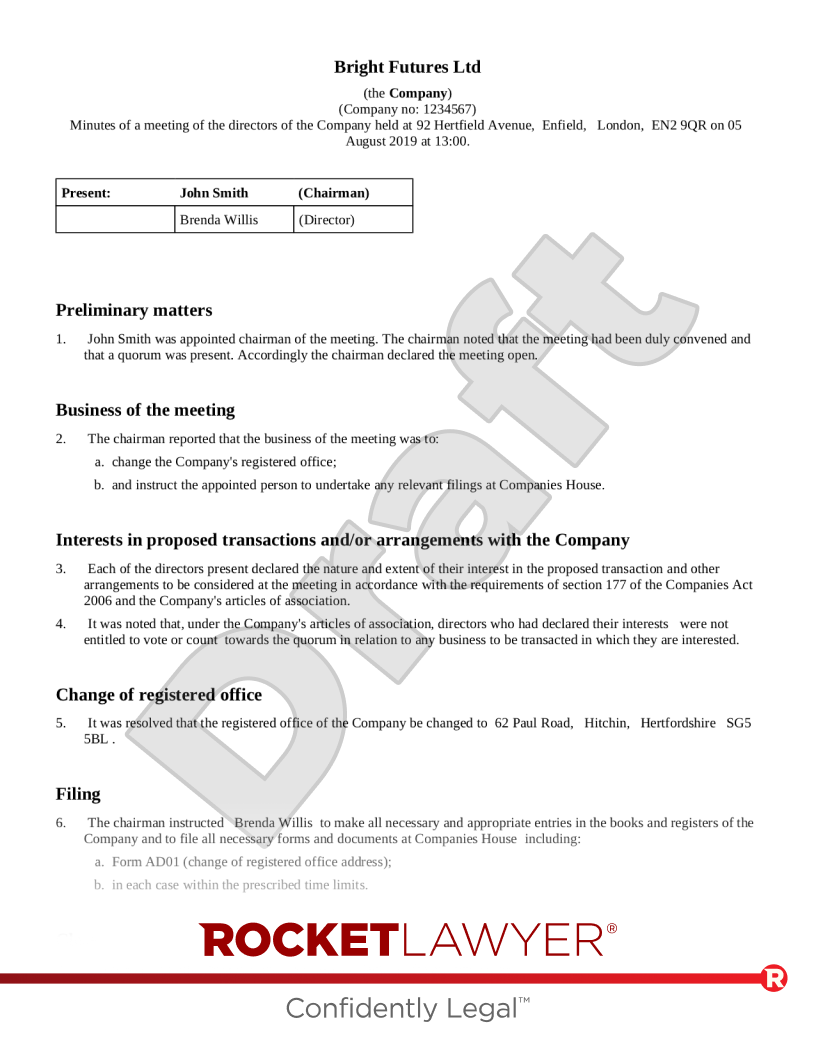
Board meeting minutes are the official written record of what happens during a company's board meeting. They aren't a word-for-word transcript of the entire conversation. Instead, they summarise the key points discussed, the decisions made (known as 'resolutions'), and any actions that need to be taken.
Their main purpose is to create a clear and permanent account of the board's activities. This ensures there's no confusion later about what was decided and provides a historical record of the company's management and strategy.
Why are board meeting minutes important?
Keeping accurate and up-to-date board minutes isn't just good practice; it's a legal requirement under the Companies Act 2006 and a key part of a director's duties. All companies must keep records of their board meetings for at least 10 years.

Board meeting minutes serve several vital functions:
-
legal compliance - they prove that the company and its directors are following their legal duties and that decisions were made properly
-
evidence - minutes can be used as evidence in court or during a dispute to show why and how a particular decision was reached, which protects both the company and its directors
-
clarity and accountability - they provide a clear record of agreed actions and assign responsibility, helping to ensure tasks are completed
-
continuity - they help new directors get up to speed on past decisions and the company's history
Are board meeting minutes confidential?
Yes, board meeting minutes are confidential documents. They belong to the company and contain sensitive commercial information, so they are not available for public inspection. However, they aren't entirely secret. Shareholders have a legal right to inspect the minutes, and copies may need to be provided to auditors, banks, or lawyers for specific reasons. They can also be ordered to be disclosed during legal proceedings.
What happens if a company doesn’t keep proper minutes?
Failing to maintain proper company records is a serious breach of a director's duty to exercise reasonable care, skill, and diligence. It can lead to fines and, in serious cases, may be used as grounds for disqualifying a director from acting as a director for a set period. This is especially likely if the company becomes insolvent, as investigators will look for evidence of mismanagement, which includes poor record-keeping.
What should be included in board meeting minutes?
While there's no strict formula, good board minutes should always contain certain key pieces of information to ensure they are a complete and useful record.
Your minutes should generally include:
-
the company’s name and company number
-
the date, time, and location of the meeting
-
a list of who attended (including directors and any other attendees, like lawyers or advisers) and who sent their apologies (ie couldn’t attend)
-
the name of the chairperson of the meeting
-
confirmation that the meeting was 'quorate' (ie that enough directors were present to make valid decisions, as set out in the articles of association)
-
the agenda for the meeting (ie what business is being considered)
-
a record of the resolutions passed by the directors
-
details of any declarations of interest made by directors (for example, if a director has a personal interest in a contract the company is discussing)
-
any filings which must be made at Companies House following the meeting, and who will make them
It is common to circulate a draft of the minutes in advance of the meeting and then circulate a final copy for approval or even table these at the next meeting.
Who is responsible for taking the minutes?
Usually, the company secretary is responsible for taking minutes. However, many small private companies don't have a company secretary. In this case, the directors can appoint one of the directors present at the meeting to take on this role, or they can appoint another trusted person. The person taking the minutes is often called the 'minute-taker', and it's vital that someone is clearly assigned the task to ensure an accurate record is kept.
Do board minutes need to be signed?
Yes, for board minutes to be an official and valid record, they must be signed by the chairperson. This signature confirms that the minutes are a true and accurate account of the proceedings. It’s common practice to circulate a draft of the minutes to all directors for review after the meeting. Once everyone agrees they're accurate, a final version is produced for the chairperson to sign, which may happen at the start of the next board meeting.
Who is the chairperson?
The chairperson (or 'chair') is the person appointed to lead the board meeting. Their primary role is to ensure the meeting is conducted in an orderly and effective manner. This involves setting the agenda, making sure all directors have a chance to speak, guiding discussions, and ensuring that clear decisions are made.
A company's articles usually set out how a chairperson is appointed. The directors may appoint a permanent chairperson from among themselves, or they might elect a different director to chair each meeting. In the event of a tied vote on a resolution, the articles often give the chairperson a second, casting vote to break the deadlock.
If you need to record the decisions made at a board meeting, you can make formal Board minutes. If you have any questions, do not hesitate to Ask a lawyer.