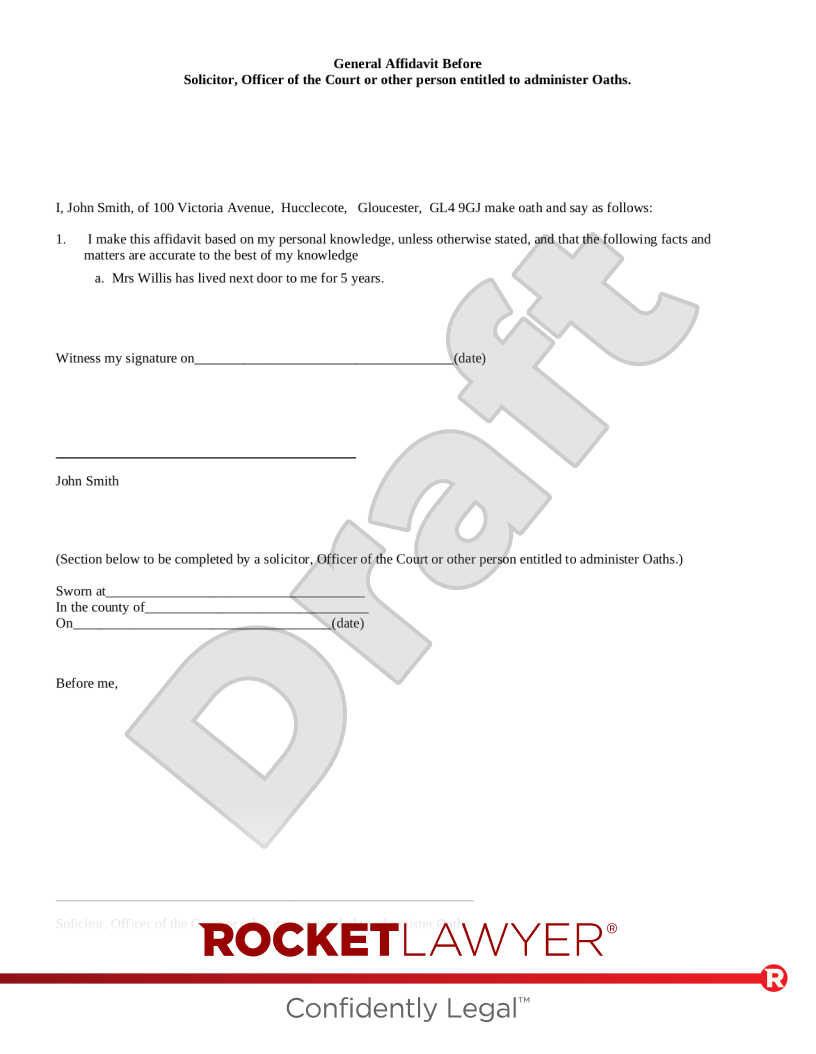
What are affidavits?
Affidavits are written statements of fact that the person making them (called the 'deponent' or sometimes ‘affiant’) swears or affirms to be true. It’s often used in court as evidence when a person cannot give oral evidence in person, or to support certain applications. Because an affidavit made under oath it’s legally binding.
What are the differences between an affidavit and a statutory declaration?
While both documents involve a formal promise that the information is true, they're used in different situations. You usually make an Affidavit for court proceedings. A statutory declaration is more common for administrative matters outside of court, like changing your name (eg a Statutory declaration of name change) or confirming your financial status for a mortgage.
The main difference is the law that governs them. Statutory declarations are made under the Statutory Declarations Act 1835, while affidavits are governed by court rules. You can make a statutory declaration to confirm facts when there isn't a specific court case involved.
Who can swear an affidavit?
Most individuals can offer and swear an Affidavit, provided they have the mental capacity to understand the importance of the oath they’re taking.
The information in the document must be based on your own personal knowledge and, if practicable, should be written in your own words.
Where an affidavit is sworn by a person who is unable to read or sign it, the authorised person must certify in the ‘jurat’ (the statement at the end) that they read the document to the deponent and the deponent appeared to understand it.
In some cases, you might offer an affidavit on behalf of someone else, such as if you're a court-appointed deputy. However, the court usually prefers that the person with the most direct knowledge of the facts swear the document.
When should an affidavit be used?
Under the Civil Procedure Rules, evidence must be given by affidavit instead of a witness statement if this is required by the court or any other rule. You may be asked to provide an affidavit during:
-
divorce proceedings, such as when providing information about finances
-
probate matters, for example, if there’s a dispute about a Last will and testament or the identity of an executor
-
debt collection, specifically when involving statutory demands or a creditor applying for a bankruptcy order
-
property disputes, such as confirming how long someone has occupied land for a prescriptive easement claim or for an order requiring an occupier to permit another to enter their land
Why is accuracy important in an affidavit?
When you sign an affidavit, you're making a legally binding promise that the contents are true. If a witness later changes their story, the defendant can use the affidavit to show that the witness isn’t credible because the facts they previously swore to are different from what they're saying now.
You must ensure your account of events is exactly as they happened. An error discovered after signing cannot be corrected other than by re-swearing the affidavit. Making a statement that you know is false is a serious matter and can lead to charges for contempt of court.
If you find an error, you must correct it before you sign the document, even if it’s inconvenient for the solicitor witnessing it. Making a statement in an affidavit that you know is false is a serious matter. It can lead to you being found in contempt of court, which carries heavy penalties, including fines and imprisonment.
How do you swear an oath?
This largely depends on your religious affiliations. The Oaths Act 1978 prescribes that you usually hold a religious text (eg the Bible) in an uplifted hand and repeat: 'I swear by Almighty God that…' followed by the words prescribed by law.
If you don't have a religious belief, the validity of the oath is not affected, but you can choose to ‘affirm’ instead. You do not affirm an affidavit on a religious text, and you repeat: ‘I do solemnly, sincerely, and truly declare and affirm…’ followed by the words prescribed by law. In these circumstances, the document is technically called an ‘affirmation’ rather than an affidavit.
Who can witness an affidavit?
For an affidavit to be legally valid, you must sign it in the presence of an authorised person. This is usually a solicitor, but it can also be any person commissioned to receive oaths (eg a notary public or another judicial officer who has administered the oath).
The person witnessing the document doesn't check if your facts are true; their job is to:
-
ensure you are who you say you are
-
verify that you took the oath or affirmation correctly
-
check that the date and signature are accurate
If you sign your affidavit in front of a solicitor, they will usually be entitled to charge a fee for swearing the affidavit. This is currently £5 per affidavit, sworn or affirmed, and £2 per exhibit. If this process is done in court, there will be no charge.
If you need to provide formal evidence for a court case, you can make an Affidavit. If you aren't sure whether you need an affidavit or a different type of statement, do not hesitate to Ask a lawyer for advice.