What is health and safety at work?
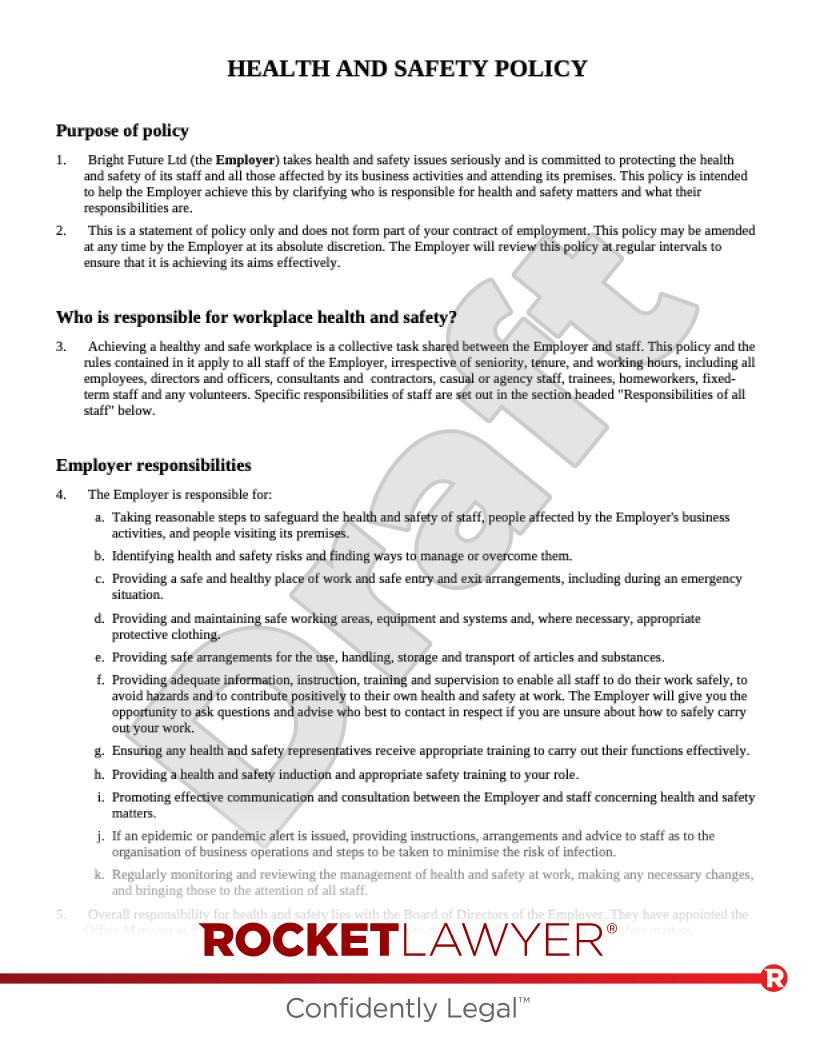
Health and safety at work refers to the rules, regulations, and procedures intended to prevent accidents and injuries in the workplace. It's a legal requirement for all employers to protect the health, safety, and welfare of their staff and anyone else who might be affected by their business activities, like customers, visitors, or the general public. This involves identifying and controlling potential dangers, providing safe equipment and working conditions, and ensuring staff are properly trained. A strong health and safety culture doesn't just prevent harm; it also boosts staff morale and productivity.
Who is responsible for health and safety?
While creating a safe workplace is a shared duty, the employer holds the main legal responsibility.
Employers
The business is ultimately responsible for the health, safety, and welfare of its employees and anyone else affected by its operations (eg customers, visitors, and the public). This duty is legally required and cannot be completely delegated to someone else.
Staff
Every staff member also has a legal duty to take reasonable care of their own health and safety and that of others who may be affected by their actions at work. They must cooperate with their employer on health and safety matters and must not misuse or interfere with anything provided for their safety (eg removing a guard from a machine or misusing fire extinguishers).
What are an employer's main health and safety responsibilities?
Under the Health and Safety at Work etc. Act 1974, all employers have a general legal duty to do everything reasonably practicable to protect the health, safety, and welfare of their staff. This duty covers a wide range of areas, from the physical state of the premises to the mental wellbeing of employees.
Employers' key duties include:
-
providing a safe place to work with safe entry and exit points
-
implementing safe systems of work (eg creating clear procedures for operating machinery)
-
ensuring all equipment is safe to use and properly maintained
-
making sure all staff are competent to do their jobs (eg through proper training and supervision)
-
appointing a competent person to oversee health and safety (ie someone with the necessary skills, experience, and knowledge; this can be an employee, the business owner, or an external consultant)
-
consulting with employees on health and safety matters (eg through direct discussion or with safety representatives)
-
providing adequate first aid arrangements
-
having mandatory employer's liability insurance (you must be covered for at least £5 million, and the certificate must be displayed)
In addition to these general duties, there are many specific regulations dealing with particular issues like hazardous chemicals (COSHH), manual handling, noise, fire safety, electricity, and the use of display screen equipment (DSE). Some high-risk workplaces, such as construction sites, have their own special rules.
Crucially, if you have five or more employees, the law requires you to have a written Health and safety policy detailing your arrangements for managing health and safety.
What about risk assessments?
A risk assessment is a core part of your legal duties. It's a careful examination of what could cause harm to people in your workplace.
Under the Management of Health and Safety at Work Regulations 1999, employers must at a minimum:
-
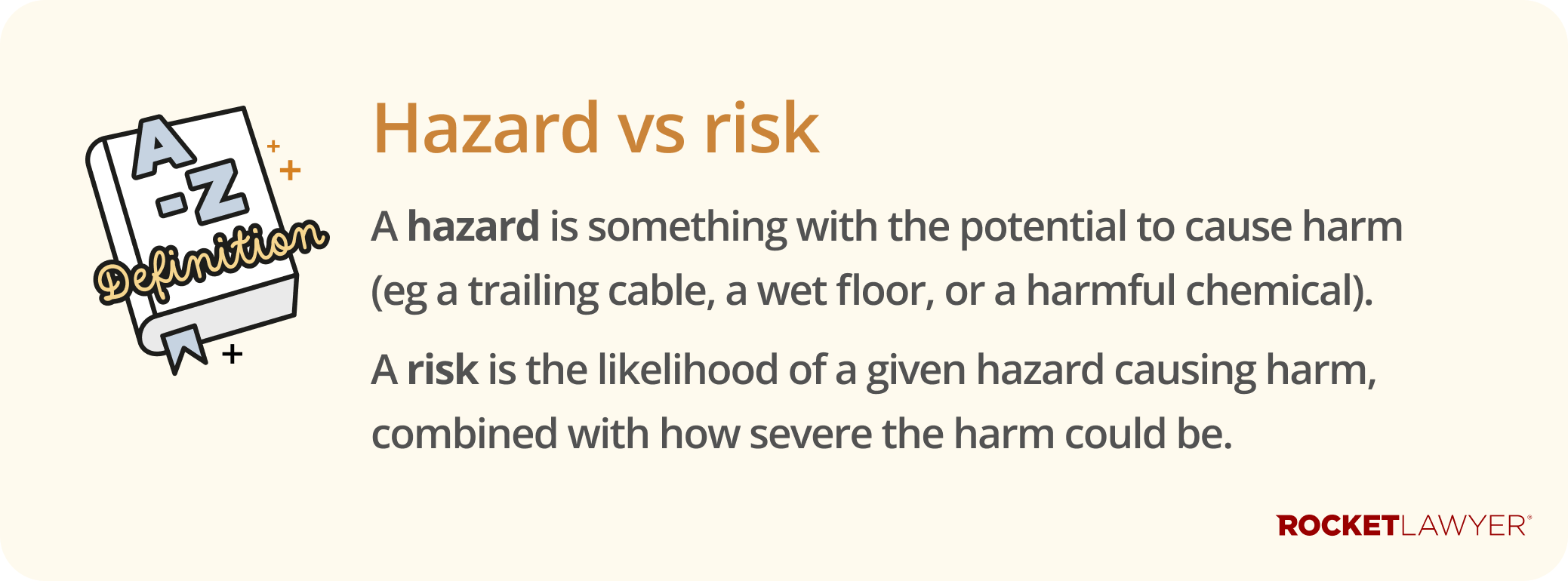
identify any hazards (areas that could cause injury or illness)
-
assess the likelihood of any risks (how likely it is that someone may be harmed and how seriously)
-
eliminate the hazard or, if not possible, control the risks
Employers must conduct and regularly update a risk assessment to identify the measures needed to comply with health and safety and fire requirements. You must also do a separate, specific risk assessment for new and expectant mothers.
For detailed guidance on how to perform one, read Risk assessments at work. Consider using a Workplace risk assessment when starting a new business, opening new premises, or returning to the workplace after a period of closure (eg, due to an epidemic, flooding, or renovations).
What is occupier's liability?
Occupier's liability is a specific legal duty under the Occupiers’ Liability Act 1957 and the Occupiers’ Liability Act 1984. It requires the person in control of a premises (ie the occupier) to ensure the safety of anyone who enters the premises, including staff, visitors, and sometimes even trespassers. This means you must take reasonable care to make sure the premises are safe for the purpose for which your visitors are there. Any specific dangers, such as operating machinery or deep water on the property, must be clearly identified with warning signs. It's crucial to have appropriate insurance to cover this liability.
How do you manage health and safety in practice?
Dealing with health and safety can feel daunting, but a few practical steps can make it much more manageable. For many office-based businesses, arrangements don't need to be overly complex. Your main focus will be your written policy, fire safety, first aid, and risk assessments for things like manual handling and display screen equipment use.
Consider appointing an expert external consultant to help you get the right systems in place. The HSE is an excellent source of free, practical information, while your local Fire Service can provide guidance on fire safety and compliance. Don't forget to also consider issues that affect mental health, such as stress and bullying, in your planning. Having a clear Anti-harassment and bullying policy can form part of your overall approach to staff wellbeing.
What happens if you breach health and safety rules?
Failing to meet your obligations can have severe repercussions. Employees who are injured or made ill may make a personal injury claim. If an employee feels forced to resign due to an unsafe environment, they could claim constructive dismissal. In the most serious cases, employers and even company directors can face criminal prosecution by the HSE, leading to heavy fines or imprisonment.
It's also important to remember that employees cannot be subjected to any detriment or discrimination for raising health and safety concerns. They are protected from this under whistleblowing legislation.
What about staff who work from home or are lone workers?
Your health and safety responsibilities extend to employees who work away from your main business premises. This includes people who work from home as well as other lone workers, such as those who travel for their job or work alone at a fixed site. Their remote environment is considered their workplace, and you still have a duty to ensure it is safe. This means you should conduct specific risk assessments to identify any hazards associated with their working arrangements and take reasonable steps to control these risks.
For more detailed guidance, read our guides on Employer health and safety responsibilities for staff working from home and Employer first aid obligations for employees working from home, and lone workers.
All employers should remember to make a Health and safety policy to set out how they comply with their legal obligations. All employment policies can also be consolidated in one place by making an Employee handbook. Do not hesitate to Ask a lawyer if you have any questions or concerns about workplace health and safety.