What is a company resolution?
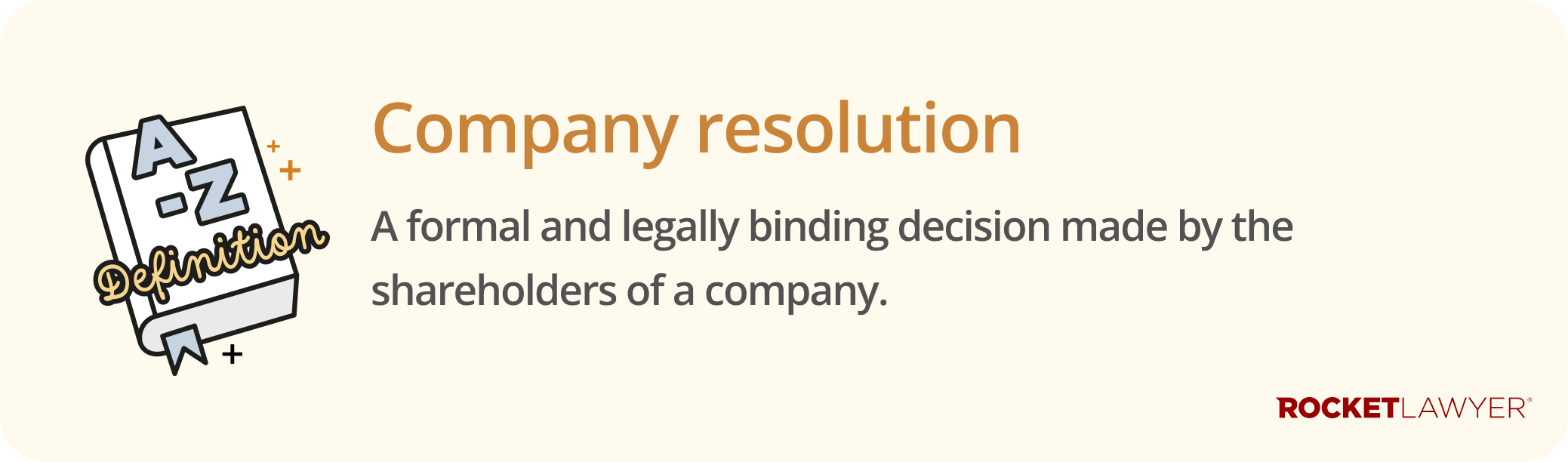
A resolution is a formal, legally binding decision that a company’s members (ie shareholders) agree to. Companies use resolutions to ensure that important decisions are made with an adequate level of consideration, agreement, and transparency.
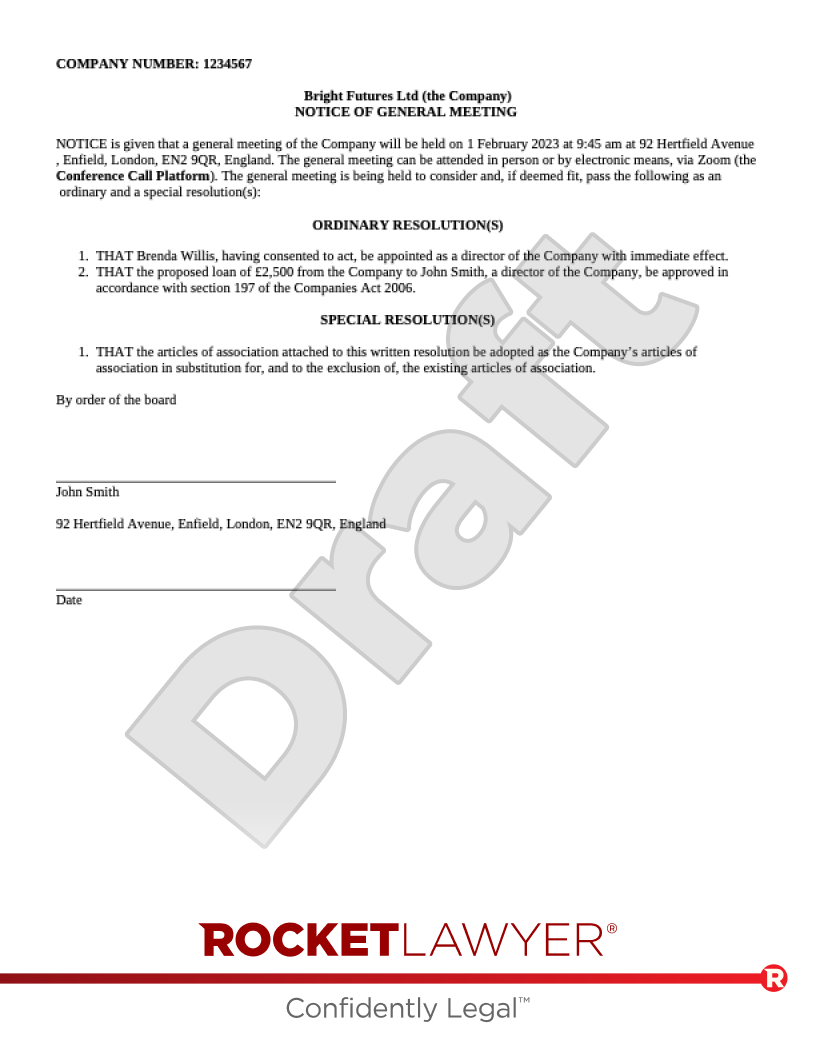
To be valid, you must make resolutions in accordance with the company’s Articles of association, any Shareholders’ agreement, and all relevant laws, primarily the Companies Act 2006. You can make resolutions at a general meeting of the shareholders or in writing. Our Shareholder resolution can be used to pass a company resolution at a general meeting and in writing.
What decisions require a resolution?
Most decisions, beyond those related to the normal day-to-day running of a business, will require a resolution. This ensures that the shareholders are properly consulted and that the action is formally documented and legally binding.
You must pass resolutions for any decisions that affect the company's fundamental structure, rules, or constitution. The company’s articles usually specify when a resolution is necessary and what type (ordinary or special) is needed.
Decisions that almost always require a resolution include:
-
changing directors' powers
-
changing the name of a company
-
changing the articles of association
-
changing the share structure
What is an ordinary resolution?
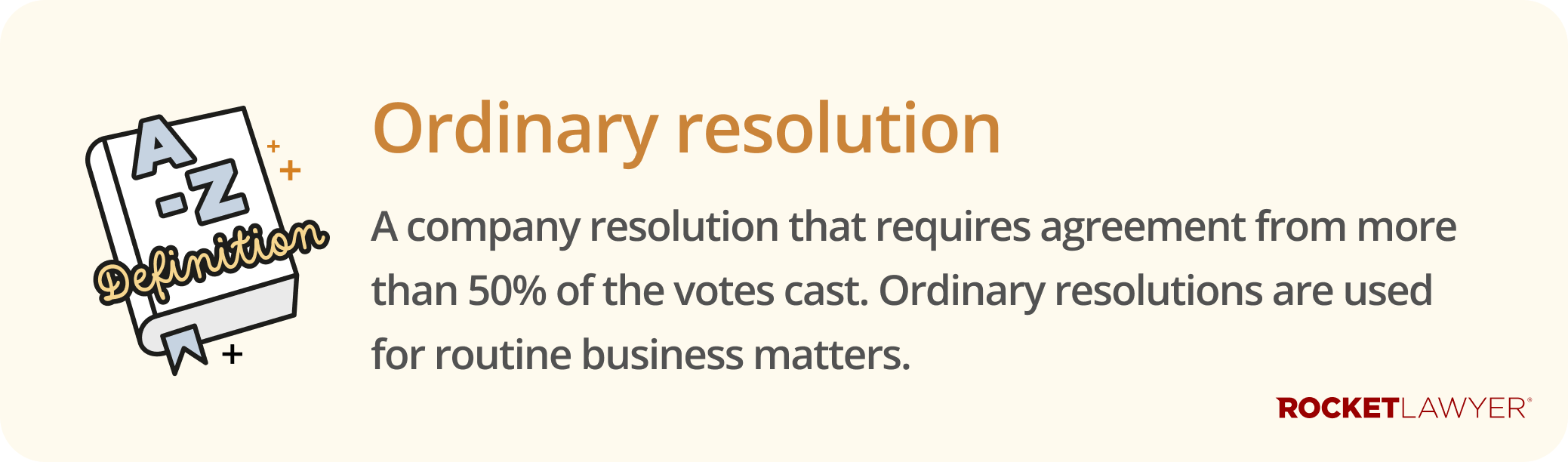
Ordinary resolutions are the basic type of resolution. They’re used for routine changes and only need a simple majority (ie more than 50%) of shareholders to agree on a decision. This type of resolution can be passed with a show of hands at a meeting. Some decisions that must be ordinary resolutions or that are usually passed as ordinary resolutions are:
-
appointment or removal of company directors
-
authorising directors’ loans
-
amending the powers of directors or changing their employment contracts
What is a special resolution?
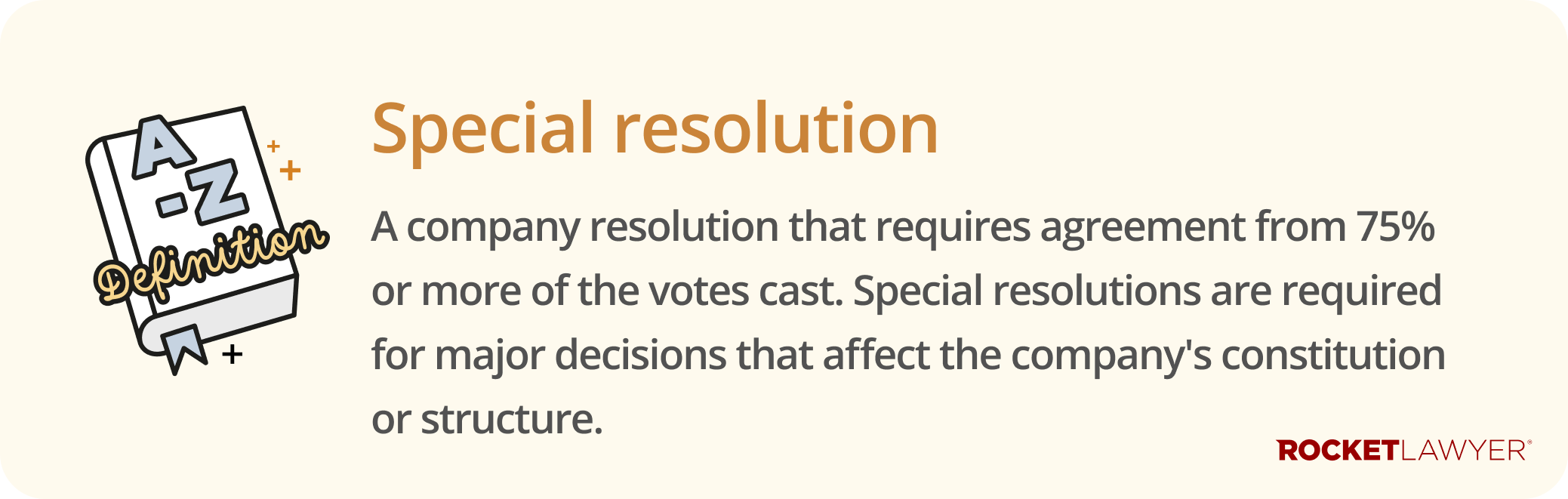
Special resolutions (also known as 'extraordinary resolutions') are required for more significant decisions or those affecting the company’s constitution. Special resolutions require at least 75% of shareholders to agree on a decision. Decisions made by special resolution include:
-
changing the name of the company
-
making changes to the articles of association
-
changing a private company to a public company (or changing a public company to a private one)
 Your company can set a higher majority threshold in its articles types of resolutions must meet (eg 80%) for certain decisions. However, this is only possible if the law (eg the Companies Act 2006) doesn’t require the decision to be passed specifically as a standard ordinary resolution or special resolution. For example, if the Companies Act 2006 only states that a decision needs 'a resolution', your company is free to require a higher percentage.

What is a written resolution?
General meetings for shareholders are normally required to pass resolutions. However, private companies can pass some decisions in writing without the need for a meeting. Ordinary or special resolutions can be passed by written resolution if the usual thresholds are met (ie a simple majority for an ordinary resolution or at least 75% for a special resolution). Shareholders should signify their agreement to the resolution, and, when the required majority threshold is met, the resolution is passed.
Certain shareholder decisions cannot be reached by written resolution. For more information, read Written resolutions.
How do you record and file company resolutions?
You must keep records of every resolution that is passed, regardless of whether it’s an ordinary or a special resolution. Maintaining these records is a legal requirement under the Companies Act 2006.
Recording minutes
Every company must keep accurate records of all formal decisions. These records include:
-
minutes of all proceedings of general meetings
-
copies of all resolutions passed otherwise than at general meetings
-
the details of any decision made by a sole shareholder of the company
You must keep these records for at least 10 years from the date the resolution, meeting, or decision was made. The records must be kept available for inspection at the company's registered office or a single alternative inspection location (SAIL). All shareholders must be able to inspect these records at any time and free of charge.
If you don’t adequately keep records, the company and every director who fails to meet this requirement have committed an offence and could face a fine.
Filing resolutions at Companies House
Not every resolution passed by shareholders needs to be filed at Companies House. However, a copy of (or a written memorandum setting out the terms) of certain resolutions must be filed within 15 days of them being passed.
You must file:
-
any special resolution
-
any unanimous resolution (ie resolutions that require all shareholders to agree) that, if not agreed as a unanimous resolution, would not have been effective unless passed as a special resolution
-
any resolution that affects a class of shareholders, including those agreed unanimously or those that bind the class without unanimous agreement
-
an ordinary resolution giving directors authority to allot shares
-
an ordinary resolution to re-denominate share capital or any class of share capital
-
an ordinary resolution authorising the company to purchase its own shares
-
an ordinary resolution agreeing to use a website to supply documents or information to shareholders
-
a board resolution to re-register a public company as private due to cancelled shares
-
any other resolution required to be filed by a law or regulation
To formally notify shareholders of a general meeting or to prepare a written resolution for passing company decisions, you can make a Shareholder resolution. Do not hesitate to Ask a lawyer if you have any questions or concerns about company resolutions.