Get permission to use someone's image, voice, or likeness: Media Release
What is a Media Release?
A Media Release is a signed agreement in which a person gives you permission to use their image, voice, or likeness in photos, video, audio, or other media. The person giving permission (the releasor) agrees not to bring certain legal claims against you (the releasee) for using that media in the ways the release allows.
Most projects capture more than one kind of media. A product shoot might produce photos and behind-the-scenes video, and a podcast guest might also appear in promotional clips. Instead of signing a separate release for each, a Media Release lets you cover every type of media in one document. Get started with Rocket Lawyer now. It's as simple as answering a few questions.
When to use a Media Release:
- You plan to publish, sell, or promote with photos, video, or audio that show or feature another person.
- Your project captures more than one type of media, such as photos and video, from the same person.
- You're a model, actor, speaker, or other participant who wants to set clear terms for how your likeness can be used.
- You're hosting an event, shoot, or interview and want written permission from the people involved.
What should I include in a Media Release?
Every Media Release should name the releasor and releasee, describe the media and when it was or will be created, explain how the media can be used, and state whether the releasor gets paid. It may also set restrictions, geographic limits, approval rights, and how long the permission lasts.
The details that matter most depend on the type of media and how you'll use it. When you make your Media Release, you can select one type of media or several. Here are the types you can include:
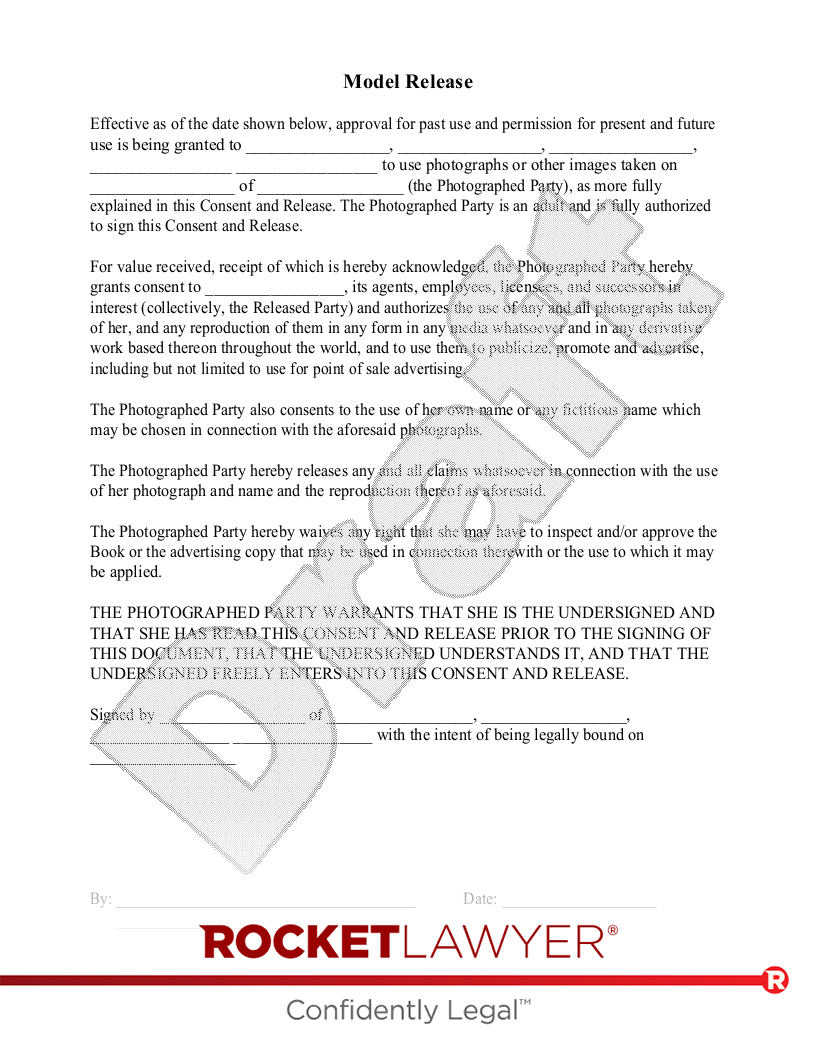
- Model Release: Gives permission to use photos or other images of a model, often for advertising, print, or commercial use.
- Photo Release: Gives permission to use photos of a person who isn't a professional model, such as an employee, customer, or event guest.
- Video Release: Gives permission to use a person's image and voice in video or audio recordings.
- Talent Release: Gives permission to use a person's performance, such as acting, voice work, or an on-camera appearance.
- Release for Use of Likeness: Gives permission to use a person's name, image, or other identifying features in any form.
How do I get my Media Release reviewed?
If you already have a Media Release and want to have it reviewed, or if you have questions about creating or using one, there are a few ways to get help.
Use our AI legal assistant to ask questions or review your document. It helps you better understand what your document says and spot anything that may need a closer look.
If you want help from an attorney, you can ask a question and get a response within one business day, or request a more in-depth document review.
Sample Media Release
The terms in your document will update based on the information you provide
 This document has been customized over 106K times
 Legally binding and enforceable
 Consult an Attorney to ask questions or review your document
 Sign this document online for free with RocketSign®
 Complies with relevant laws
Media Release
This Media Release ("Release") is effective as of __________ ("Effective Date"), by and between __________ ("Releasor") of ____________________, ____________________, __________ __________, and __________ ("Releasee"), of __________, __________, __________ __________.
In consideration of $__________ paid by __________, I hereby revocably authorize __________, and its agents, licensees, assignees, affiliates, and legal representatives, to edit, alter, copy, exhibit, publish, obtain copyright, or distribute any likenesses or other media featuring me ("Media"), captured or recorded on __________ for the purposes of publicizing, promoting, or advertising __________'s programs or for any other related, lawful purpose. Additionally, I waive any right to royalties or other compensation arising out of or related to the use of the media, beyond the payment described above.
The above authorization is granted subject to the following restriction(s):
__________
I understand that my or the advertising copy or printed matter that may be used in connection with the use and/or publication of the Media may be edited, copied, exhibited, published, or distributed, and I waive the right to inspect or approve the finished product, including any written, printed, or digital materials, wherein my or likeness appears.
This authorization of Release shall continue indefinitely, unless otherwise revoked in writing.
I further consent to the use of my name, or any fictitious name that may be chosen, in connection with the aforementioned Media.
I represent and warrant that, as of the date of this Release, (i) I have not granted any exclusive rights or licenses to the Media to any third party, and (ii) no other party's consent or authorization is required for the permission I am granting to the Releasee under this Release.
I hereby hold harmless, release, and forever discharge __________ (and all persons acting under its permission or authority) from any and all claims, demands, and causes of action that I, my heirs, representatives, executors, administrators, or any other persons acting on my behalf or on behalf of my estate have or may have arising out of or relating to this Release or the use of the Media. This includes, without limitation, any claims for libel, slander, invasion of privacy, infringement of copyright, right of publicity, or any other claim related to my likeness, including any claims related to blurring, distortion, alteration, optical illusion, digital alteration, use in composite form (whether intentional or otherwise), or the use of a fictitious name that may occur or be produced in the processing or publication of the Media.
Severability. If any provision of this Release shall be held to be invalid, illegal, or unenforceable for any reason, the remaining provisions shall continue to be valid and enforceable. If a court finds that any provision of this Release is invalid, illegal, or unenforceable, but that by limiting such provision, it will become valid, legal, and enforceable, then such provision shall be deemed to be written, construed, and enforced as so limited.
Entire Agreement. This Release contains the entire agreement of the parties with respect to the subject matter contained herein. No other promises, warranties, representations, agreements, or understandings, whether oral or written, exist concerning this subject matter. This Release supersedes any previous or simultaneous oral or written promises, warranties, representations, agreements, or conditions between the parties.
Governing Law. This Release shall be governed by the laws of __________.
I am at least 18 years of age and am competent to contract in my own name. I have read this release before signing below and I fully understand its contents, meaning, and legal effect, and I voluntarily agree to the terms of the Release.
The Releasor:
__________
Date
The Releasee:
__________
Date
About Media Releases
Learn how to get permission to use someone's image, voice, or likeness
-
How to write a Media Release
A Media Release (also called a Media Release Form or Media Consent Form) is a legal document that gives a person or business permission to use someone else's image, voice, or likeness. You can use one release for a single type of media, like photos, or for several types at once, like photos, video, and voice recordings.
Using a person's likeness for commercial purposes without permission can lead to claims under right of publicity or privacy laws, which vary by state. A clear, signed release helps both sides understand what's allowed.
Here are some of the most common clauses in a Media Release.
- Parties and effective date
The release names the releasor (the person whose image, voice, or likeness appears in the media) and the releasee (the person or business getting permission to use it), along with their addresses. It also states the date the release takes effect. If the releasee is a business, the release may list the company's legal name and principal place of business. The permission usually extends to the releasee's agents, licensees, assignees, and affiliates, so partners who help publish the media are covered too. - Types of media covered
This section identifies the media the release applies to, such as photos, video, audio, a performance, or a general likeness. It also notes when the media was or will be captured. Being specific here helps avoid disputes later about whether a particular photo or clip is included. - Payment (consideration)
The release states what, if anything, the releasor receives in exchange for granting permission. Payment can be a lump sum, installments, or something else of value. If the releasor is being paid, the release may also say they waive any royalties or further compensation beyond that payment. - Permitted uses
The permitted uses section describes what the releasee can do with the media, like edit, copy, publish, distribute, or register a copyright in it. It also describes the purpose, such as advertising, promoting the releasee's programs, or any other related lawful purpose. - Restrictions and geographic limits
The releasor may want to limit how their likeness is used. For example, they might exclude political ads, certain products, or adult content. The release can also limit use to a specific region or country. - Inspection and approval rights
Some releases let the releasor inspect or approve the finished product before it's published. Others say the releasor waives that right. Approval rights give the releasor more control, while waiving them gives the releasee more flexibility. - Duration and revocability
The release states how long the permission lasts, such as indefinitely or for a set period. It also says whether the permission is revocable (the releasor can withdraw it in writing) or irrevocable (the releasor can't take it back once signed). - Use of name
The releasor may agree to let the releasee use their real name, or a fictitious name, alongside the media. - Releasor warranties
The releasor confirms that they haven't given anyone else exclusive rights to the media and that no one else's consent is needed for the permission they're granting. - Release of claims
This is the heart of the document. The releasor agrees to hold the releasee harmless and give up claims related to the use of the media, such as claims for invasion of privacy, defamation, or violation of the right of publicity. This often covers editing, blurring, digital alteration, or use in composite images. - Governing law
The release names the state whose laws apply if there's ever a dispute. - Signatures
Both the releasor and the releasee sign and date the release. The releasor also confirms they're at least 18, have read the release, and understand it.
- Parties and effective date
-
Definitions of Media Release terms
Term
Definition
Releasor
The person whose image, voice, likeness, or performance appears in the media and who gives permission to use it.
Releasee
The person or business receiving permission to use the media.
Likeness
A person's recognizable appearance or identifying features, which may include their face, body, voice, or name.
Right of publicity
A person's right to control the commercial use of their name, image, or likeness. It's governed by state law and varies from state to state.
Consideration
Something of value exchanged to form a contract, such as money. Consideration can also be non-monetary, like publicity or exposure.
Revocable
Permission that the releasor can withdraw, usually by giving written notice.
Irrevocable
Permission that the releasor can't withdraw after signing.
Royalties
Ongoing payments based on the use or sale of a work. Many releases say the releasor waives royalties.
Hold harmless
A promise not to hold another party legally responsible for certain claims or losses.
Waiver
Voluntarily giving up a legal right, such as the right to approve the finished product.
Composite
An image made by combining multiple images or elements, sometimes with digital editing.
Governing law
The state law that applies to the agreement if there's a dispute.
Severability
A clause stating that if one part of the agreement is found invalid, the rest still applies.
Media Release FAQs
-
What's the difference between a Media Release, Model Release, Photo Release, and Video Release?
They all do the same basic job: they give you permission to use someone's likeness. The difference is what media they cover. A Media Release can cover one or several types at once.
Release
Covers
Common uses
Media Release
Any combination of photos, video, audio, performance, and likeness
Shoots, events, interviews, and projects that capture more than one type of media
Model Release
Photos or images of a model
Advertising, catalogs, stock photography
Photo Release
Photos of a person who isn't a professional model
Company websites, event photos, social media
Video Release
A person's image and voice on video or audio
Commercials, YouTube videos, training videos, podcasts
-
Do I need a separate release for each type of media?
Not necessarily. If you capture photos and video of the same person, a single Media Release can cover both. Just make sure the release clearly lists every type of media you plan to use.
-
Do I need a Media Release to photograph or film someone in public?
Generally, you don't need written permission to take a photo or video of someone in a public place. A release matters when you want to use that media, especially for commercial purposes like advertising or promoting a product. Rules vary by state, so check the laws where you plan to use the media.
-
Do I need a Media Release for social media or YouTube?
If a recognizable person appears in content you use to promote a business, product, or channel, it's a good idea to get a signed release. Platforms and clients may also require releases before they accept your content.
-
What's the difference between commercial and editorial use?
Commercial use promotes or sells something, like an ad, a product page, or a marketing campaign. Editorial use informs or comments, like a news story or documentary. Commercial use typically requires a release. Editorial use often doesn't, but there are limits, so a release is still a safe choice.
-
Does the person have to be paid?
No. A Media Release can include payment or not. If the releasor is paid, the release should state the amount and how it will be paid. Some releases rely on other value, like exposure or a free product, as consideration.
-
Can the person take back their permission?
It depends on the release. A revocable release lets the releasor withdraw permission in writing. An irrevocable release means the permission stands once it's signed. You choose which option applies when you make your document.
-
Can a minor sign a Media Release?
[Copy pending: confirm how the new interview handles releasors under 18. If a parent or guardian can sign, use: "A minor can't sign a release on their own. A parent or legal guardian needs to sign on the minor's behalf." If not supported, point to the right alternative document.]
-
Does a Media Release need to be notarized?
Generally, no. A Media Release usually doesn't need to be witnessed or notarized to be valid. Some parties choose notarization for high-value or high-profile projects.
-
How long does a Media Release last?
A release lasts as long as it says. You can make it indefinite or set it for a specific period. If the release is revocable, it lasts until the releasor withdraws permission in writing.
-
What happens if I use someone's likeness without permission?
Using a person's image or voice commercially without permission may lead to a claim for violating their right of publicity or privacy. That could mean paying damages or having to stop using the media. A signed release helps protect you and gives the person a clear say in how their likeness is used.

Our quality guarantee
We guarantee that properly executed Rocket Lawyer legal documents are legally enforceable under applicable US laws.
Need help? No problem!
Get instant answers to any legal question with Rocket Copilot! You can also connect with a Legal Pro at any time — just ask your question and choose a written response or live consult.


