List the assets in your Living Trust: Schedule of Assets
What is a Schedule of Assets?
A Schedule of Assets is a list of the property held in your Living Trust. It's usually attached to your trust document and describes each asset, like your home, bank accounts, vehicles, and valuables, along with its estimated value.
Setting up a Living Trust is a big step, but the trust only controls the assets you put in it. A Schedule of Assets gives you, your trustees, and your loved ones one clear record of what the trust holds. Get started with Rocket Lawyer now. It's as simple as answering a few questions.
When to use a Schedule of Assets:
- You've created a Living Trust or Joint Living Trust and want to record which assets it holds.
- You've bought, sold, or moved property into or out of your trust and need an updated list.
- You're a trustee and want a clear inventory of the assets you manage.
How do I get my Schedule of Assets reviewed?
If you already have a Schedule of Assets and want to have it reviewed, or if you have questions about creating or using one, there are a few ways to get help.
Use our legal AI assistant to ask questions or review your document. It helps you better understand what your document says and spot anything that may need a closer look.
If you want help from an attorney, you can ask a question and get a response within one business day, or request a more in-depth document review.
Sample Schedule of Assets
The terms in your document will update based on the information you provide
 This document has been customized over 13.8K times
 Legally binding and enforceable
 Consult an Attorney to ask questions or review your document
 Sign this document online for free with RocketSign®
 Complies with relevant laws
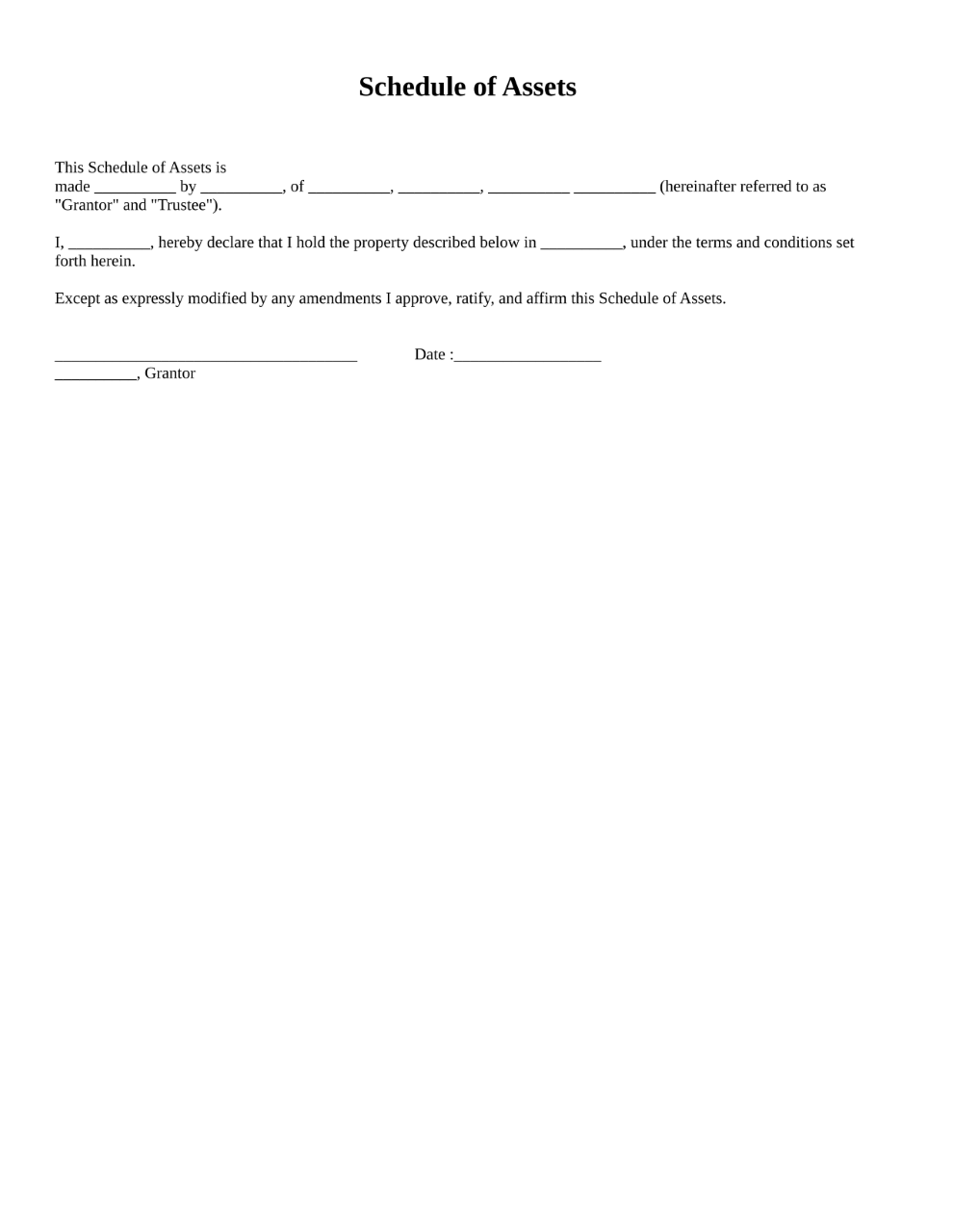
Schedule of Assets
This Schedule of Assets is made __________ by __________, of __________, __________, __________ __________ (hereinafter referred to as "Grantor" and "Trustee").
I, __________, hereby declare that I hold the property described below in __________, under the terms and conditions set forth herein.
Except as expressly modified by any amendments I approve, ratify, and affirm this Schedule of Assets.
_____________________________________ Date :__________________
__________, Grantor
About Schedules of Assets
Learn how to list the assets in your Living Trust
-
How to write a Schedule of Assets
A Schedule of Assets (sometimes called Schedule A) is a document that lists the property held in a Living Trust. It works alongside your trust document, so anyone reading your trust can see exactly what it covers. Here are the main parts of a Schedule of Assets.
- Trust name and parties
The schedule names the trust exactly as it appears in your trust document, including the date it was signed. For example, "David Doe and Jacqui Doe Living Trust, dated April 27, 2026." It also names the grantors (the people who created the trust) and the trustees (the people who manage it). - Single or joint schedule
A single schedule lists one person's assets. A joint schedule lists assets owned together by two or more people, often spouses or partners. To decide which you need, look at how the assets are titled. If both names appear on the ownership documents, a joint schedule is likely the right fit. - Asset descriptions and values
Each asset gets its own entry with a short description and its current or estimated value. Be specific enough that someone else could identify the asset. For bank accounts, list only the last four digits of the account number to protect your privacy. - Declaration of trust
The grantors declare that they hold the listed property in the trust under its terms. This ties the schedule to your trust document. - Affirmation and signatures
The grantors approve and affirm the schedule, subject to any amendments they make later. The grantors sign and date it, and any current trustees who aren't grantors sign too.
- Trust name and parties
-
Definitions of Schedule of Assets terms
Term
Definition
Living Trust
A trust you create during your lifetime to hold and manage your assets. It's also called a revocable trust because you can usually change or cancel it.
Grantor
The person who creates the trust and transfers assets into it. Also called a settlor or trustor.
Trustee
The person or organization that manages the trust's assets and carries out its terms.
Successor trustee
The person who takes over managing the trust if the original trustee can't serve or dies.
Beneficiary
A person or organization who receives benefits or assets from the trust.
Funding a trust
Moving assets into a trust, often by retitling them in the trust's name.
Real property
Land and anything permanently attached to it, like a house.
Personal property
Movable property, like vehicles, jewelry, art, and furniture.
Probate
The court process for settling a person's estate after they die. Assets held in a Living Trust generally pass outside of probate.
Amendment
A document that changes part of an existing trust.
Schedule of Assets FAQs
-
Does listing an asset on a Schedule of Assets put it in my trust?
Not always. A Schedule of Assets records what your trust holds, but some assets also need to be retitled in the trust's name. For example, you may need a new deed for real estate or updated account paperwork from your bank. Check with each institution about what it requires.
-
Do I need a Schedule of Assets if I have a Living Trust?
It's a good idea. A Schedule of Assets gives your trustees a clear record of the trust's property, which can make managing and distributing your assets easier.
-
What's the difference between a single and joint Schedule of Assets?
A single schedule includes one person's assets. A joint schedule includes assets owned together by two or more people, such as spouses or partners. If both names appear on an asset's ownership documents, it likely belongs on a joint schedule.
-
Who signs a Schedule of Assets?
The grantors sign the Schedule of Assets. Any current trustees who aren't grantors also need to sign.
-
Can I update my Schedule of Assets?
Yes. If you add, sell, or remove assets, you can make an updated Schedule of Assets. Keep it with your trust document so your records stay current.
-
Should I include my full account numbers?
No. List only the last four digits of bank account numbers. That's enough to identify the account while protecting your information.
-
What assets usually aren't listed in a Living Trust?
Some assets pass directly to a named beneficiary, like many life insurance policies and retirement accounts. These are often handled through beneficiary designations instead of the trust. Ask an attorney if you're unsure how to handle a specific asset.

Our quality guarantee
We guarantee that properly executed Rocket Lawyer legal documents are legally enforceable under applicable US laws.
Need help? No problem!
Get instant answers to any legal question with Rocket Copilot! You can also connect with a Legal Pro at any time — just ask your question and choose a written response or live consult.


