Organize information to prepare for bankruptcy: Bankruptcy Worksheet
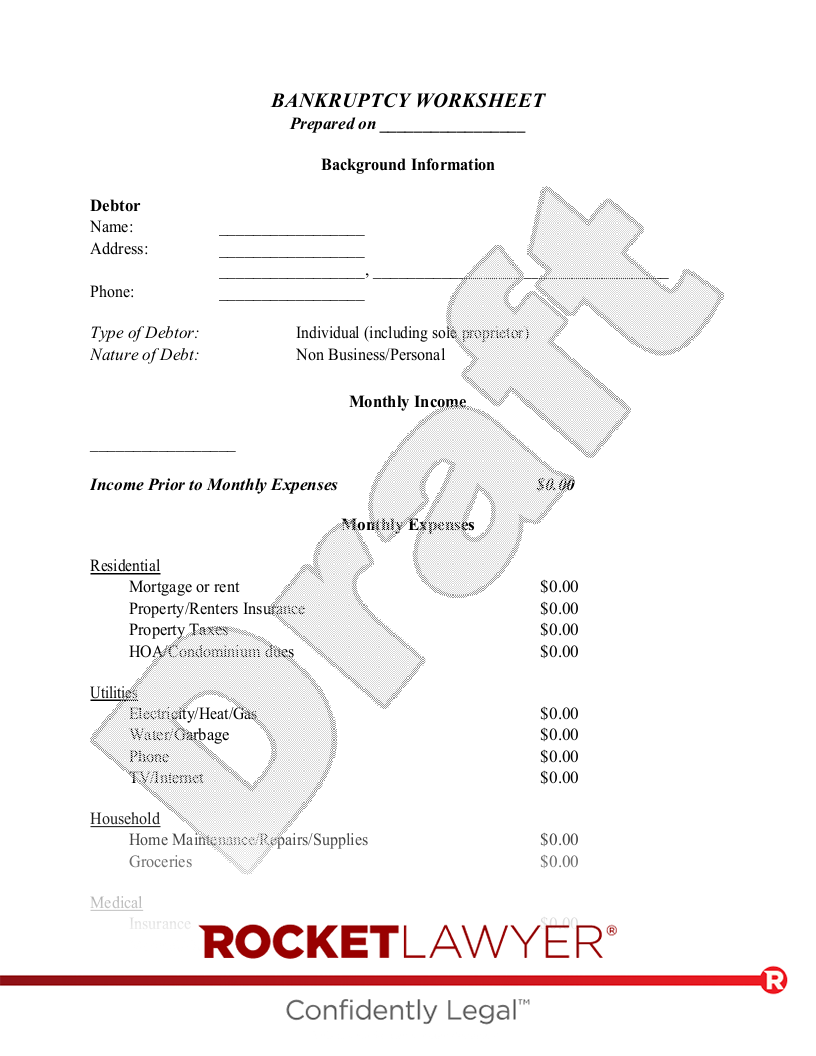
What is a Bankruptcy Worksheet?
If you're thinking about filing for bankruptcy a Bankruptcy Form can help you organize the information you'll need. Maybe you're not sure if it's the right move for you or if it's even an option at all. Either way, it can help to play with the figures first. This Bankruptcy Form is a great tool for helping you make an informed decision.
In an uncertain economic climate bankruptcy can be a shrewd option, not just a last resort. When making this personal decision this bankruptcy form is still one of the best ways to help you decide if you should file. It's certainly not an easy choice, and it's not right for everyone. You'll need to figure out your assets and debts: who do you owe money to? Is your income going to work with bankruptcy? What are your expenses that you can't clear? Working with a bankruptcy attorney can certainly help, but you can figure out some of the important details yourself. A little preparation can help you save time and money - Using a Bankruptcy Worksheet can help you see the big picture and decide where to go from there.
When to use a Bankruptcy Worksheet:
- You're thinking about filing bankruptcy.
- You're helping someone else with the bankruptcy process.
How do I get my Bankruptcy Worksheet reviewed?
If you already have a Bankruptcy Worksheet and want to have it reviewed, or if you have questions about creating or using one, there are a few ways to get help.
Use Rocket Copilot to ask questions or review your document; this helps you better understand what it says and identify anything that may need a closer look.
If you are looking for help from a attorney, you can also ask a question and receive a response within one business day, or request a more in-depth document review.
Sample Bankruptcy Worksheet
The terms in your document will update based on the information you provide
 This document has been customized over 49.9K times
 Documents and communicates
 Consult an Attorney to ask questions or review your document
BANKRUPTCY WORKSHEET
Prepared on
Background Information
Debtor
| Name: |
| Address: |
| , |
| Phone: |
| Type of Debtor: |
| Nature of Debt: |
last filed in .
last filed in .
Real Property
Secured Creditors
Priority Unsecured Creditors
- Debtor disputes amount owed
Contracts
Monthly Income
| Gross Wages |
| Business Operations |
| Rental or Real Property |
| Interest, Dividends, or Royalties |
| Unemployment |
| Social Security |
| Pension |
| Alimony |
| Child Support |
| Food Stamps |
| Rent Assistance |
| Public Assistance |
| Income Prior to Monthly Expenses |
Monthly Expenses
Residential
| Mortgage or rent |
| Property/Renters Insurance |
| Property Taxes |
| HOA/Condominium dues |
Utilities
| Electricity/Heat/Gas |
| Water/Garbage |
| Phone |
| TV/Internet |
Household
| Home Maintenance/Repairs/Supplies |
| Groceries |
Medical
| Insurance |
| Medical/Dental |
| Medications/Other |
Personal
| Clothing/Laundry/Dry Cleaning |
| Personal Care Products/Services |
| Child Care |
| Alimony |
| Child Support |
| Entertainment/Travel/Vacations |
| Transportation |
| Charitable Contributions/Religious Donations |
| Life Insurance |
| Total Monthly Expense |
| Total Income after Expense |
Tax debts less than 3 years old.
Money obtained through false pretenses.
Credit obtained for the purchase of luxury goods within 60 days of filing for bankruptcy.
Cash advances received through credit plans within 60 days of filing bankruptcy.
Debts for theft.
Child support or alimony.
Debts for willful injury to another.
Student loans that first became due less than seven years before filing bankruptcy.
Debts caused by drunk driving.
PendingOn AppealConcluded


