Document end-of-life preferences in Texas: Texas Living Will
What is a Texas Living Will?
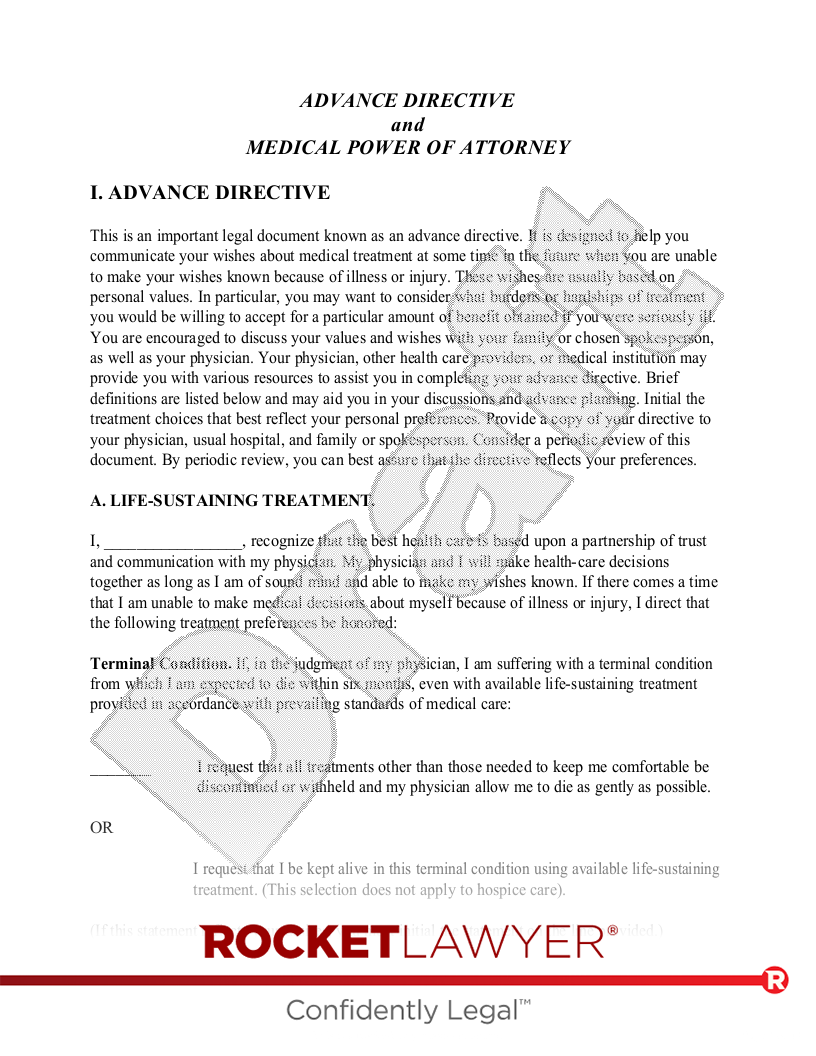
A Texas Living Will is a legal document that outlines your preferences with regard to medical care, such as your request for or refusal of certain medical treatments and procedures, in addition to the optional selection of a chosen decision maker.
The person making a Living Will is known as the "principal," and the individual or entity receiving permission to carry out the principal's wishes is called the "agent." Designed for residents of Texas, this free Living Will is made for use in Tarrant County, Harris County, Dallas County, and in every other county throughout the state. Any Texas Living Will form from Rocket Lawyer can be tailored to address your particular circumstances. With this essential legal document on hand, your healthcare providers will have a record of your preferences, and your agent can offer proof that they have been authorized to act in your interest when you are not able.
When to use a Texas Living Will:
- You want to specify your wishes so that it is more likely they will be carried out.
- You are facing the possibility of surgery or a hospitalization.
- You have declining health.
- You have been diagnosed with a terminal condition.
How do I get my Texas Living Will reviewed?
If you already have a Texas Living Will and want to have it reviewed, or if you have questions about creating or using one, there are a few ways to get help.
Use Rocket Copilot to ask questions or review your document; this helps you better understand what it says and identify anything that may need a closer look.
If you are looking for help from a attorney, you can also ask a question and receive a response within one business day, or request a more in-depth document review.
Texas Living Will FAQs
-
How do I write a Living Will in Texas?
It's fast and simple to document your medical preferences using a free Texas Living Will template from Rocket Lawyer:
- Make the document - Provide a few general details, and we will do the rest
- Send and share - Look over it with your healthcare agent(s) or get legal help
- Sign it and make it legal - Required or not, witnesses and notarization are ideal
This solution, in many cases, would end up being notably less expensive and less time-consuming than finding and hiring a conventional law firm. If necessary, you may start this Living Will on behalf of an elderly parent, a spouse, or another family member, and then help that person sign when ready. Please keep in mind that for a Living Will to be accepted as legally valid, the principal must be mentally competent at the time of signing. In the event that the principal is already incapacitated and unable to make their own decisions, a conservatorship generally will be required. When dealing with this scenario, it is important to Consult an attorney.
-
Why should I write a Living Will?
Anyone who is over 18 years old ought to have a Living Will. While it's challenging to think about, there might come a day when you can no longer make your own medical decisions. Typical occasions in which you might consider it helpful to make or update your Living Will include:
- You are aging or have declining health
- You intend to move into a care facility
- You are planning for an upcoming surgery or hospitalization
- You've been diagnosed with a terminal illness
Whether this Texas Living Will is being made as a result of a change in your health or as part of a forward-looking plan, notarization and witnesses can often help to protect your document if its authenticity is questioned. Please keep in mind that in Texas, your Living Will is not valid during pregnancy.
-
Do I need to work with an attorney for my Living Will in Texas?
It’s a good idea to have important documents like your Texas Living Will reviewed before signing, so you fully understand your choices and help avoid unintended outcomes. The problem is that some attorneys may not review documents they didn’t prepare, while others may require a retainer or high hourly fees. This can make getting a legal review of your Texas Living Willdifficult and time-consuming.
Rocket Lawyer makes the process easier. With Rocket Lawyer, you can request a review from an attorney or ask questions about your document. You can also use Rocket Copilot to review your document, identify potential issues, and check that everything is complete before signing.
-
How much would I normally need to pay to make a Living Will in Texas?
Attorney fees for drafting or reviewing a Texas Living Will can vary widely. Many lawyers charge hourly rates that may range from around $100 for less experienced attorneys to $350 or more per hour for highly experienced attorneys in major metropolitan areas. For more routine documents, some attorneys may offer flat-fee pricing.
The total cost will depend on several factors, including your location, the attorney’s experience, and the complexity of your agreement. More documents or situations involving negotiation will typically require more time and increase the overall cost.
With Rocket Lawyer, you can create a personalized Texas Living Will tailored to your specific needs—without the high cost typically associated with hiring a lawyer. If you have questions or want additional peace of mind, you can also get your document reviewed or ask an attorney for guidance.
-
Does a Living Will need to be notarized or witnessed in Texas?
The requirements and restrictions are different by state; however, in Texas, your document must be acknowledged by a notary public or signed by two witnesses. No more than one witness to your Living Will form can be your attending physician or any other healthcare facility employee who is providing direct care to you or is a business administrator of the facility or its parent organization. In addition, only one witness can be a relative (including your spouse, adoptees, or family members), heir, or beneficiary. As a basic standard, your witnesses should be 18 years old or older, and none should also be named as your healthcare agent.


