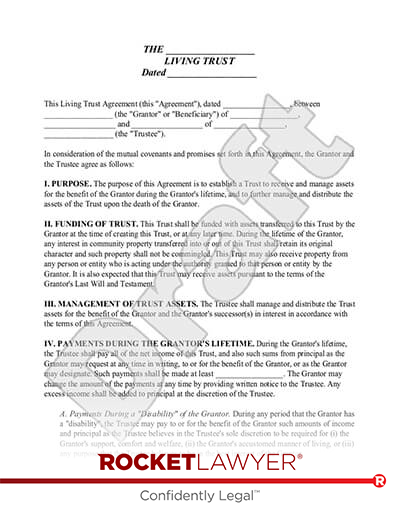
What is a trustee?
A trustee is the person who serves as the legal owner of a trust’s assets and is responsible for managing and distributing those assets according to the terms of the trust.
A grantor is the person who creates a living trust. In most cases, the grantor initially serves as the sole trustee. Trustee responsibilities are later transferred to a successor trustee, usually when the grantor becomes physically or mentally unable to serve or upon the grantor’s death.
A successor trustee is a trustee who has taken over legal ownership and responsibility for a living trust.
In some states or jurisdictions, a trustee—particularly one administering assets after death—may also be referred to as an estate trustee. The term “estate trustee” is often used interchangeably with trustee or executor, depending on local law and context, but generally refers to a person responsible for managing and distributing assets after death.
| Quick definition: Trustee Duties
|
How is a trustee appointed?
A trustee is named through the creation or amendment of a living trust. This means the person who creates the trust chooses the trustee or trustees at their discretion.
After being named, a trustee must accept the role. An unwilling individual cannot be appointed as a trustee.
If the trust maker does not name a trustee, or if the named individual is unable or unwilling to serve, a court may appoint one.
Unlike an executor under a will, a trustee is typically appointed through the trust document without court involvement. In most cases, this process is private and does not become part of the public record.
Once someone accepts the role, resigning as trustee may involve specific requirements that vary by state and situation. A trustee considering resignation should Consult an Attorneyfessional about the proper steps in their state.
What are the duties of a trustee while the Grantor is still alive?
While the living trust maker is alive, the trustee is responsible for managing the trust. This includes managing trust funds and investments, following the instructions in the trust document, keeping records, filing required tax forms, and handling administrative tasks related to the trust.
If the trust has not yet been established, the trustee may also be responsible for creating the trust and transferring assets into it.
More specifically, trustee duties may include:
- Creation of the trust: If required, the trustee gathers information related to the trust. This may involve writing letters, making phone calls, filing tax returns, and transferring ownership of real estate and other assets.
- Distribution for the grantor: If the trust provides for distributions to the grantor, the trustee ensures those distributions are made properly.
- Managing assets, funds, and investments: The trustee manages the trust’s financial and legal matters, including investments and property. Trustees have a fiduciary duty, meaning they must manage assets for the benefit of the grantor (if living) and the trust’s beneficiaries. The trustee is also responsible for maintaining financial records and filing taxes on behalf of the trust.
What are the duties of a trustee or successor trustee once the Grantor dies?
After the grantor’s death, the trustee or successor trustee carries out the terms of the living trust and administers distributions to beneficiaries. In most living trusts, the person performing these tasks is the successor trustee.
This process may include resolving challenges to the trust, obtaining a federal tax identification number, and opening a checking account in the trust’s name. If the trust has not yet been established, the trustee may also be responsible for creating the trust and transferring property into it.
Unlike Wills, many states do not impose the same formal notice requirements for living trusts. In some cases, there may be no requirement to notify heirs, beneficiaries, or creditors, though the rules vary by state and by the terms of the trust.
Trustee duties after death
Organizing the trust and reviewing trust assets
After the grantor’s death, the trustee must obtain death certificates and notify the Social Security Administration and the state Department of Health.
The trustee must locate and review trust assets and collect any additional assets that may flow into the trust. If another individual is serving as executor, the trustee should remain in close communication, as estate assets not already held in the trust may need to be transferred into it.
During this process, the trustee should review records, take physical custody of trust assets, and arrange appraisals if necessary. Unlike probate, an inventory filing is generally not required for a living trust.
Payment of debts, expenses, and notice to beneficiaries
The trustee must transfer trust property into their name as trustee and establish a record-keeping system to track trust assets.
Before making distributions, the trustee must determine which debts and expenses should be paid. This may include resolving creditor claims, paying trustee and attorney fees, and filing required tax returns, including death-related tax filings.
To cover these costs, the trustee may need to liquidate certain assets.
The trustee must also identify the trust’s beneficiaries and notify them of their status.
Distribution of assets
After debts, expenses, and taxes have been paid, the successor trustee distributes the remaining assets according to the trust’s instructions. This may include making direct distributions to beneficiaries or establishing trust shares.
Terminating the trust
Once all trust assets have been distributed in accordance with the trust terms, the trust may be terminated.
Unlike probate, the trustee is generally not required to file a final report with the probate court. However, providing a final accounting to beneficiaries is considered appropriate and helps demonstrate that assets were distributed correctly.
Some living trusts include trust shares that continue beyond the grantor’s death, such as for a surviving spouse or children. In those cases, the trust is terminated according to the terms governing those shares rather than at the time of the grantor’s death.
How do I choose a trustee?
A trustee is responsible for carrying out the trust’s terms, managing assets, and making distributions to beneficiaries. For that reason, the trustee should be dependable and capable of handling financial matters. A business or financial background can be helpful but is not required.
Some people choose a bank or trust company to serve as trustee. These institutions provide professional management but charge fees for their services.
Many trust makers also name an alternate successor trustee in case their first choice cannot or will not serve. If no alternate is named, the court may need to make the decision.
You may name one alternate successor trustee to serve alone or two alternate co-trustees to serve together.
Should I name a child as trustee?
Some trust makers choose not to name a child as trustee. Common reasons include potential conflicts of interest, family tension, and possible tax or administrative complications.
Potential concerns include:
- A conflict of interest when one child must distribute funds that reduce their own share.
- Strained relationships if a child must deny requests from siblings.
- Possible adverse tax consequences when a trustee is also a beneficiary.
Are there restrictions on who can be a trustee?
In most cases, a trustee must be at least 18 years old. Other restrictions are limited.
Because trustees typically act without court supervision, they are guided by the trust’s terms and by state trust law. Most states provide general requirements rather than detailed rules that apply at death.
If a court becomes involved, many states require a trustee to obtain a bond unless the trust states that no bond is required.
Some states restrict trusts where the grantor, trustee, and beneficiary are all the same person. In particular, care should be taken in Texas and Wisconsin, where such arrangements may cause the trust to be considered void due to a merger of interests.
Can a trustee also be a beneficiary?
Yes, a trustee can also be a beneficiary.
However, trustees have a fiduciary duty to act impartially and in good faith. Even the appearance of unfairness can lead to legal challenges and added expense.
One option is to appoint co-trustees who can oversee each other’s actions. This can reduce risk, though co-trustees must be able to work together effectively.
Can a trustee also be the estate executor?
Yes. This is common and can be convenient, especially when assets have not yet been transferred into the trust.
Because the roles of trustee and executor are similar, naming the same individual can simplify estate administration.
Does a trustee have to be bonded?
A trustee may be required to obtain a bond under state law or under the terms of the trust. A bond functions like insurance and helps protect trust assets from loss due to theft or error.
Many grantors choose to waive the bond requirement, particularly when the trustee is a trusted individual. Bonds can be costly and may increase court involvement in some states.
When a bank serves as trustee, a bond is usually not required because banks are typically already bonded.
Can a trustee be held personally liable?
Yes. A trustee may be held personally liable for intentional misconduct, such as fraud or theft, as well as for unintentional errors.
Trustees have a fiduciary duty that includes loyalty, good-faith decision-making, and reasonable care in managing trust assets. In some states, a trust may limit liability for honest mistakes through an exculpatory clause.
These clauses generally do not protect trustees from liability for intentional breaches of duty or gross negligence.
What should I do next?
If you have been named a trustee, take time to consider whether the role is right for you. Serving as trustee involves significant legal and financial responsibility.
You may choose to seek professional help or step aside if you are unable to serve. It’s also important to give yourself time, especially if the role follows the loss of a loved one.
If you are deciding whom to name as trustee, carefully weigh the responsibilities, risks, and personal dynamics involved. A attorney can help you understand your options and make informed choices.
Please note: This page offers general legal information, but not legal advice tailored for your specific legal situation. Rocket Lawyer Incorporated isn't a law firm or a substitute for one. For further information on this topic, you can Ask an Attorney.


