Document end-of-life preferences in Illinois: Illinois Living Will
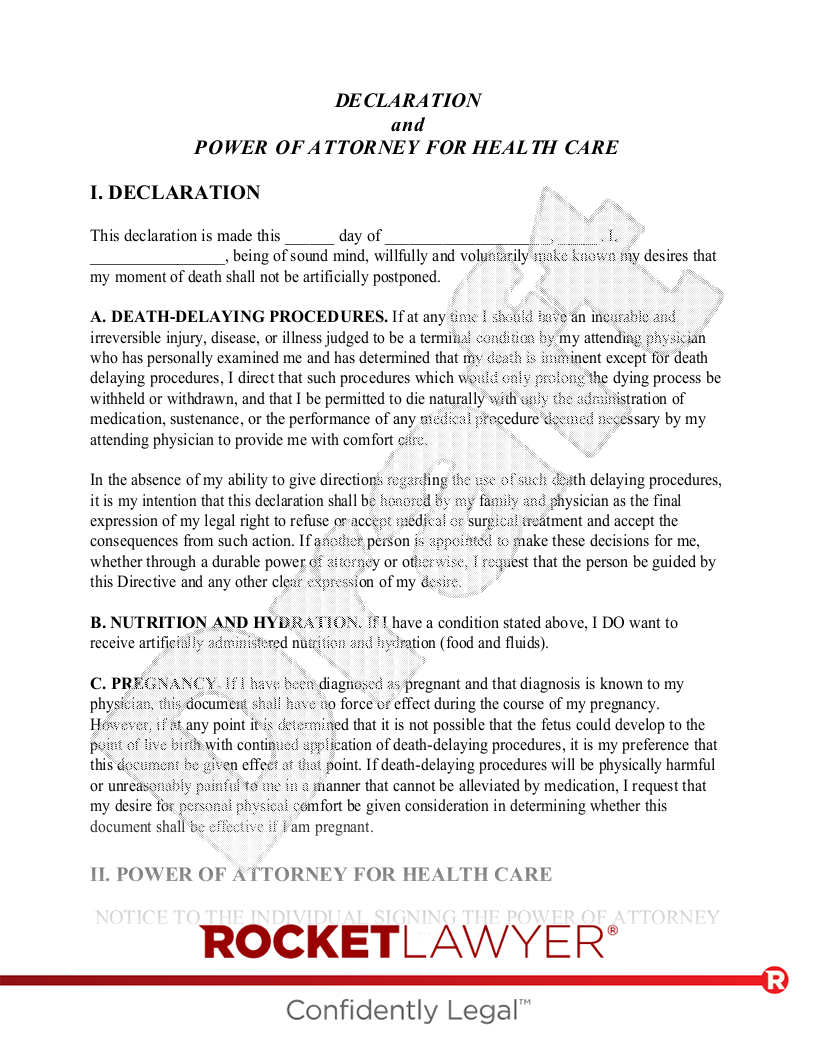
What is an Illinois Living Will?
An Illinois Living Will is a legal document that outlines your wishes related to medical care, such as your acceptance or refusal of a certain medical treatment or procedure, along with the (optional) appointment of a chosen agent or decision maker.
The individual making a Living Will is called the "principal," and the person or entity receiving authority to carry out the principal's wishes is known as the "agent." Suitable for Illinois residents, this free Living Will can be used in Lake County, Cook County, DuPage County, and in every other region in the state. Each Illinois Living Will form from Rocket Lawyer can be personalized for your particular situation. With this official document on hand, your healthcare institutions will have a point of reference for your preferences and your representative will be able to provide verification that they have been given the authority to act in your interest.
When to use an Illinois Living Will:
- You want to shield your loved ones and give them the information to make the right end-of-life decisions for you.
- You're getting ready to start drafting an estate plan.
How do I get my Illinois Living Will reviewed?
If you already have an Illinois Living Will and want to have it reviewed, or if you have questions about creating or using one, there are a few ways to get help.
Use Rocket Copilot to ask questions or review your document; this helps you better understand what it says and identify anything that may need a closer look.
If you are looking for help from a attorney, you can also ask a question and receive a response within one business day, or request a more in-depth document review.
Illinois Living Will FAQs
-
How do I write a Living Will in Illinois?
It is fast and simple to record your medical wishes using a free Illinois Living Will template from Rocket Lawyer:
- Make the document - Answer a few basic questions, and we will do the rest
- Send and share it - Discuss it with your healthcare agent(s) or ask an attorney
- Sign it - Optional or not, notarization/witnesses are encouraged
This solution is, in many cases, much less expensive than finding and working with your average lawyer. If necessary, you may start this Living Will on behalf of an elderly parent, a spouse, or another relative, and then have them sign it after you've drafted it. Please note that for a Living Will to be accepted as valid, the principal must be mentally competent at the time of signing. If the principal has already been declared legally incompetent, a court-appointed conservatorship could be necessary. When managing such a situation, it would be best to talk to an attorney.
-
Do I need to make a Living Will?
Anyone who is over 18 years old should have a Living Will. Even though it can be difficult to think about, there will likely come a time when you are not able to make your own healthcare decisions. Typical situations in which it might be helpful to make or update your Living Will include:
- You are getting older or dealing with ongoing health issues
- You are planning to live in a community care facility
- You plan to undergo an in-patient procedure requiring anesthesia
- You have been diagnosed with a terminal condition
Whether this Illinois Living Will is being produced as a result of a change in your health or as part of a forward-looking plan, notarization and witnesses are strongly recommended as a best practice for protecting your document if someone challenges its lawfulness. Please note that a Living Will is not valid during pregnancy in Illinois.
-
Do I need to work with an attorney to review my Living Will in Illinois?
It’s a good idea to have important documents like your Illinois Living Will reviewed before signing, so you fully understand your choices and help avoid unintended outcomes. The problem is that some attorneys may not review documents they didn’t prepare, while others may require a retainer or high hourly fees. This can make getting a legal review of your Illinois Living Willdifficult and time-consuming.
Rocket Lawyer makes the process easier. With Rocket Lawyer, you can request a review from an attorney or ask questions about your document. You can also use Rocket Copilot to review your document, identify potential issues, and check that everything is complete before signing.
-
What would I traditionally have to pay for a lawyer to help me make a Living Will in Illinois?
Attorney fees for drafting or reviewing an Illinois Living Will can vary widely. Many lawyers charge hourly rates that may range from around $100 for less experienced attorneys to $350 or more per hour for highly experienced attorneys in major metropolitan areas. For more routine documents, some attorneys may offer flat-fee pricing.
The total cost will depend on several factors, including your location, the attorney’s experience, and the complexity of your agreement. More documents or situations involving negotiation will typically require more time and increase the overall cost.
With Rocket Lawyer, you can create a personalized Illinois Living Will tailored to your specific needs—without the high cost typically associated with hiring a lawyer. If you have questions or want additional peace of mind, you can also get your document reviewed or ask an attorney for guidance.
-
Does a Living Will need to be notarized or witnessed in Illinois?
The requirements and restrictions governing Living Wills are different in each state; however, in Illinois, your Living Will requires the signatures of two witnesses. Witnesses to your Living Will form shouldn't be your attending physician, advanced practice nurse, physician assistant, dentist, podiatric physician, optometrist, psychologist, or any relative of the healthcare professionals listed above. Along the same lines, your witness should also not be the owner or operator (or their relatives) at any healthcare facility where you are a patient. Your spouse or any of your other relatives are also prohibited. As a general rule, witnesses should be over 18 years old, and no witness should simultaneously be your agent.


