Request information about burial benefits: Letter to Request Information about Veteran Benefits
Other Names:
Veterans Benefits Information Request
VA Information Request
What is a Letter to Request Information about Veteran Benefits?
As a U.S. military veteran, you're entitled to certain benefits. To get the benefits you deserve, use our Veterans Health Benefits Request Form to contact the Department of Veterans Affairs. You, or your dependents, can find out information and discover if you qualify for veteran benefits.
As a veteran, your service earned you not just respect, but benefits as well. Make sure you and your dependents get the information you need. You can use our Letter to Request Information about Veteran Benefits to ask for information about veteran benefits from the Department of Veterans Affairs. Veterans of the United States military and their dependants may qualify for a variety of benefits including medical care. To obtain the most up-to-date information on VA benefits, contact the nearest Department of Veterans Affairs regional office at 1-800-827-1000. You can also search the Department of Veterans Affairs' website at www.va.gov for additional information about veteran benefits.
As a veteran, your service earned you not just respect, but benefits as well. Make sure you and your dependents get the information you need. You can use our Letter to Request Information about Veteran Benefits to ask for information about veteran benefits from the Department of Veterans Affairs. Veterans of the United States military and their dependants may qualify for a variety of benefits including medical care. To obtain the most up-to-date information on VA benefits, contact the nearest Department of Veterans Affairs regional office at 1-800-827-1000. You can also search the Department of Veterans Affairs' website at www.va.gov for additional information about veteran benefits.
When to use a Letter to Request Information about Veteran Benefits:
- You want to request veteran benefits information.
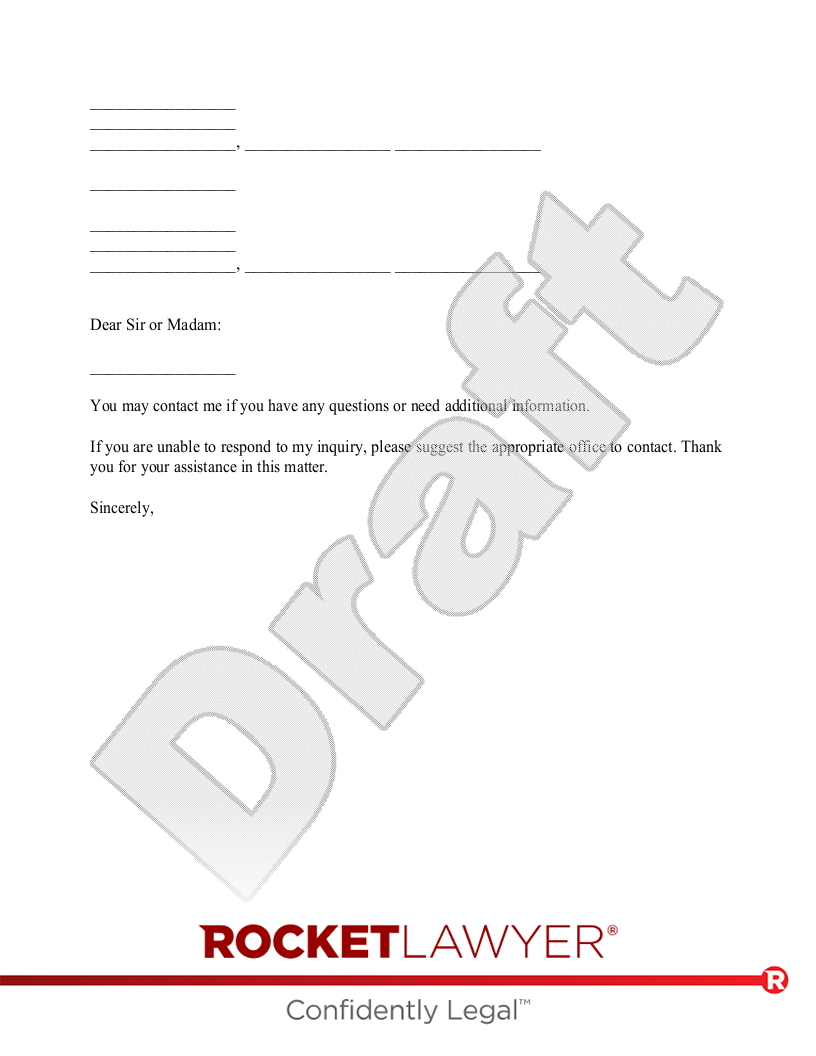
Sample Request Letter for Information about Veteran Benefits
The terms in your document will update based on the information you provide
 This document has been customized over 4.2K times
 Documents and communicates
 Consult a Legal Pro to ask questions or review your document
 Sign this document online for free with RocketSign®
,
,
Re: Entitlement to and benefits resulting from a service-connected disability or death
You may contact me if you have any questions or need additional information. or
If you are unable to respond to my inquiry, please suggest the appropriate office to contact. Thank you for your assistance in this matter.
Sincerely,


