MAKE YOUR FREE Personal Financial Statement
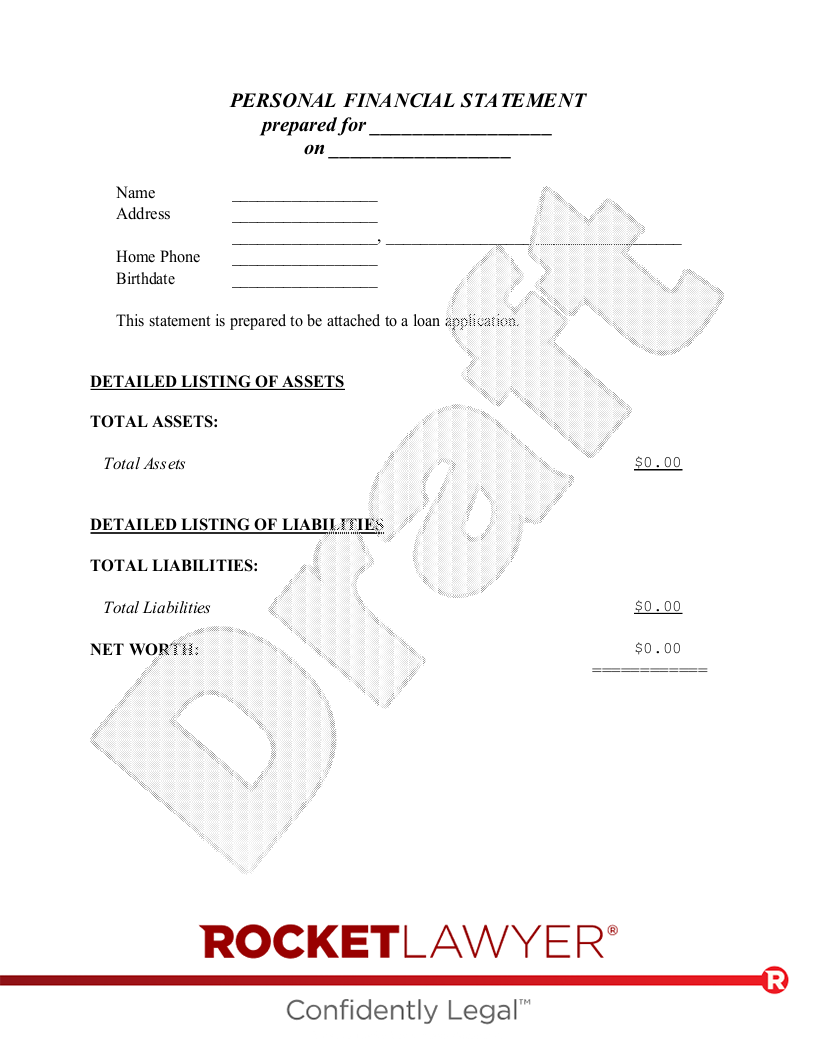
What is a Personal Financial Statement?
Personal Financial Statements can help save time when you're consulting with a professional such as an attorney, financial planner, estate planner, real estate agent, or broker. They can also be useful when you are starting a new business, preparing to buy real estate, or working on a Prenuptial Agreement or estate plan. If you're planning to apply for a loan, lease, or a line of credit, having a financial statement prepared can help demonstrate creditworthiness and increase your odds at getting approved.
Note: If you are married and have combined all or some of your personal finances, a Joint Financial Statement may be more appropriate for your situation.
When to use a Personal Financial Statement:
- You're single and meeting with an estate planning attorney or financial planner.
- You're thinking about applying for a loan.
- You're planning to buy real estate or working on your estate plan.
- You'd like to get your liabilities and assets figured out.
Sample Personal Financial Statement
The terms in your document will update based on the information you provide
 This document has been customized over 144.8K times
 Documents and communicates
 Ask a lawyer questions about your document
PERSONAL FINANCIAL STATEMENT
prepared for
on
| Name |
| Address |
| , |
| Home Phone |
| Birthdate |
| This statement is prepared to be |
(not included in asset total)
(not included in asset total)
SUMMARY LISTING OF ASSETS AND LIABILITIES
| ASSETS | Amount |
| _____________ |
| TOTAL ASSETS: |
| LIABILITIES | Amount |
| _____________ |
| TOTAL LIABILITIES: |
| NET WORTH: |
| ============ |
SOURCES OF MONTHLY INCOME:
| Investment Accounts |
| Trusts |
| Other Sources |
| _____________ |
| TOTAL MONTHLY INCOME |
MONTHLY EXPENSES:
| Child Care |
| Food |
| Health Care/Medication |
| Utilities |
| Housing/Rent |
| Other Mortgage Loans |
| Auto Loans |
| Auto Insurance |
| Other Insurance |
| Credit Cards |
| Student Loans |
| Other Expenses (including clothing, recreation, misc.) |
| _____________ |
| TOTAL MONTHLY EXPENSES |
I certify and warrant that to the best of my knowledge the information contained in this Personal Financial Statement is true, correct and complete.
The Personal Financial Statement is not a legal document and does not require any signature, witnesses or notarization.
| _____ | If a certification as to the accuracy and completeness of the financial statement is required, it will be necessary for to sign the statement. |
| ____ | Lender or officer of financial institution |
| ____ | Financial advisor and/or individuals that the statement was prepared for |
Personal Financial Statement FAQs
-
How do you make a Personal Financial Statement?
Simply select your state, then begin answering the questions as prompted. The step-by-step process is simple and easy to complete. When you're finished, you can save, download, and print your document.
-
How do you write a Personal Statement of Assets and Liabilities?
A Personal Financial Statement is typically just another name for a Personal Statement of Assets and Liabilities. The template on this page will create a Statement of Assets and Liabilities.
-
What are some examples of personal financial documents?
Examples of personal financial documents that you'll want to refer to while making your financial statement include:
- Checking account records
- Savings account records
- Stocks and bonds
- Real estate holdings
- Accounts receivable
- Annual income
- Retirement plans
- Car loans
- Personal property
- Credit card debts
- Mortgage information
- Loans (student loans, etc.)
- Any other relevant assets or liabilities


