In California, you may also evict a tenant if:
- The tenant stays after the lease is up and refuses to leave voluntarily after being given the proper notice to move, or
- The landlord terminates the rental agreement for a valid reason and the tenant refuses to leave on his or her own after being given the proper notice.
If your situation meets the above criteria, you may be able to evict your tenant. But, if you’ve never had a problem with the tenant or if you simply don’t want to go through the court process, you should think about hiring a mediator or solving the problem yourself through something like negotiation first. You can generally evict a tenant through the courts afterwards if mediation or negotiations don’t work.
Getting Started
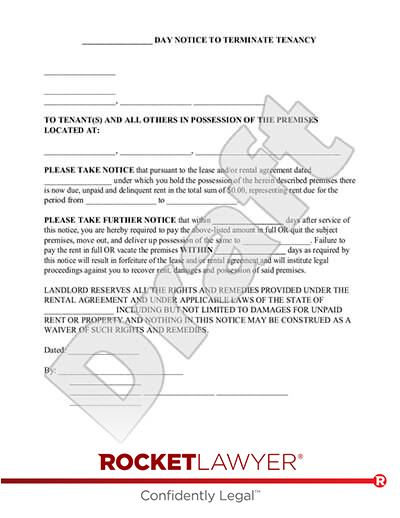
If you want to start the process of evicting a tenant in California, you can serve your tenant an Eviction Notice. Depending on your situation, this notice may or may not have to include the reason or reasons for eviction:
- For example, if the tenant is failing to do something—such as pay rent—the notice will have to state this and state a time and manner in which the tenant has to pay rent in order to avoid eviction. If your tenant corrects the problem, you no longer have cause for eviction. If your tenant does not remedy the problem within the time provided, you may file an “Unlawful Detainer” lawsuit.
- If the notice does not need to have a reason or reasons for the eviction—such as a 30-day notice to move out of a month-to-month tenancy—you may file an lawsuit as soon as the notice period ends.
- Whether you have to include a reason for eviction can also depend upon whether your city or county has special rules like rent control ordinances.
What’s an “Unlawful Detainer” Lawsuit?
An “unlawful detainer” suit is what California calls an eviction lawsuit. Once you file, expect that:
- The process should take about two months. During this time, you as the landlord may not be able to accept rent, but the tenant will ultimately be liable for it.
- The tenant has about five days to respond after being served with your complaint.
- The court will then schedule a trial within 20 days or so of your request.
- The trial usually takes about an hour.
If you win, the tenant will generally be given five days to vacate, though this depends on how fast the sheriff posts the lock-out order and on whether the tenant can obtain additional time. The lock-out order allows the sheriff to physically lock the tenant out of the rental property.
When to Talk to a Lawyer
Evicting a tenant in California can be complicated and it’s never a bad idea to speak with a real estate attorney. You should especially consider doing this if:
- The tenant works for you and lives on the property: If you’re employing the tenant and, as a condition of this employment, the tenant does not pay rent, you can usually file a lawsuit once the tenant no longer works for you. (The tenant can either be fired or can quit.)
- The tenant lives in a residential hotel: If the tenant lives in a hotel with more than six rooms for more than 30 days and the hotel is the tenant’s primary residence, they will usually be granted the rights of a regular tenant.
- The tenant lives in a mobile home or RV park: This varies significantly between counties and it’s highly recommended to contact your local superior court or a real estate attorney.
- There is a foreclosure on a rental unit: A tenant living in a unit that has been foreclosed upon can generally NOT be evicted when that property is purchased by a new owner. However, there are many potential scenarios in this case, and contacting a lawyer is a good idea.
As you can see, evicting a tenant in California can be complicated. But an Eviction Notice is generally a necessity. Look at a Sample Eviction Notice now.
Andy I. Chen is a general practice lawyer based in Los Altos, California. Fluent in Mandarin-Chinese, Andy takes a variety of transactional and litigation cases all throughout Northern California. Andy has been practicing law since 2009 and is licensed in California and New York. He also maintains an active pro bono practice helping both current and former members of the US military.
This article contains general legal information and does not contain legal advice. Rocket Lawyer is not a law firm or a substitute for an attorney or law firm. The law is complex and changes often. For legal advice, please ask a lawyer.


